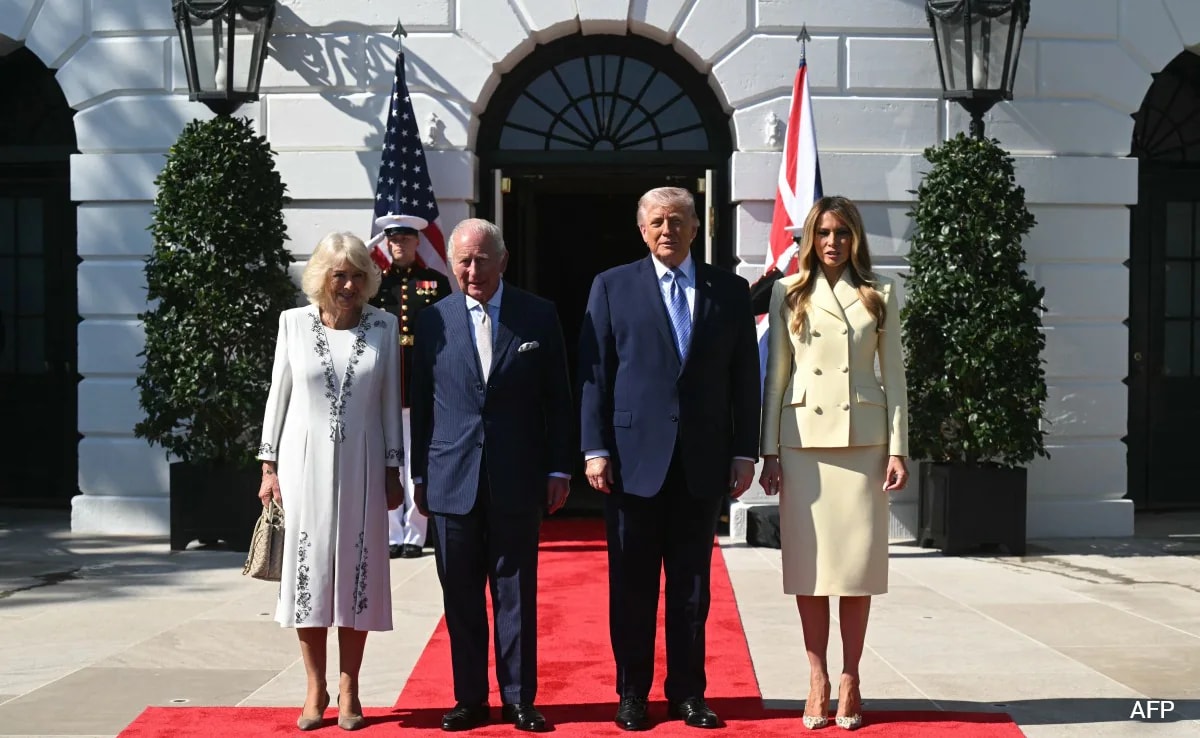
The media is currently choking on its own hyperbole. If you believe the headlines, the recent sit-down between King Charles and Donald Trump was a "desperate salvage mission" or a "pivotal moment for the Special Relationship." It is neither. This meeting was not an exercise in diplomacy; it was a high-stakes piece of theater designed to mask the reality that both institutions—the British Monarchy and the American Executive—are currently operating on fumes.
Mainstream commentary suggests that Charles is "stepping up" to bridge the gap between a populist Washington and a traditionalist London. This is a fundamental misunderstanding of how power functions in 2026. Sovereignty no longer lives in palaces or Oval Offices. It lives in the data centers of Northern Virginia and the sovereign wealth funds of the Middle East. To suggest that a handshake in a drawing room can "salvage ties" is like trying to fix a crashed server by polishing the monitor.
The Myth of the Royal Mediator
The "lazy consensus" argues that the King serves as a soft-power lubricant. The logic goes: Trump likes gold, the King has a gold coach, therefore influence happens. I have spent twenty years watching diplomats mistake access for influence. Access is a selfie. Influence is the ability to change a trade tariff or a defense posture.
King Charles has neither the constitutional mandate nor the political capital to move the needle on the issues that actually matter to the Trump administration:
- The aggressive decoupling of American supply chains from China.
- The dismantling of multilateral climate agreements (which Charles spent a lifetime building).
- The radical restructuring of NATO funding.
When Charles sits across from Trump, he isn't negotiating. He is performing. He is a ceremonial figurehead meeting a man who views ceremony as a tool for personal branding. To frame this as a "bid to salvage ties" is to ignore that the ties are being cut by economic forces that don't care about the House of Windsor.
The Environmental Elephant in the Room
For decades, Charles has been the world’s most prominent environmentalist. Trump, conversely, views the green transition as a "hoax" or a competitive disadvantage. The press wants to know how they found common ground. The brutal truth? They didn't.
They likely spoke about architecture or the history of the Scottish Highlands—safe, stagnant topics that provide a veneer of cordiality while the actual policy rift widens into a canyon. By pretending this meeting was a success, the British government is engaging in a dangerous form of "prestige-laundry." They are using the King’s moral authority to sanitize a relationship that is, at its core, increasingly transactional and one-sided.
The Power Paradox
Look at the numbers. The UK’s GDP is roughly $3.5 trillion. The United States is over $28 trillion. In any other industry, this wouldn't be a partnership; it would be a hostile takeover or a subsidiary relationship.
| Feature | The Royal Narrative | The Market Reality |
|---|---|---|
| Purpose | Strengthening historical bonds | Negotiating terms of surrender |
| Currency | Tradition and "Soft Power" | Energy independence and AI dominance |
| Outcome | A joint communique | Zero change in trade policy |
The UK's obsession with the "Special Relationship" is a psychological coping mechanism for a post-Brexit nation that has lost its primary trade bloc and hasn't yet secured a viable replacement. Charles is being used as the ultimate "hail mary" pass in a game the UK is losing.
The Architecture of Distraction
The competitor article claims this meeting was about "stability." On the contrary, this meeting is a symptom of instability. Stable nations don't need to trot out an aging monarch to beg for relevance. They rely on integrated economies and shared strategic goals.
The reality of the 2026 geopolitical climate is that the US is pivotally focused on AUKUS (the trilateral security pact between Australia, the UK, and the US) not because of "ties," but because of geography and submarine technology. Trump understands the submarine side. He couldn't care less about the "ties."
Imagine a scenario where a CEO of a struggling legacy brand meets with a Silicon Valley disruptor. The legacy CEO brings out the company’s 100-year-old founding documents to show "heritage." The disruptor is looking at the legacy CEO’s dwindling cash reserves and outdated tech stack. That is the Charles-Trump dynamic. One is talking about the past; the other is wondering how much of the future he can buy for cents on the dollar.
Dismantling the "Stability" Narrative
People also ask: "Does the King help secure a better trade deal?"
The answer is a flat no. Trade deals are written by mid-level bureaucrats at the Department of Commerce and the USTR. They are driven by agricultural lobbies in the Midwest and tech giants in California. None of these groups care about the protocols of Buckingham Palace. In fact, the King’s presence often complicates things by adding a layer of media scrutiny that trade negotiators usually prefer to avoid.
The Downside of the Contrarian Reality
Admitting that the Monarchy is toothless in this exchange is painful. It forces the UK to realize it is a medium-sized island nation with a productivity crisis, not a global empire. The risk of my perspective is that it strips away the last bit of national pride that "soft power" provides. But pretending that the King can charm his way into a favorable trade treaty is a fantasy that prevents the UK from doing the hard work of actual reform.
Stop looking at the photo ops. Start looking at the defense procurement contracts.
The Intelligence Gap
We are witnessing a massive disconnect between the "Royal Experts" and the "Market Analysts." The Royal Experts focus on the King’s tailored suits and Trump’s handshake duration. The Market Analysts are watching the US dollar’s strength and the UK’s inability to keep pace with American innovation.
While the King and the President were discussing whatever it is they discuss behind closed doors, the following things were actually happening:
- US tech firms were further consolidating their grip on the UK's digital infrastructure.
- The US Treasury was tightening rules that make it harder for British firms to compete in the "green" sectors Charles claims to love.
- The American electorate was moving further toward an "America First" posture that views all allies—royal or otherwise—as potential liabilities.
The Real Move
If the UK actually wanted to salvage ties, they wouldn't send a King. They would send a delegation of their top battery technology scientists, their most aggressive fintech founders, and a plan to actually contribute 3% of their GDP to defense.
The Monarchy is a distraction. It is a beautiful, gilded curtain pulled over a decaying stage. Every minute the public spends analyzing the "body language" of this meeting is a minute spent ignoring the fact that Britain's influence is being liquidated.
The "Special Relationship" isn't a marriage. It’s a subscription service. And the US is currently looking for the "unsubscribe" button. A handshake from a King isn't going to change the billing cycle.
Stop celebrating the optics. Start mourning the loss of actual leverage. The King didn't save the relationship; he just confirmed it's a museum piece.
The meeting wasn't a bridge to the future. It was a wake for the past.