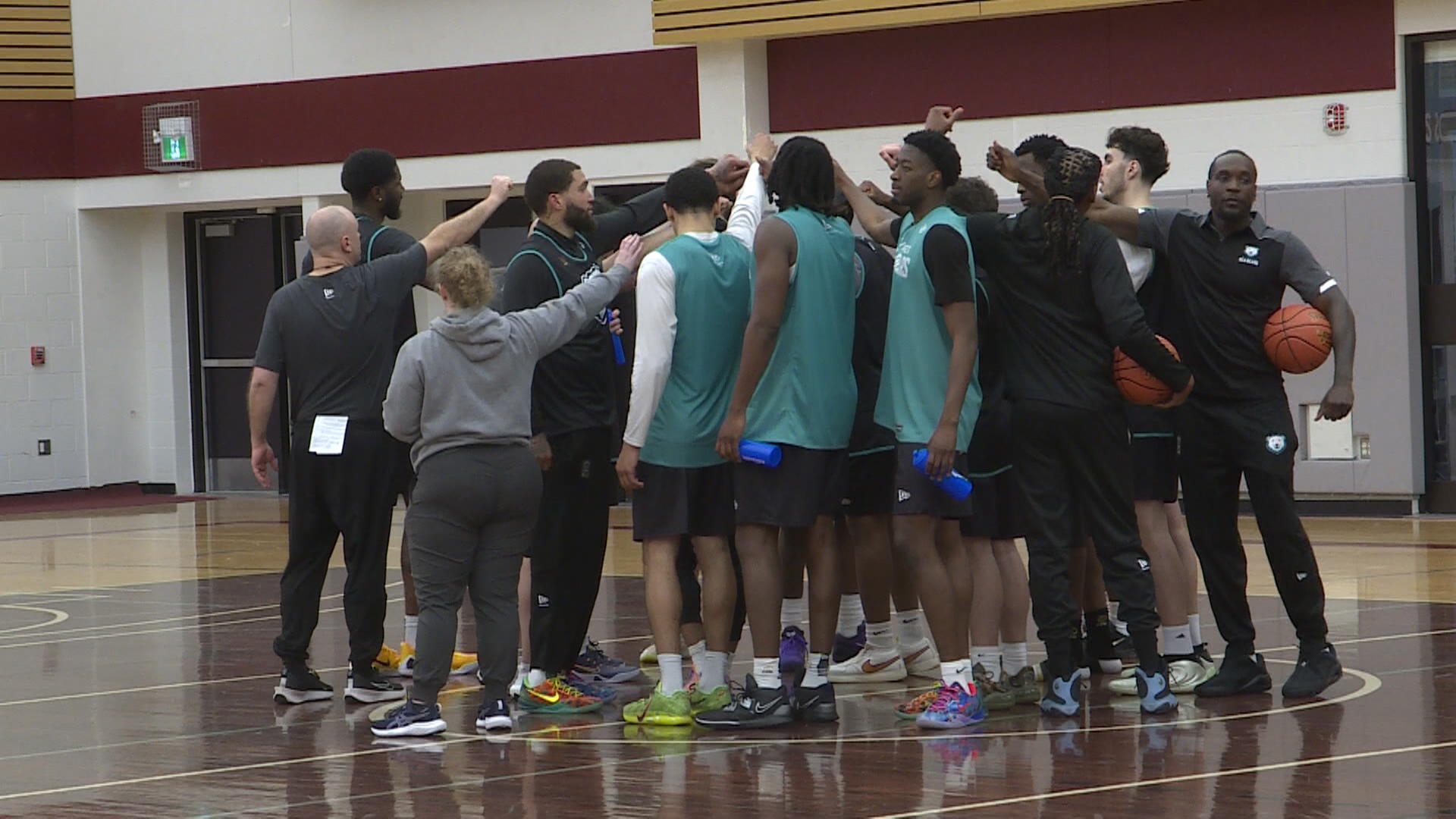
The release of point guard Armani Chaney by the Winnipeg Sea Bears ten games into the 2026 Canadian Elite Basketball League (CEBL) season demonstrates the highly calculated, high-turnover nature of professional summer basketball. In a league characterized by short regular seasons—spanning only twenty games total—and stringent roster mechanics, the marginal value of a backup guard must be measured strictly by tactical fit, developmental economics, and structural versatility.
Chaney played in all ten games of the 2026 season prior to his release, ranking second on the roster with 43 total assists. While traditional box-score metrics identify him as an effective bench distributor, a deeper analysis reveals a functional misalignment with the systemic requirements of the franchise. The decision to open an active roster spot ahead of a critical first-place matchup represents a calculated trade-off between baseline productivity and tactical flexibility.
The Core Constraints of Summer Professional Basketball
Evaluating roster optimization within the CEBL requires understanding the structural variables that govern the league's operational model. Unlike traditional year-round international leagues, the CEBL operates on a highly condensed timeline from May through August. This short window changes the relationship between a team's talent acquisition strategies and its short-term tactical needs.
- The Elastic Roster Bottleneck: In a twenty-game sprint, there is minimal margin for system adjustments. Coaches do not have the luxury of multi-month developmental cycles to integrate pieces that require specific, high-volume usage patterns to succeed.
- The Replacement Cost of International Talent: Teams face clear restrictions regarding the distribution of domestic versus non-domestic player minutes. Every spot allocated to an international or non-domestic player must yield maximum on-court leverage.
- The Intersquad Positional Deficit: The recent signing of forward D.J. Burns by Winnipeg altered the internal hierarchy and positional weight of the team's roster. This frontcourt addition necessitated a reallocation of offensive possessions and physical court space, reducing the utility of a ball-dominant backup playmaker.
High-Volume Distribution versus Possession Efficiency
The discrepancy between Chaney's historical production and his performance in Winnipeg highlights a common challenge in basketball talent evaluation: the scalability of a player's role from a high-usage primary option to a low-turnover rotational piece.
Chaney’s professional career is defined by high-volume, high-yield statistical output. During his time with the Newfoundland Rogues in the Basketball Super League (BSL), he posted elite metrics, averaging 30.3 points and 8.1 assists per game to earn most valuable player honors. Similarly, in European leagues like the Austrian Superliga and the Turkish Basketball First League, he regularly logged usage rates that allowed him to dictate tempo and command the floor.
When integrated into the Winnipeg system, this high-usage style faced structural barriers. In ten appearances, Chaney averaged roughly 4.3 assists per game in a backup capacity. While this volume appears solid on the surface, it came with systemic costs.
The Playmaking Efficiency Equation
True playmaking value is calculated by balancing volume against possession retention and shooting efficiency. A backup point guard in a short-season framework must operate as an efficiency catalyst rather than an volume producer. This operational reality is defined by a specific trade-off:
$$\text{Playmaking Efficiency} = \frac{\text{Assists}}{\text{Turnovers}} \times \text{True Shooting Percentage}$$
When a player's true shooting efficiency drops or their turnover rate rises relative to their assist volume, their presence on the floor can stall the overall offense. Chaney's effectiveness has historically relied on rhythm, perimeter volume, and regular pick-and-roll orchestration. In a restricted reserve role, a player with this profile can struggle to maintain high efficiency. The data indicates that his performance profile did not align cleanly with the modern basketball mandate of maximizing points per possession through elite floor spacing and low-turnover ball movement.
Tactical Realignment for Championship Leverage
The timing of this roster move provides insight into the management's underlying strategy. Releasing a primary rotational player directly before a high-stakes matchup for first place signals that the front office prioritized immediate tactical flexibility over depth.
By clearing this specific roster spot, the organization achieves several strategic advantages:
- Possession Reallocation: The offense can now funnel more touches through primary playmakers, increasing overall continuity and structural predictability during critical stretches of the game.
- Defensive Versatility: Replacing a smaller guard with length or a defensive specialist allows the team to switch more effectively on the perimeter and handle physical opponents without compromising their defensive schemes.
- Financial and Roster Agility: In a league with strict player caps and active roster limitations, keeping a spot open allows management to react instantly to the late-summer market as international leagues conclude and high-tier talent becomes available.
The fundamental limitation of this decision is the immediate reduction in proven backcourt depth. If the starting guard rotation encounters foul trouble or injury during the final stretch of the season, the absence of an experienced ball-handler will place additional stress on the remaining players. However, professional front offices routinely accept this risk, betting that systemic efficiency will outperform individual depth over a twenty-game season.
The team's mid-season adjustment proves that past accolades and raw volume are secondary to current tactical fit. The franchise is shifting toward a model centered on defensive size, frontcourt interior presence, and precise perimeter spacing. Success will now depend on how efficiently the remaining backcourt elements absorb the missing playmaking responsibilities without increasing turnover rates or compromising defensive integrity during high-pressure games.