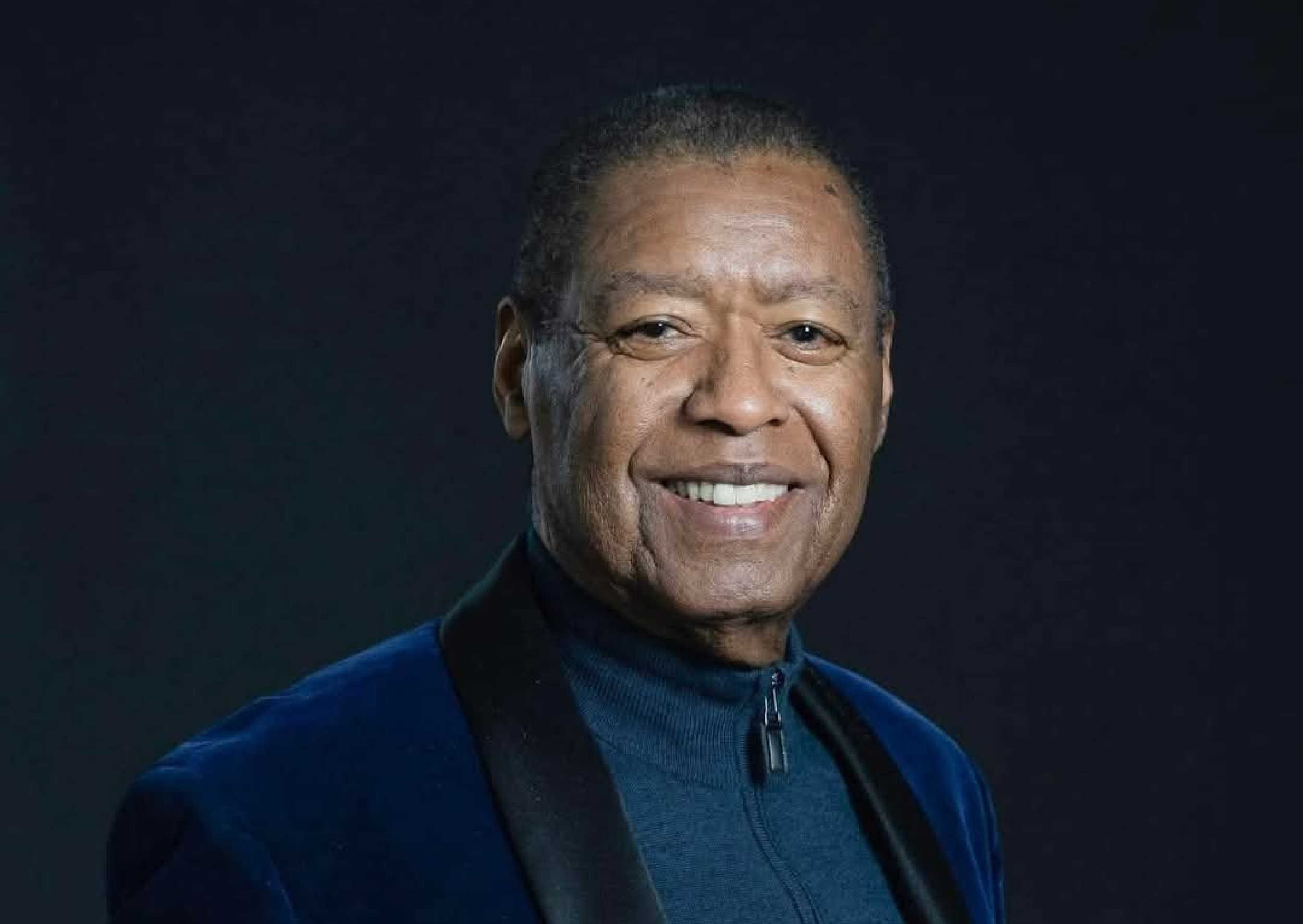
Before the mega-church became a global franchise, and long before "worship leader" was a viable career path on LinkedIn, Ron Kenoly was a high-octane anomaly. In the early 1990s, the religious music industry was largely divided between the dusty traditionalism of hymnals and the nascent, often derivative sounds of Christian Contemporary Music (CCM). Kenoly didn't just bridge that gap. He blew it apart with a brass section and a level of production value that caught Nashville and the global church off guard.
His rise was no accident. It was the result of a meticulously crafted sonic identity that blended the rhythmic complexity of funk and soul with a lyrical accessibility that transcended denominational borders. When Integrity Music released Lift Him Up in 1992, they weren't just selling a live recording; they were exporting a new liturgy for the modern age. To understand the modern worship industry is to understand the mechanics of the Kenoly era. It was the moment the "concert-experience" became the standard for Sunday morning, shifting the focus from the pew to the stage in a way that remains controversial today.
The Military Precision of the Groove
Kenoly’s background wasn't strictly ecclesiastical. His time in the United States Air Force and his subsequent pursuit of a secular R&B career provided him with a technical discipline often lacking in the church circles of the 1970s and 80s. When he finally pivoted to full-time ministry, he didn't leave the groove behind. He brought it with him, along with an insistence on world-class musicianship.
The Bass Line as Doctrine
In many ways, the success of the Kenoly sound rested on the shoulders of legendary bassist Abraham Laboriel. This wasn't the simplified, root-note playing typical of standard church music. This was aggressive, syncopated, and undeniably sophisticated.
- Musical Complexity: By incorporating jazz-fusion elements, Kenoly’s arrangements demanded a higher caliber of player.
- Production Value: The use of full horn sections and expansive percussion setups created a wall of sound that felt massive, even on a cassette tape.
- Cultural Crossover: This wasn't "white" or "black" church music; it was a rhythmic middle ground that felt global.
This musicality was the "hook" that allowed Kenoly to dominate the global market. He was one of the first artists to successfully export an American worship style to Africa, Asia, and South America, not through theological treatises, but through the universal language of a tight pocket and a soaring chorus.
The Logistics of Global Influence
We often look at spiritual movements through a lens of mysticism, but Kenoly’s impact was as much about distribution as it was about devotion. Integrity Music’s Hosanna! Music series functioned as the primary pipeline. In an era before streaming, these physical recordings were the "software" that ran the "hardware" of local churches.
If a worship leader in Lagos or London wanted to sound modern, they bought a Kenoly tape. They studied the transitions. They mimicked his call-and-response cues. This created a homogenization of worship that we still see in the era of Hillsong and Bethel. Kenoly provided the prototype for the "celebrity worship leader," a figure who was part pastor, part performer, and entirely essential to the brand’s bottom line.
The Shift from Participation to Observation
This is where the investigative lens uncovers a friction point. Before this era, church music was largely participatory and musically simple enough for the average congregant to follow. Kenoly’s arrangements, while infectious, raised the bar so high that the average person could no longer keep up. The "performance" became the point.
The stage became a spectacle. Lights, choreography, and professional-grade audio engineering weren't just additions; they became requirements. This shift fundamentally changed the psychology of the congregant. People stopped being singers and started being an audience. While Kenoly’s personal integrity remains largely unquestioned in an industry rife with scandal, the system he helped build created a vacuum that prioritized stage presence over pastoral care.
Analyzing the Secular Pivot
It is a common trope to say Kenoly "gave up" R&B for the gospel. The reality is more nuanced. The R&B market in the late 70s was brutal and often tied to predatory contracts. The burgeoning "Praise and Worship" market offered a level of stability and a direct-to-consumer audience that the secular world couldn't match.
Kenoly’s genius was recognizing that the church was a sleeping giant of a market. By applying the production standards of a Motown or a Quincy Jones to the lyrics of the Bible, he tapped into a demographic that was hungry for quality but felt alienated by the "worldliness" of secular radio. He didn't just find a niche; he built a fortress.
The Economics of the Songbook
The real wealth in the worship industry isn't in ticket sales—it's in the CCLI (Christian Copyright Licensing International) rankings. When a church prints lyrics on a screen or records a service, they pay into a pool.
- "Celebrate Jesus": This song alone became a global staple, generating royalties for decades.
- Translatability: His songs were lyrically simple enough to be translated into dozens of languages without losing their rhythmic punch.
- Longevity: Unlike pop songs that fade in six months, a "classic" worship song can have a shelf life of thirty years.
Kenoly mastered this long-game strategy. His songs were engineered for the corporate setting, ensuring they would be played every Sunday in thousands of locations simultaneously.
The Overlooked Academic Legacy
While the world saw the singer, the industry saw the educator. Kenoly eventually earned a Ph.D. in Ministry of Music, a move that signaled his desire to be taken seriously as more than just a "performer." He spent years teaching the "how-to" of worship leading, essentially training his own competition.
This educational component is why his influence persists. You can hear his phrasing in the voices of modern leaders who weren't even born when Sing Out with One Voice was recorded. He codified the "worship flow"—the art of moving from high-energy "praise" to intimate "worship" without breaking the musical momentum. It’s a psychological arc that is now standard operating procedure for almost every large church in the West.
The Counter-Argument: Was Something Lost?
Critics of the Kenoly era argue that the "professionalization" of worship led to a spiritual shallowness. When the music is this good, is the emotion coming from the message or the major-seventh chords?
There is an argument to be made that Kenoly’s success paved the way for the current "worship industrial complex," where songs are written in "writing rooms" based on data metrics rather than personal conviction. He brought the excellence, but the industry that followed often kept the polish while losing the soul. Kenoly himself often warned about this, emphasizing that the "anointing" cannot be manufactured, even with the best lighting rig in the world.
The Hard Truth of the Pioneer
The story of Ron Kenoly is the story of how the church learned to compete with the world on its own terms. He proved that religious music didn't have to be sonic wallpaper. It could be vibrant, rhythmically daring, and professionally produced.
However, his legacy is a double-edged sword. He gave the church a new voice, but he also gave it a new set of vanities. The "Kenoly sound" was a moment in time where talent and theology met at a high-water mark, but it also set off an arms race in church production that has left smaller congregations feeling inadequate and larger ones feeling like entertainment venues.
To look at Kenoly today is to see a man who succeeded in his mission to "point the world to Jesus," but in doing so, he inadvertently created a roadmap for an industry that often forgets the destination in favor of the journey. He remains the gold standard for a specific type of excellence, a reminder that before the smoke machines arrived, you actually had to be able to sing.
If you want to understand why your local church sounds the way it does this Sunday, go back and listen to the horn hits on God Is Able. The DNA is all there. The question for the next generation isn't how to recreate that sound, but how to recapture the sincerity that made the sound matter in the first place.
Search for the 1994 video of his concert in South Africa. Watch the faces of the thousands in the crowd. They weren't there for a celebrity; they were there for an encounter. The fact that the music was incredible was just a bonus. That is a distinction the modern industry would do well to remember.


