Step onto the suspension bridge at Dharchula, and the first thing you feel is the vibration. It is the hum of the Mahakali River, roaring through the deep gorges of the Himalayas. Beneath your boots, the steel cables sway. Walk a few hundred paces North, and you are in Nepal. Turn around, and you look at India.
For the people living along this liquid border, geopolitics is not something debated in air-conditioned rooms in Kathmandu or New Delhi. It is a daily chore. It is the ritual of carrying baskets of tomatoes across a bridge. It is a marriage between families living in different time zones that are only fifteen minutes apart. It is a shared cup of tea.
When diplomatic cables flash the news that Nepal has officially called India its "most important partner," it sounds like the sterile language of international relations. It sounds cold. But high-stakes diplomacy is never actually cold. It is deeply personal, forged by geography, history, and an inescapable mutual dependency.
The Weight of the Mountains
To understand why Nepal prioritizes its ties with India above all others, you have to look at the map. Geography is destiny, and Nepal’s destiny is carved into the steep slopes of the world's highest mountains.
Consider a hypothetical shopkeeper in Pokhara. Let us call him Ramesh. Ramesh sells trekking gear, solar lanterns, and packaged food to tourists. Every single item in his shop—from the North Face knockoff jackets to the batteries powering his flashlights—likely traveled through the Indian port of Haldia or Visakhapatnam. It then moved by rail or truck across the vast, flat plains of Uttar Pradesh or Bihar before winding its way up the treacherous mountain roads of Nepal.
Nepal is landlocked. More accurately, it is India-locked on three sides, with the impenetrable wall of the Tibetan Plateau guarding its northern frontier.
This is not a political choice; it is a geological reality. While treaties can be rewritten, the Himalayas cannot be moved. For Nepal, smooth transit routes through India are the literal lungs of its economy. When those routes choke, the entire country gasps for air.
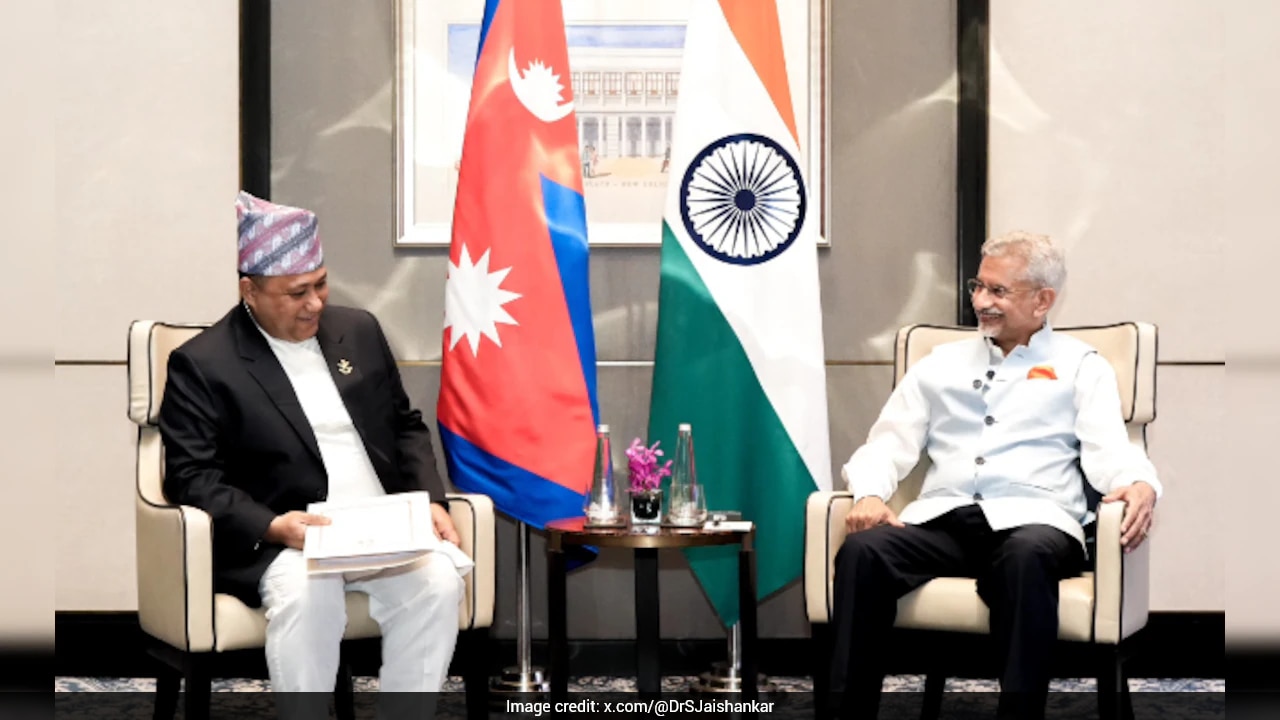
During his official briefings, Nepal's Foreign Minister reiterated this reality, stating plainly that the government gives the highest priority to its relations with India. The statement was a public reaffirmation of an undeniable truth: Nepal’s economic survival and its relationship with New Delhi are inextricably linked.
The Electric Lifeline
But this is not a one-way street of dependency. The dynamic between these two nations is shifting from historical reliance to a modern, high-stakes partnership. The new currency of this relationship is not just goodwill. It is electricity.
For decades, Nepal’s massive hydropower potential remained a theoretical talking point in geography textbooks. The roaring glacial rivers held the promise of immense wealth, but the country lacked the capital and the infrastructure to harness it. That is changing.
Deep in the mountain valleys, massive concrete turbines are spinning.
India has committed to importing 10,000 megawatts of electricity from Nepal over the next decade. Think about that volume. It is enough to power millions of Indian homes, factories, and air conditioners during the scorching summer months. For Nepal, this is the golden ticket to erasing its massive trade deficit. It transforms Nepal from a recipient of aid into an exporter of clean energy.
The relationship is evolving into a complex web of mutual benefits. India needs green energy to meet its climate goals and fuel its roaring economic growth. Nepal needs the revenue to build schools, roads, and hospitals. They are locked in a dance where neither partner can afford to step on the other’s toes.
Voices in the capital
Walk through the bustling streets of Kathmandu’s Thamel district, and you will hear a mosaic of opinions. The political elite talk about sovereignty, non-alignment, and balancing the influence of giant neighbors.
"We must maintain our independence," says an elderly journalist sitting in a tea shop near Durbar Square, his fingers tracing the rim of a clay cup. "We are a yam between two boulders, as our ancestors said. We cannot lean too far to one side."
He is referring to China, the other giant neighbor to the North. In recent years, Beijing has extended its footprint in Nepal, funding highways, airports, and internet infrastructure. It is a tempting alternative for a nation looking to diversify its options.
Yet, the traditional bonds with India possess a distinct character that infrastructure projects cannot replicate. You cannot easily build a railway through the highest peaks of the earth to match the ease of walking across a flat plain.
More importantly, China does not share the deep cultural, linguistic, and familial ties that knit India and Nepal together. The border between India and Nepal is open. No passports are required for citizens of either country to cross. Millions of Nepalis live and work in India, sending money back to rural villages nested in the shadows of Annapurna.
The Indian Army still maintains regiments of Gurkha soldiers, legendary for their bravery. When a young man from a remote Nepali village puts on that uniform, the geopolitical becomes intensely familial.
The Friction of Proximity
Living so close to a powerhouse brings inevitable friction. No relationship this intimate is without its scars.
There are long-standing border disputes in places like Kalapani and Lipulekh, small patches of land that trigger massive nationalist protests in Kathmandu whenever they appear on new maps. There is the memory of economic blockades that left Nepalis queuing for days just to buy a liter of petrol. There is the constant, underlying anxiety that a giant neighbor might overstep its bounds and treat a sovereign nation as a mere sphere of influence.
These fears are real. They are felt deeply by ordinary citizens who worry about their nation’s identity being swallowed by a cultural and economic monolith.
Navigating this requires an delicate balancing act. Nepal’s recent diplomatic declarations are designed to strike that balance. By explicitly naming India as the "most important partner," Kathmandu is reassuring New Delhi of its loyalty, ensuring that vital supply lines and energy deals remain secure. It is a pragmatic calculation, a recognition that while you can choose your friends, you cannot choose your neighbors.
Beyond the Diplomatic Ink
Back on the suspension bridge at Dharchula, the sun begins to dip below the jagged ridge line. The sky turns a deep, bruised violet.
A woman in a red sari walks past the border guards, carrying a sleeping child on her shoulder. The guards on both sides know her face. They nod her through without a word. She does not care about the official statements issued from foreign ministries. She does not read the press releases about bilateral cooperation or hydropower agreements.
But her ability to walk across that bridge, to seek medical care on one side and return to her home on the other, depends entirely on those statements.
The ties between India and Nepal are often described in grand, sweeping terms: ancient, eternal, unbreakable. But their true strength lies in their mundane utility. It is found in the electricity flowing through transmission lines across the plains, the trucks carrying grain up the winding mountain highways, and the open border that allows two distinct nations to share a single, vibrant heartbeat.
The rivers originating in the glacial peaks of Tibet will continue to carve their way south through Nepal, feeding into the great plains of India. They flow without regard for lines drawn on a map, binding the fates of the people who live along their banks forever.