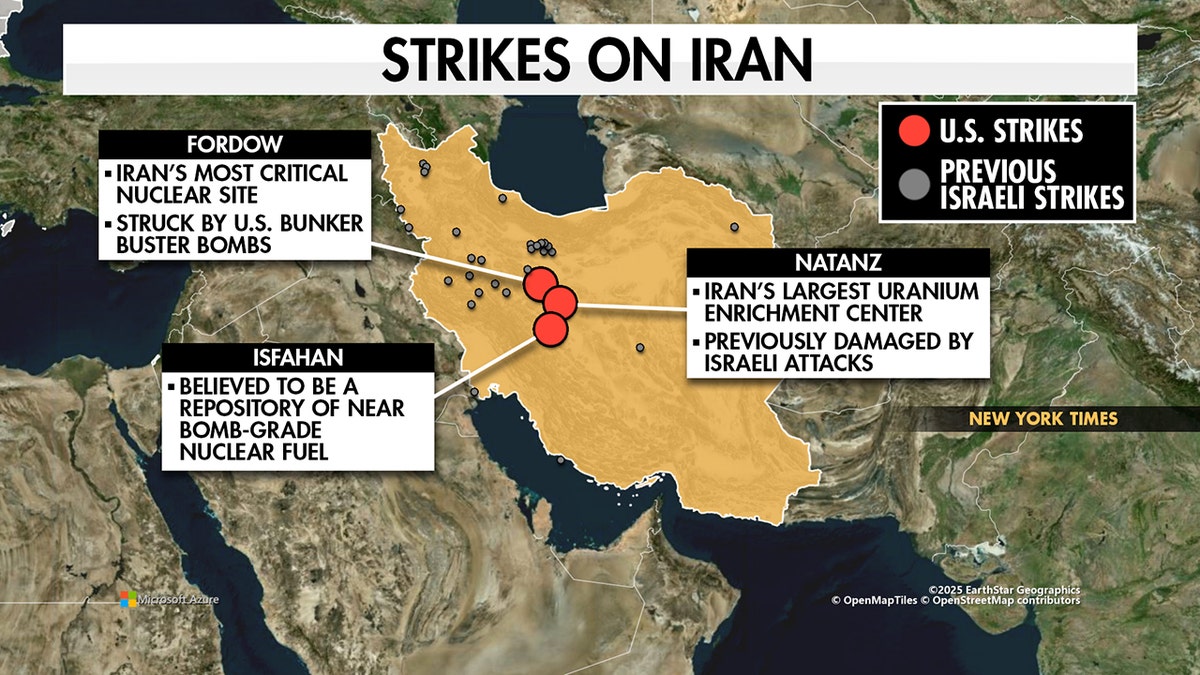
The movement of ballast LNG carriers into the Persian Gulf represents a calculated stress test of maritime insurance thresholds and sovereign risk premiums. When empty vessels—highly buoyant and technically complex assets—attempt a crossing into a high-friction zone, they are not merely performing a logistical reset; they are signaling a shift in the perceived cost of kinetic interference versus the necessity of maintaining "just-in-time" liquefaction cycles. The current operational environment in the Strait of Hormuz serves as a definitive case study in how global energy supply chains price geopolitical volatility into the physical movement of hulls.
The Triad of Operational Transit Risk
To evaluate why a vessel operator would commit a multimillion-dollar asset to a contested waterway while empty, one must understand the three distinct pillars of risk that govern these decisions.
1. The Insurance Escalation Ladder
Maritime transit in the Persian Gulf is governed by the Joint War Committee (JWC) of the Lloyd’s Market Association. When an area is "listed," every entry requires a specialized War Risk Premium. This is not a static cost. It functions as a dynamic tax on geographic presence.
- Hull Interest: The premium is calculated based on a percentage of the vessel's value. For an LNG carrier valued at $200 million, even a 0.1% premium translates to $200,000 per transit.
- Breach of Warranty: Carriers must notify underwriters before entering the Strait. A failure to accurately time the entry can result in a total loss of coverage, creating a binary risk profile for the operator.
2. Physical Vulnerability of Ballast Hulls
A common misconception is that an empty tanker is "safer" than a full one. From a naval architecture and security perspective, the opposite is often true.
- The Freeboard Problem: Empty tankers sit significantly higher in the water. This increased freeboard makes them easier targets for boarding parties and increases the radar cross-section, making the vessel more visible from a distance.
- Maneuverability Constraints: While lighter, a ballast vessel is more susceptible to windage. In the narrow shipping lanes of the Strait, which are only two miles wide in each direction, any loss of propulsion or forced course deviation due to external interference becomes a high-probability grounding event.
3. Cargo Opportunity Cost
The decision to enter the Gulf empty is driven by the rigid nature of LNG liquefaction contracts. Unlike crude oil, which can be stored in tank farms with relative ease, LNG production is a continuous cryogenic process. If a vessel is not at the loading arm of a facility like Ras Laffan exactly when the storage tanks reach capacity, the facility must "flare" gas or throttle production. The financial penalty for missing a loading window often exceeds the heightened war risk premium.
The Strategic Cost Function of Maritime Deterrence
The re-entry of empty vessels indicates that the "Cost of Avoidance" has finally eclipsed the "Cost of Risk." This transition can be expressed as a function of charter rates, spot price differentials, and insurance volatility. When global LNG prices in the JKM (Japan Korea Marker) or TTF (Title Transfer Facility) are high, the pressure to maintain the shuttle service between the Gulf and the consumer markets overrides the marginal increase in security spend.
The Mechanism of Shadow Escorts
Vessels currently attempting the Hormuz crossing do not move in a vacuum. They rely on a layered security architecture that includes:
- AIS Manipulation: Digital obfuscation where vessels "go dark" or broadcast false coordinates to complicate targeting by non-state actors or hostile regional powers.
- Private Maritime Security Teams (PMST): The presence of armed contractors on the bridge wing. While effective against low-level piracy, these teams offer no defense against state-level anti-ship missiles or limpet mines.
- State-Led Task Forces: Participation in structures like the International Maritime Security Construct (IMSC). The psychological value of a nearby destroyer is the primary variable that keeps the commercial insurance market liquid.
Logical Failure Points in Market Perception
Mainstream analysis often interprets the movement of empty tankers as a sign of "returning normalcy." This is a fundamental misreading of the data. In reality, these movements indicate that the market has successfully socialized the risk.
The second limitation of current observation is the failure to distinguish between "vessel flow" and "vessel safety." A high volume of traffic in the Strait does not suggest a decrease in threat level; it suggests that the profit margins of the energy majors are currently high enough to absorb the potential total loss of a hull. If LNG prices were to collapse while the geopolitical tension remained constant, the Strait would likely empty of commercial traffic within 72 hours.
The Liquefaction Bottleneck and Cryogenic Deadweight
The Persian Gulf is the world's most critical node for LNG because of the capital expenditure required for liquefaction. Unlike the United States or Australia, the Gulf producers have optimized their entire economic model around the reliability of the Hormuz transit.
The physical reality of the LNG carrier itself dictates the strategy. These are not just ships; they are floating thermoses.
- Boil-Off Gas (BOG): Even an empty tanker carries "heel"—a small amount of LNG kept in the tanks to keep them at cryogenic temperatures (approximately -162°C).
- The Cooling Loop: If a ship stays outside the Gulf for too long waiting for "safe passage," it loses its heel. To restart, it must undergo a multi-day cooling process that consumes massive amounts of fuel and time.
This technical requirement creates a "Sunk Cost Trap." Once a ship is committed to the region and its tanks are cooled, the operator is incentivized to take higher risks to reach the loading terminal rather than abandon the mission and face the thermal reset costs.
Deterministic Modeling of Transit Success
To predict whether these empty tankers will successfully load and exit, analysts must monitor the "Turnaround Delta." This is the time between a vessel entering the Strait (ballast) and exiting (laden).
A lengthening Turnaround Delta indicates friction: increased inspections, GPS jamming incidents, or tactical holding patterns. Conversely, a tightening Delta suggests that the operators have reached a tacit understanding with regional powers or that the naval escort presence has reached a saturation point sufficient to deter interference.
The current data shows a stabilized Delta, which implies that for the immediate window, the risk is being managed through technical transparency—vessels are essentially daring interdiction by making their presence known and their commercial intent undeniable.
The strategic play for energy stakeholders is no longer about avoiding the Strait of Hormuz, but about diversifying the "Insurance Carry." Entities that can internalize risk through captive insurance models or sovereign guarantees will gain a competitive advantage over those reliant on the commercial London market. The movement of empty tankers into the Gulf is the ultimate leading indicator of this shift: it is a declaration that the physical asset is now subservient to the continuity of the cryogenic supply chain.
Operators should prioritize the hardening of hull-side electronic counter-measures and the synchronization of arrival windows with high-tide/low-light cycles to minimize the freeboard vulnerability of the ballast phase. The era of passive transit has ended; we have entered the era of the "Tactical Commercial Transit," where every nautical mile through the Strait is a negotiated outcome between capital and kinetic threat.