The wind off the Danube has a way of biting through a wool coat in late autumn, a sharp reminder that Belgrade has always been a city of crossroads and cold fronts. If you stand on the heights of the Kalemegdan Fortress, you aren’t just looking at a confluence of rivers. You are looking at the literal seam of history. To the west, the ghosts of the Austro-Hungarian Empire; to the east, the fading echoes of Ottoman rule; and scattered in the soil beneath your boots, the shrapnel of a dozen different wars that nobody asked for but everyone had to endure.
In the cafes along Knez Mihailova, the talk is usually about the skyrocketing price of rakija or the latest football heartbreak. But lately, there is a new weight in the air. It is the weight of sophisticated machinery, crated and shipped from thousands of miles away.
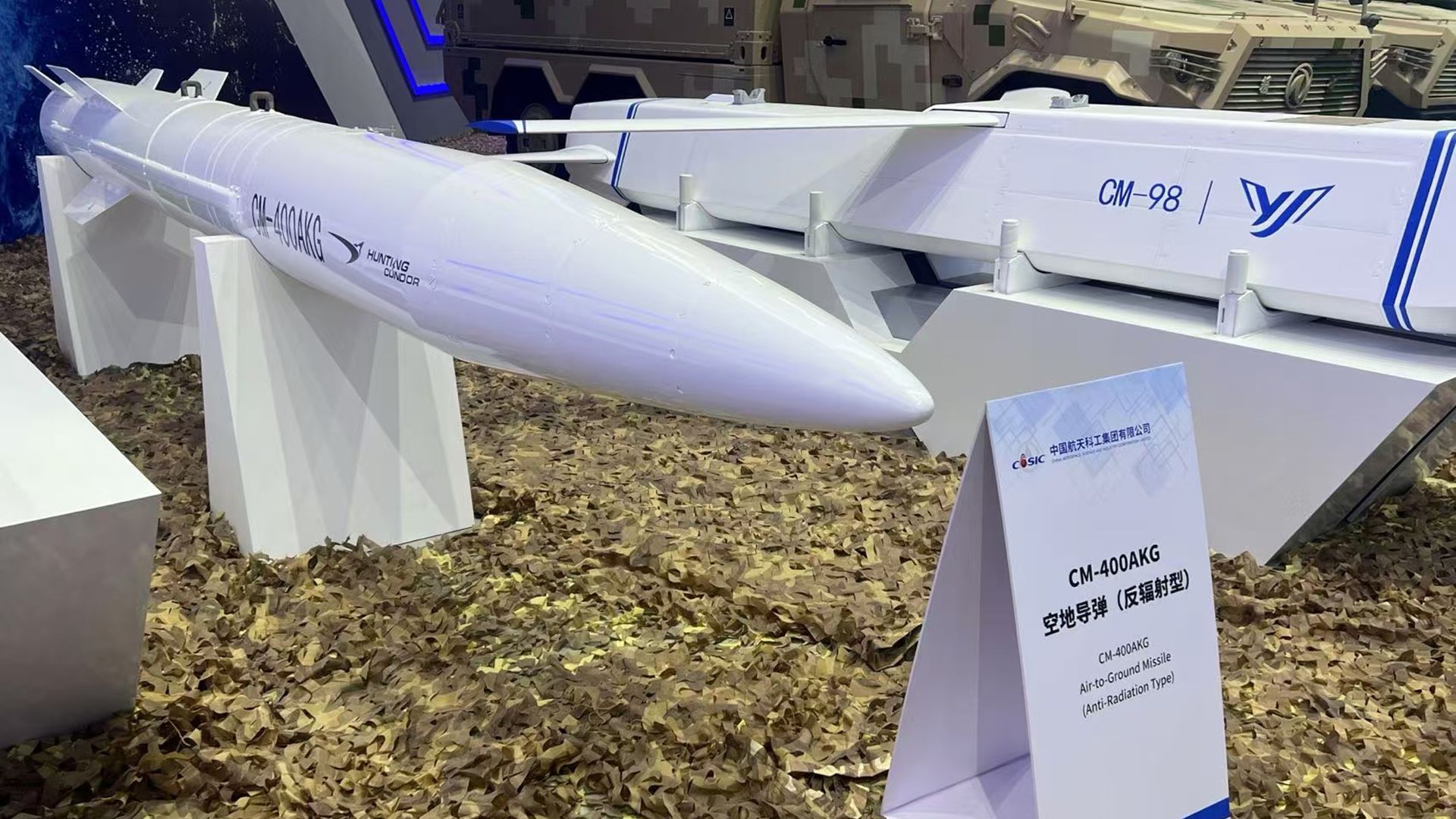
Serbia has recently confirmed the purchase of Chinese-made CM-401 supersonic cruise missiles.
To a military analyst in a windowless room in Brussels or Washington, this is a data point—a shift in "anti-access/area denial" capabilities. To the person walking their dog in a Belgrade park, it is something else entirely. It is a signal. It is a statement that the sky is no longer a shared space, but a fortified one.
The Speed of Sovereignty
Imagine, for a moment, a hypothetical air defense commander named Dragan. He remembers 1999. He remembers the sound of sirens that felt like they would never stop, and the sight of a skyline illuminated by things that weren't stars. For a man like Dragan, the CM-401 isn't just hardware. It is a promise that the past will not repeat itself.
The CM-401 is a formidable piece of engineering. It travels at speeds that defy the human nervous system’s ability to comprehend. We are talking about Mach 4. At that velocity, the air itself becomes as dense as water, a physical barrier that the missile shatters with a violent, indifferent grace. It is designed to strike ships and land targets with a "porpoise" flight path—dipping and weaving in the upper atmosphere to confuse the very sensors meant to stop it.
But why China? Why now?
The answer isn't found in a brochure. It’s found in the reality of a country that feels squeezed. Serbia is a candidate for the European Union, yet it remains an island in a sea of NATO members. It seeks the prosperity of the West while nursing the scars the West gave it. China, sensing this friction, has stepped in with a checkbook and a warehouse full of high-tech weaponry.
The Silent Logistics of Influence
When a country buys a missile system, they aren't just buying a tube of explosives. They are buying a relationship. They are inviting foreign engineers into their bases. They are sending their own officers to Beijing for training. They are syncing their digital nervous systems with a provider that operates under a completely different set of geopolitical rules.
This isn't a "game-changer"—to use a tired phrase—but it is a profound realignment of the gravity in the Balkans.
The CM-401 allows Serbia to project power far beyond its borders. With a range of nearly 300 kilometers, these batteries can reach deep into the Adriatic or across neighboring territories. For the neighbors, this feels like a threat. For the Serbian government, it is described as "deterrence."
The truth usually sits somewhere in the shivering middle.
Consider the technical reality of a supersonic strike. If a CM-401 is launched, the target has almost no time to react. In the space it takes to pour a cup of coffee, the missile has covered the distance between cities. This compression of time changes how leaders think. It removes the luxury of deliberation. When weapons move this fast, the humans in charge have to move even faster, or—more likely—they have to hand the decision-making over to algorithms.
A Sky Full of Ghosts
There is a specific kind of silence that follows a massive military parade. The engines of the transport trucks fade, the crowds disperse, and the heavy metal is tucked away into hangars. But the psychological footprint remains.
The acquisition of the CM-401, alongside the previously delivered FK-3 surface-to-air systems, makes Serbia the primary operator of Chinese strategic weaponry in Europe. It is a lonely, prestigious position. It makes Belgrade a laboratory for how Chinese tech integrates with a European military infrastructure that still relies heavily on aging Soviet skeletons and aspirations of Western interoperability.
One has to wonder about the technicians. The young Serbian men and women who will sit in front of screens manufactured in Shenzhen. They will look at the glowing lines and the Cyrillic translations of Mandarin code. They are the ones who have to live with the paradox of being "neutral" while being armed to the teeth by a superpower on the other side of the globe.
The cost of these systems is rarely just financial. It is measured in the subtle shifts of diplomacy. Every time a Chinese heavy transport plane lands at Batajnica Air Base, a phone rings in a capital city nearby. Anxiety rises. Budgets for counter-measures are drafted. The cycle of "keeping pace" begins anew, a frantic race where the finish line is just more expensive hardware.
The Invisible Stakes
We often talk about weapons as if they are static objects, but they are living debts. They require maintenance. They require proprietary spare parts. They require a constant stream of software updates. By choosing the CM-401, Serbia has hitched its defensive wagon to the Chinese industrial complex for the next two or three decades.
If relations sour, the missiles become expensive paperweights. If relations deepen, the pressure to align with Chinese foreign policy grows heavier. It is a slow-motion dance of dependency, masked by the bravado of national pride.
The people of Belgrade are resilient. they have seen empires come and go. They have seen the borders on their maps redrawn with the stroke of a pen and the fire of a gun. They know that a missile is never just a missile. It is a symptom of a world that is becoming more fractured, more frantic, and much, much faster.
Standing again on that fortress at the confluence of the rivers, you can see the lights of the city flickering on. The cranes of new construction projects—many funded by foreign capital—dot the horizon. The CM-401 batteries are out there somewhere, hidden in the shadows of the Serbian countryside, waiting for a command that everyone hopes will never come.
The sky looks the same as it did twenty years ago. It is vast, blue, and indifferent. But beneath that surface, the air is humming with the frequency of supersonic intent. Serbia has bought its protection, but in a world of Mach 4 consequences, the price of security is a permanent state of high-tension watchfulness.
The sun sets behind the hills, turning the Danube into a ribbon of dark mercury. Somewhere in the distance, a jet streaks across the clouds, leaving a white scar that lingers long after the sound has passed. You watch it fade, wondering if we are building a future of safety or merely a more efficient way to vanish.