The Silence in Terminal 4
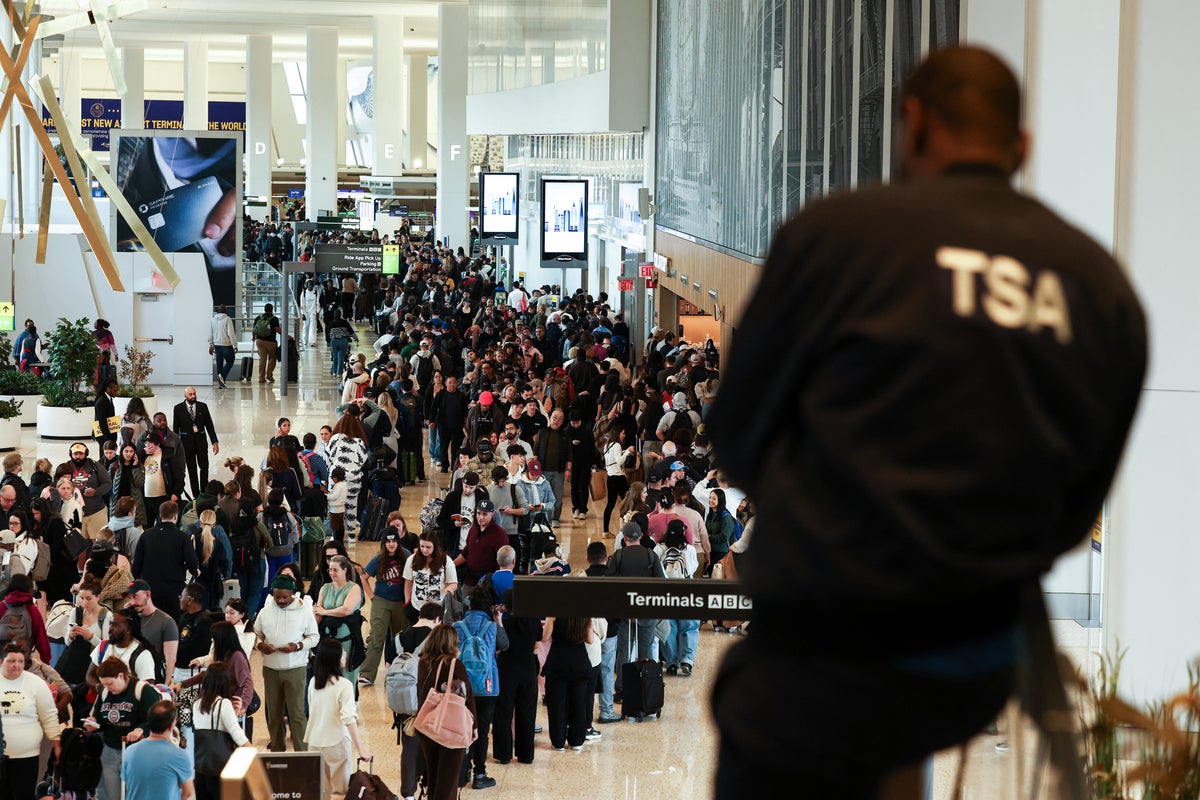
Alejandro’s boots have seen three continents, but they’ve never felt as heavy as they do on the linoleum of JFK’s international arrivals hall. In his pocket is a ticket for the World Cup opener. In his heart is the memory of his father’s last words about seeing a goal scored on American soil. But in front of him is something no athlete can outrun: a line that hasn't moved in forty-five minutes.
There are no shouting guards. No frantic announcements. Just a crushing, bureaucratic silence.
The screens that usually flash welcoming imagery of national parks and bustling cities are dark. The booths, meant to be manned by the sharp-eyed sentinels of Customs and Border Protection (CBP), are mostly empty. This isn't a security breach or a technical glitch. It is the sound of a government that has simply stopped breathing.
As the United States prepares to host the world’s greatest sporting spectacle, the machinery of the state has seized up. A budget impasse in Washington D.C. has led to a federal shutdown, and while the players are warming up on the pitch, the fans are cooling their heels in the purgatory of the arrivals lounge.
The Math of a Bottleneck
Travel is a game of fine margins. When a hub like Hartsfield-Jackson in Atlanta or LAX in Los Angeles operates at peak capacity, the system relies on a delicate pulse. On a standard day, CBP processes roughly one million travelers entering the U.S.
Now, layer the World Cup on top of that.
Conservative estimates suggested an additional several million international visitors would descend upon North America for the tournament. To handle this, the plan was simple: more staff, more overtime, more "seamless" transitions. But "essential" workers—the label given to border agents during a shutdown—are currently working without paychecks.
Morale doesn't just dip in these scenarios; it vanishes. When an officer is worried about their mortgage payment or how they’ll put gas in the car to get to the next shift, the efficiency of a passport check becomes a secondary concern. The result is a mathematical nightmare. If each interaction at a kiosk takes just sixty seconds longer due to understaffing and stress, a queue of five hundred people becomes an eight-hour ordeal.
Consider the ripple effect. A flight from London lands in Philadelphia. The passengers are held on the tarmac because the arrivals hall is at physical capacity. That plane is now occupying a gate needed by a flight from Mexico City. The Mexico City flight circles, burns fuel, and eventually diverts to an airport that is even less prepared for the influx.
The logistics of a World Cup are built on a house of cards. Washington just pulled the bottom card.
When the Beautiful Game Meets Ugly Reality
Meet Sarah. She’s a hypothetical volunteer for the tournament, tasked with coordinating transport for fans in Miami. She’s been standing at the "Meeting Point" sign for six hours. Her phone is blowing up with messages from frantic families who saved for four years to be here.
"Where are the buses?" they ask.
"Why aren't we moving?" they plead.
Sarah has no answers because the answers are locked in a committee room three thousand miles away. The tragedy of this disruption isn't found in the halls of Congress; it’s found in the tears of a child who realizes they’re going to miss the kickoff because of a dispute over discretionary spending.
The invisible stakes are the reputations of the host cities. We think of the World Cup as a series of matches, but for the local economy, it’s a massive infrastructure test. Hotels in Seattle and Dallas are seeing "no-shows" spike. Restaurants that stocked up on extra inventory are watching produce wilt. The economic engine of the tournament—the billions of dollars in projected tourism revenue—is idling in a TSA line.
The Fragile Illusion of Preparedness
We often mistake "essential" for "invulnerable."
During a shutdown, the Federal Aviation Administration (FAA) keeps air traffic controllers on the scopes. They are professionals. They will keep the planes from hitting each other. But the support staff—the technicians who maintain the radar arrays, the trainers who prep the next generation, the administrative backbone that ensures every flight plan is optimized—are often furloughed.
The system becomes brittle.
Under normal circumstances, a summer thunderstorm in the Midwest is a nuisance. Under shutdown conditions, with reduced staffing and no ability to authorize overtime for recovery efforts, that same thunderstorm becomes a systemic collapse. We are asking a skeleton crew to manage the largest surge in transcontinental travel in a decade.
It is a recipe for exhaustion. And in aviation, exhaustion is the enemy of safety.
The Ghost of Tournaments Past
History loves a cruel irony. In previous decades, the challenge of hosting a World Cup was building the stadiums or ensuring the turf was the right shade of green. In 2026, the challenge is simply the ability to say "hello" at the gate.
The irony is that the U.S. government spent years bidding for this honor. They promised FIFA and the world a "world-class experience." They spoke of unity and the power of sport to bridge divides. Yet, the very bridge fans are trying to cross is being dismantled by the same hands that signed the bid.
The fans aren't interested in the nuances of a continuing resolution or the intricacies of the debt ceiling. They see a uniformed officer who looks tired, a luggage carousel that has stopped turning, and a clock ticking toward a game they may never see.
Beyond the Terminal
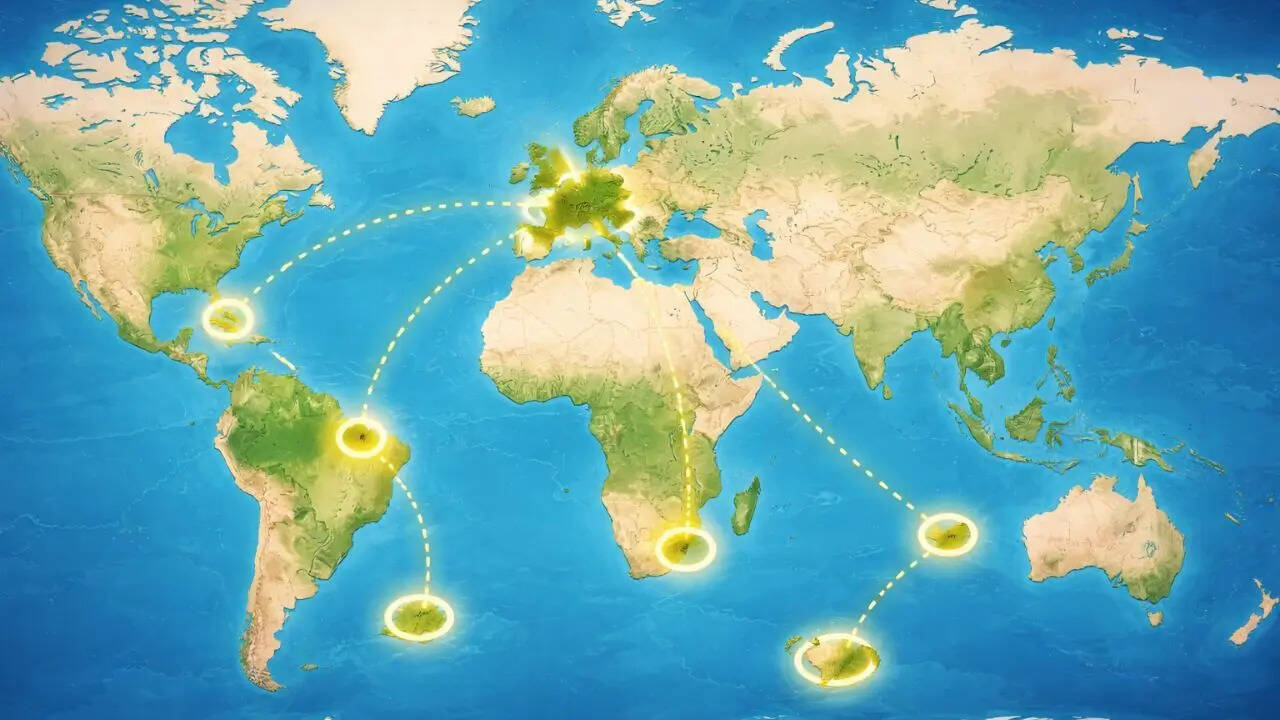
The impact stretches into the sky. International carriers are already weighing the costs of flying into a "disturbed" airspace. If the delays at U.S. gateways become too severe, airlines may begin canceling legs of journeys before they even depart from Frankfurt or Tokyo.
Think about the logistical weight of a single World Cup team. It’s not just eleven players. It’s trainers, doctors, kit managers, and tons of equipment. If a national team’s gear is stuck in a customs warehouse because there aren't enough agents to process the manifests, the integrity of the competition itself is at risk.
We are witnessing the collision of two worlds. One is the world of the fan—pure, emotional, and driven by a singular passion. The other is the world of the bureaucrat—cold, calculated, and often indifferent to the human cost of a political stalemate.
The Long Road Home
Eventually, the lights will come back on in the Capitol. A deal will be struck. The paychecks will be backdated. The pundits will move on to the next scandal.
But for the fans who spent forty-eight hours on an airport floor, the damage is permanent. They won't remember the score of the match they missed. They’ll remember the smell of stale coffee and the sight of a "Closed" sign at the border of the "Land of the Free."
The true cost of a shutdown isn't measured in lost tax revenue. It’s measured in lost faith. It’s the realization that even the most celebrated events on earth are at the mercy of a few people in a room who have forgotten what it’s like to wait in line.
The sun begins to set over the tarmac at JFK. Alejandro is finally at the front of the queue. The officer looks at his passport, then at the jersey he’s wearing. There’s a brief moment of connection—a shared recognition of the game they both love.
The officer sighs, stamps the book, and hands it back.
"Good luck," the officer whispers. "I hope you make it by halftime."
Alejandro runs. He doesn't look back at the thousands still waiting in the shadows of the dark terminal. He runs toward a stadium that feels further away than it did when he was ten thousand miles across the ocean.
Would you like me to analyze the specific economic impact projections for the host cities affected by these travel delays?