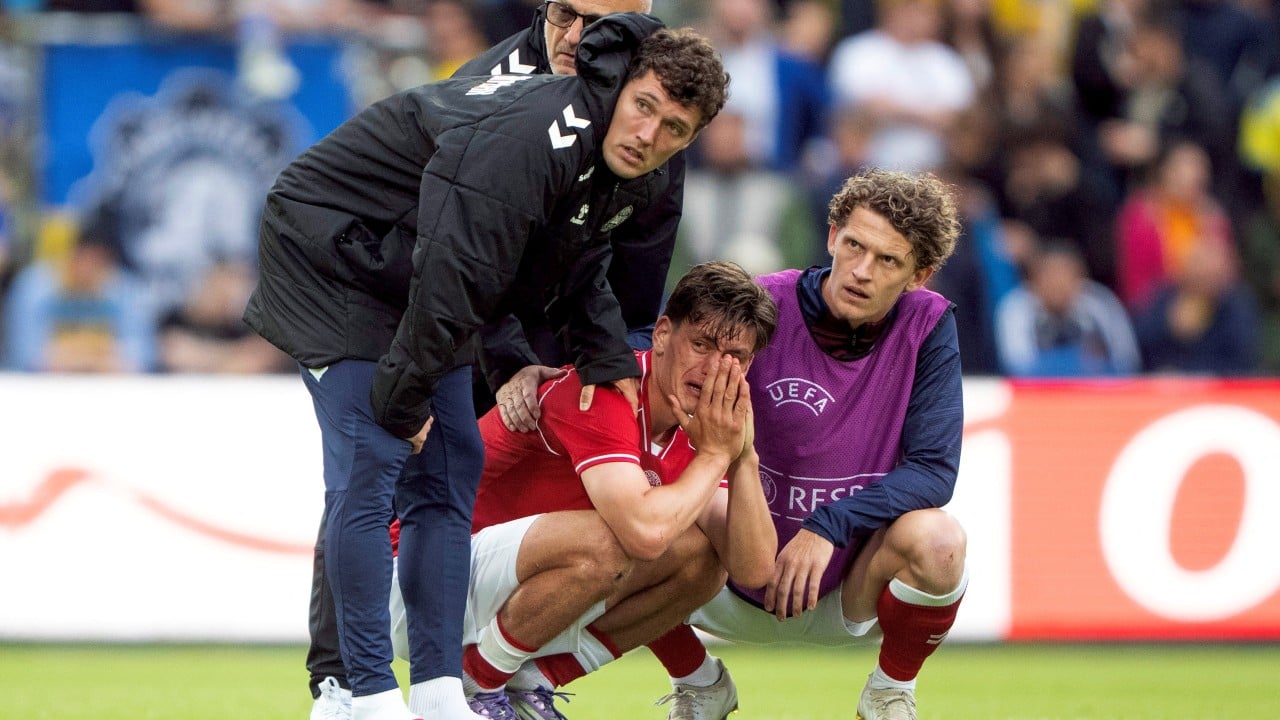
The narrative surrounding the Chapel Hill Super Regional will inevitably focus on the ninth-inning heroics of North Carolina center fielder Owen Hull, whose walk-off double secured a 4-3 victory for the Tar Heels and punched their ticket to Omaha. For the University of Southern California, it will be cataloged as a heartbreaking, near-miss tragedy. Yet, attributing this collapse to simple misfortune ignores the systematic tactical failure that unfolded across the final two frames at Boshamer Stadium.
USC did not just lose an emotional baseball game. They actively surrendered a 3-1 lead in a winner-take-all Game 3 because their coaching staff fundamentally mismanaged a tired bullpen, failed to recognize when starting pitcher Andrew Johnson had hit a wall, and played passive defense when the situation demanded aggression.
By the time Hull’s drive cleared the outfield grass, the Trojans had exposed the exact operational flaws that separated a good team from a national championship contender.
The Mirage of the Andrew Johnson Masterclass
For seven innings, Andrew Johnson looked like the smartest acquisition in college baseball. The veteran right-hander mixed a biting slider with a low-90s fastball that routinely caught North Carolina hitters out in front. He navigated traffic, induced harmless pop-ups, and protected a slim lead carved out by two solo home runs from the USC middle infield.
It looked like enough. A 3-1 lead heading into the bottom of the eighth inning usually feels like an asset, but in modern college baseball, it can turn into a trap.
The trouble began with high pitch counts and familiar tendencies. North Carolina’s coaching staff, led by Scott Forbes, excels at forcing opposing starters into second and third looks at the top of the batting order. By the time the eighth inning commenced, the Tar Heels had stopped chasing Johnson’s slider in the dirt. They were sitting on his fastball, a strategic shift that the USC dugout failed to counter.
Back-to-back doubles in the eighth quickly cut the deficit to 3-2. Johnson was visibly missing his spots, his arm slot dropping as fatigue took its toll. Rather than pulling the trigger on a fresh arm from the bullpen, the Trojan coaching staff opted for sentimentality over metrics, leaving an exhausted starter on the mound to escape a self-inflicted jam.
The Anatomy of a Ninth Inning Implosion
Leaving Johnson in for the eighth was an unforced error, but the mismanagement of the ninth inning was where the game truly slipped away.
With a 3-2 lead, USC finally turned to a relief corps that had spent the weekend looking vulnerable. The decision-making process here mirrored a trend seen across college baseball all year, an over-reliance on analytical matchups that ignore the actual momentum on the field.
A leadoff walk to start the frame set the disaster in motion. In high-stakes postseason baseball, walking the opening batter is equivalent to a self-inflicted wound. The Tar Heels immediately small-balled the Trojans, executing a textbook sacrifice bunt that moved the tying run to second base.
Then came the tactical blunder that sealed USC's fate. With runners eventually occupying the corners after an infield single, the USC infield elected to play back at standard depth, conceding the tying run in exchange for an out. A routine sacrifice fly to deep center field predictably tied the score at 3-3.
Instead of keeping the infield in to choke off the run at the plate and force North Carolina to earn the tying run through a clean hit, the Trojans gave it away for free. It was an elite demonstration of playing not to lose, rather than playing to win.
The Contrast in Postseason Heritage
The difference between programs that view Omaha as a destination and those that view it as an expectation became clear during this three-game series. North Carolina had never won a Super Regional after dropping Game 1. They broke that historical curse because their bullpen management was flawless over the weekend, highlighted by Jason DeCaro’s complete-game shutout in Game 2 and a lockdown relief combination of Jackson Rose and Walker McDuffie in Game 3.
The Tar Heels trusted their depth. USC leaned on a handful of stars until those stars completely ran out of gas.
When Owen Hull stepped up to the plate with two outs in the ninth, everyone in the stadium knew where the ball was going. Hull had already driven in a run earlier in the afternoon. He was dialed into the velocity of the Trojan relievers, who were throwing straight fastballs down the center of the plate without any movement or deception.
Hull’s double to center field did not happen in a vacuum. It was the mathematical certainty of an offense that had worn down a pitching staff over twenty-seven innings of baseball.
USC finishes its season with 48 wins, a spectacular achievement on paper that will provide solace to fans in the coming weeks. For the players who sat in the dugout and watched the Tar Heels celebrate on their home field, that number means nothing. The hard reality is that the Trojans had a multi-run lead in the final six outs of a championship cycle and lacked the managerial execution required to cross the finish line. Omaha requires perfection, and USC blinked when it mattered most.