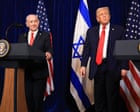
The signing of the tentative June 2026 Washington-Tehran peace framework did not just halt a catastrophic, multi-month military conflict in the Persian Gulf. It shattered the foundational illusion of the modern U.S.-Israel strategic alliance. For over two decades, Jerusalem operated under the assumption that American military might would serve as the ultimate guarantor against a nuclear-armed Iran, culminating in the joint U.S.-Israeli air campaign launched on February 28, 2026.
That assumption is dead.
By agreeing to a 60-day ceasefire mediated by Pakistan, reopening the blockaded Strait of Hormuz, and deferring the core nuclear dispute to future talks, the White House has chosen regional stabilization over Jerusalem's demand for total Iranian capitulation. Israel now finds itself in a state of profound strategic isolation. Prime Minister Benjamin Netanyahu’s domestic political rivals are openly calling the deal one of the greatest failures in the nation’s history, exposing a bitter reality. Washington is willing to live with a latent Iranian nuclear capability to avoid an endless war, leaving Israel to face its greatest existential threat fundamentally alone.
The Washington Retreat from Maximalism
The joint military campaign launched in early 2026 was supposed to be the definitive blow. Billed as a operation to induce regime change and permanently dismantle Tehran’s underground enrichment facilities in Isfahan, the multi-week bombardment instead exposed the limits of western air power. The cost was staggering. Billions of dollars in precision munitions were expended, global energy markets were thrown into chaos, and Iran responded with asymmetric counter-strikes targeting U.S. bases, UK installations in Cyprus, and Arab Gulf states.
Washington realized it was trapped in an unproductive war of attrition. The political appetite in America for a protracted ground invasion or a multi-year blockade simply did not exist.
The resulting Memorandum of Understanding signed this week represents a massive step back from previous American demands. For years, the official U.S. position dictated that Iran must export its entire enriched uranium stockpile and permanently dismantle its domestic enrichment capabilities. The new framework abandons this position entirely.
Instead, American negotiators have signaled a willingness to accept an arrangement where Iran down-blends its current 60 percent enriched stockpile to a civilian-grade 3.67 percent, while keeping the physical enrichment infrastructure intact on Iranian soil.
This is not a victory; it is a tactical retreat. The White House has prioritized free-flowing commerce through the Strait of Hormuz and a cessation of hostilities over the absolute disarmament of the Islamic Republic. For Israel, this concession is an unmitigated disaster that validates their worst fear: that the United States will ultimately choose a contained Iran over a destroyed one.
The Illusion of Full Agreement
Publicly, the diplomatic messaging remains carefully synchronized. Prime Minister Netanyahu quickly announced that he had spoken with Washington and that both leaderships were in complete agreement regarding the path forward.
The reality on the ground in Jerusalem tells a completely different story.
Inside the Israeli security establishment, the mood alternates between fury and panic. Israeli officials look at the text of the draft agreement and see a series of gaping omissions that directly threaten their national security.
- No Missile Restrictions: The agreement contains zero limitations on Iran’s ballistic missile or drone programs, assets that were used to striking effect against regional targets throughout the spring.
- The Proxy Network Remains: While Washington claims the deal features an Iranian commitment to stop funding regional proxies, Tehran’s state apparatus has made no such public pledge. Senior Iranian advisors have already stated that support for Hezbollah, Hamas, and the Houthis remains an non-negotiable component of their defense doctrine.
- The Inspection Blindspot: The International Atomic Energy Agency has been unable to properly verify Iran's highly enriched uranium stockpiles since the initial round of bombings back in June 2025. The new deal relies on a 60-day window to negotiate a verification mechanism that Iran has spent years subverting.
The Domestic Backlash and Netanyahu’s Isolation
The political fallout inside Israel has been immediate and severe. Political challengers have launched an informal referendum on the prime minister's entire long-term strategic doctrine ahead of the upcoming autumn elections.
The core accusation is simple. Netanyahu overpromised what American military intervention could achieve, spent years goading Washington into an open war, and was completely outflanked when the United States decided to exit the conflict early.
Opponents from across the political spectrum are arguing that Israel has emerged from this war weaker, while Iran’s ruling structure has survived the assassination of key figures to secure massive economic concessions. The promised $300 billion reconstruction and economic development fund discussed in diplomatic circles—even if partially walked back by American lawmakers—signals to Jerusalem that the international community is moving toward rebuilding Iran rather than collapsing it.
Furthermore, the regional architecture Israel spent years cultivating via the Abraham Accords has been severely strained. Iran’s military strikes against Arab Gulf states during the peak of the 2026 conflict forced those nations to prioritize immediate self-defense and diplomatic de-escalation over an anti-Iran military alliance with Jerusalem. The Gulf states are not a unified bloc willing to burn down the region for Israeli security interests. They want stability, open shipping lanes, and economic predictability.
Israel's Independent Military Doctrine
With the American umbrella effectively folded, Israel is forced to re-evaluate its traditional deterrence model. The nation now faces a fork in the road that defines its modern history.
Jerusalem can either acquiesce to a regional order where Iran sits permanently on the nuclear threshold, or it can execute an entirely independent, uncoordinated military strategy to disrupt Tehran's ambitions.
An independent Israeli strategy is fraught with extreme risk. Without U.S. logistical support, mid-air refueling capabilities, and diplomatic cover at the United Nations, a sustained Israeli campaign against deeply buried Iranian nuclear sites would be vastly more difficult to execute.
Yet, the alternative is deemed unacceptable by the current defense establishment. Netanyahu’s declaration that "with an agreement, without an agreement, Israel will act" is not empty political rhetoric. It is a literal statement of the country's survival doctrine.
The immediate flashpoint will be Lebanon. Iran has already stated that any permanent peace deal requires a total Israeli withdrawal from southern Lebanon and a cessation of strikes against Hezbollah. Israel, having established a significant buffer zone in the north after intense fighting earlier this year, has zero intention of retreating while Hezbollah retains its missile capabilities.
This mismatch in expectations means the current 60-day ceasefire is highly fragile. If Israel continues its operations in Lebanon to permanently push back Hezbollah, it risks blowing up the U.S.-Iran negotiations entirely, putting Jerusalem in direct diplomatic opposition to its most vital ally.
The real tragedy of the 2026 peace framework is that it solves nothing. It merely resets the clock to the pre-war status quo, but with an American superpower that has clearly demonstrated its exhaustion and a Jewish state that feels deeply betrayed. By choosing the path of short-term regional stabilization, Washington has not prevented a nuclear crisis. It has simply ensured that when the next phase of the conflict erupts, Israel will feel compelled to strike first, strike alone, and strike without warning.