Donald Trump just hit the brakes on a career-defining trip to Beijing, and the official line from the White House is as predictable as it is incomplete. Washington claims the President needs to be in the Situation Room to oversee Operation Epic Fury, the multi-week air campaign and ground friction currently unfolding across Iran. While a war of this scale certainly demands the Commander-in-Chief’s presence, the postponement of the March 31 summit with Xi Jinping is more than a scheduling conflict. It is a calculated admission that the administration's Middle East gamble has hit a wall that only China can dismantle.
The primary friction point is not just the missiles flying over Tehran. It is the Strait of Hormuz, a twenty-one-mile-wide choke point currently being strangled by Iranian retaliatory measures. With one-fifth of the world’s oil supply effectively frozen and prices hitting levels that threaten the delicate U.S. economic recovery, Trump has discovered that "Maximum Pressure" has a boomerang effect. By delaying the trip, Trump is telegraphing a blunt message to the Great Hall of the People: the U.S. will not hand China a "stabilization summit" while Beijing sits on its hands as the world’s largest oil importer.
The Hormuz Standoff
The irony of the current conflict is that the United States is more energy independent today than at any point in the last half-century. China, conversely, is not. Roughly 90% of the oil flowing through the Strait of Hormuz is destined for Asian markets, with China being the top customer. Yet, as U.S. and Israeli jets continue to pound IRGC positions, it is American taxpayers and sailors who are footing the bill to keep those lanes open.
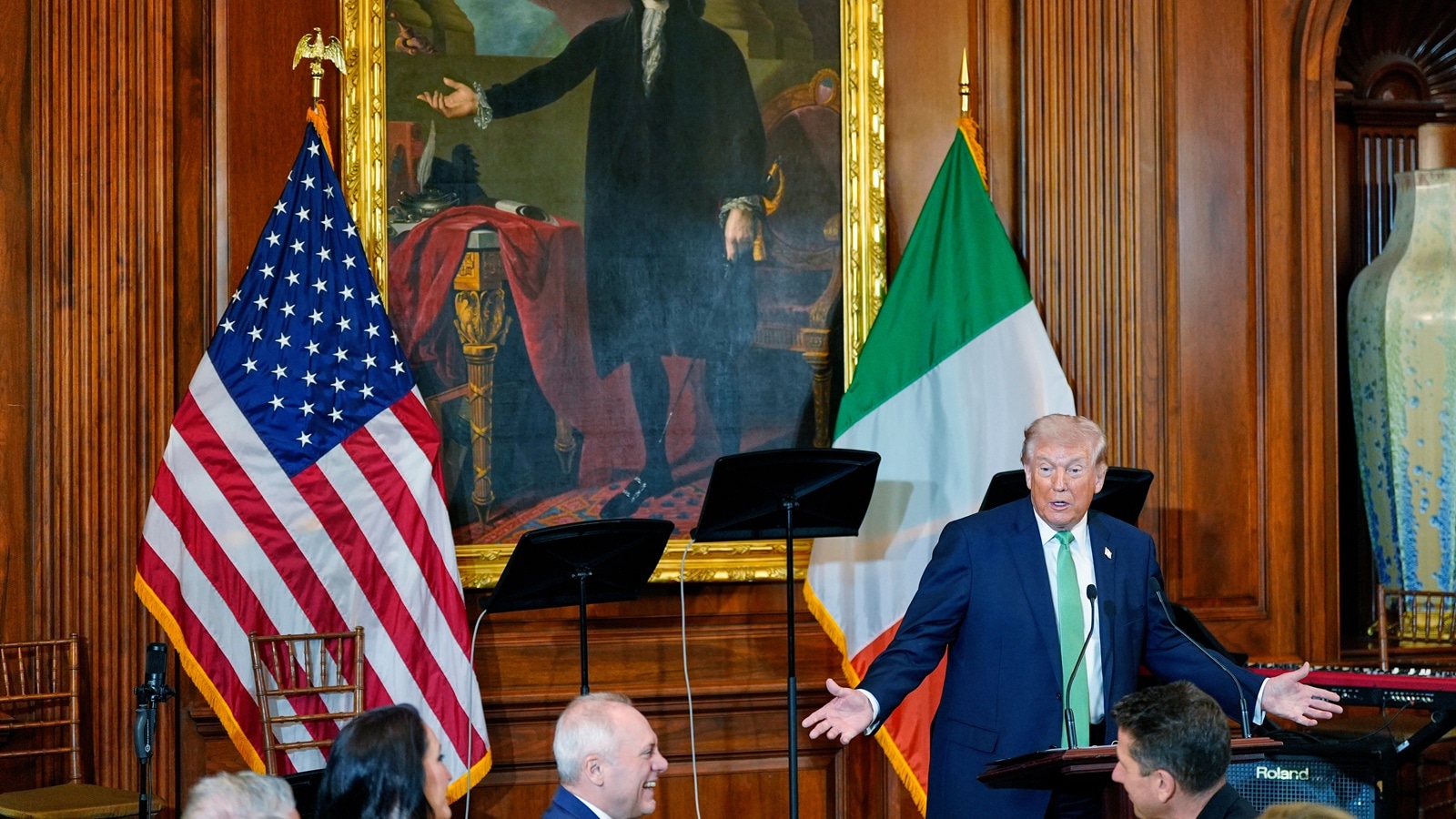
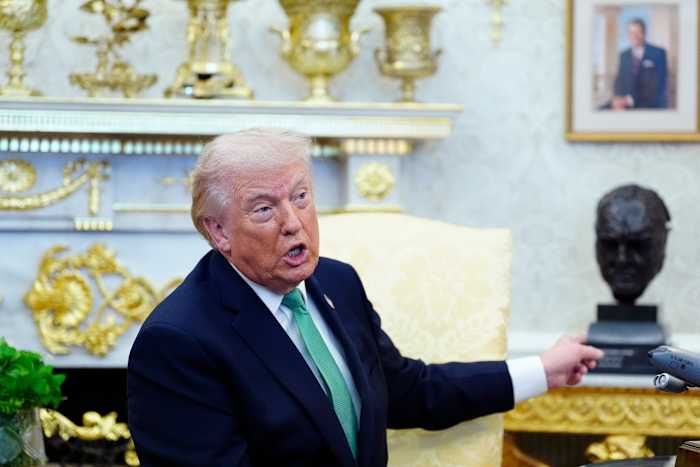
Trump’s public rhetoric has shifted from the typical talk of trade deficits to a more transactional security demand. He is essentially asking why the U.S. Navy is acting as a free private security firm for Chinese tankers. In his meeting this week with Irish Prime Minister Micheál Martin, Trump was uncharacteristically transparent, suggesting he would "reset" the visit in five or six weeks. This isn't just a delay; it is a cooling-off period designed to see if the reality of $150-a-barrel oil forces Xi Jinping to provide more than just "calls for restraint."
The Quiet Crisis in Domestic Logistics
Behind the scenes, the "War in Iran" has created a secondary crisis that has nothing to do with crude. The mobilization for Operation Epic Fury has stretched U.S. military sealift and air transport capabilities to their limits. Sources within the Department of Transportation suggest that the logistical surge required to sustain a high-intensity conflict in the Persian Gulf is cannibalizing the very resources needed to support a high-profile presidential delegation to Asia.
A state visit of this magnitude involves hundreds of support personnel, armored vehicles, and secure communication hubs. In a normal year, this is routine. In a year where the Pentagon is scrambling to keep carrier strike groups supplied in a contested maritime environment, the "logistical reasons" cited by Treasury Secretary Scott Bessent carry a weight that most analysts are ignoring. The U.S. simply cannot afford a "distraction" summit while the gears of the military-industrial complex are grinding this loudly.
Beyond the Fragile Trade Truce
To understand the stakes, one must look at what was supposed to happen in Beijing. The summit was designed to cement a one-year trade truce and address the Section 301 investigations into China’s maritime and shipbuilding sectors. These are the industries that underpin global trade, and the Trump administration has used the threat of triple-digit tariffs to keep Beijing at the negotiating table.
The Missing Deliverables
- Agricultural Commitments: China had signaled a willingness to purchase 25 million metric tons of U.S. soybeans in 2026. This is the "political win" Trump needs for his base ahead of the midterms.
- Fentanyl Precursors: A breakthrough on chemical export controls was expected to be the centerpiece of the joint statement.
- Semiconductor Reciprocity: Negotiations were underway to end Chinese retaliation against U.S. chipmakers like Nvidia and Intel.
By walking away from the March date, Trump is gambling that the "soybean lobby" and the tech sector will forgive the delay in exchange for a decisive win in the Middle East. It is a high-stakes play. If the war drags on and oil prices remain elevated, the inflationary pressure could wipe out any political gain from a trade deal.
The Moscow Factor
An overlooked element in this geopolitical shell game is the administration's recent pivot toward Russia. To offset the Iranian oil shock, the White House has moved to lift several key sanctions on Russian energy exports. This has sparked fury on Capitol Hill, but from a purely pragmatic "America First" perspective, it is a move to flood the market with non-Hormuz crude.
This maneuver hasn't gone unnoticed in Beijing. China views the U.S.-Russia energy alignment with deep suspicion. If Trump can stabilize energy markets using Russian supply, he weakens China’s leverage as a "mediator" in the Middle East. The postponement of the China trip gives this new energy reality time to bake into the global market.
The Myth of the Short Excursion
The administration initially framed the strikes on Iran as a "limited excursion" to degrade nuclear capabilities and retaliate for regional provocations. However, the assassination of Supreme Leader Ali Khamenei and the subsequent rise of Mojtaba Khamenei have turned a surgical strike into a regime-shattering event. The "why" behind the trip delay is rooted in the realization that there is no "limited" version of this war.
Iran’s response—launching drones at U.S. assets in Bahrain, Qatar, and the UAE—has forced a total re-evaluation of the American footprint in the region. Trump cannot be seen shaking hands with Xi while U.S. bases are under fire. It would project a level of compartmentalization that the current American electorate, increasingly weary of foreign entanglement, would likely reject.
The Strategy of Forced Neutrality
By making the China trip contingent on "Beijing’s response" to the Hormuz crisis, Trump is attempting to end the era of Chinese "free-riding" in Middle Eastern security. For decades, China has benefited from the stability provided by the U.S. Fifth Fleet without contributing a single hull to the policing of international waters.
Trump is betting that the economic pain in Shanghai and Shenzhen will eventually outweigh Beijing’s desire to see the U.S. bogged down in a desert quagmire. It is a brutal, transactional approach to diplomacy. He is telling Xi Jinping that the path to a trade deal runs through the Strait of Hormuz.
The danger, of course, is that China has its own "Maximum Pressure" playbook. If Beijing decides to call the bluff, they could further restrict rare-earth exports or accelerate their own naval buildup in the South China Sea, forcing Washington to fight a logistical war on two fronts. For now, the President is betting that he can finish the job in Iran before the trade truce with China expires.
The silence from the Chinese Foreign Ministry regarding a new date suggests they aren't ready to play the role Trump has scripted for them. If the "five or six weeks" timeline passes without a rescheduled summit, we aren't just looking at a delayed trip. We are looking at the collapse of the world’s most important bilateral relationship under the weight of a war that neither side can truly afford.
The White House is currently reviewing the latest satellite imagery of the Kharg Island oil terminal to determine if the IRGC’s ability to disrupt shipping has been permanently neutralized.