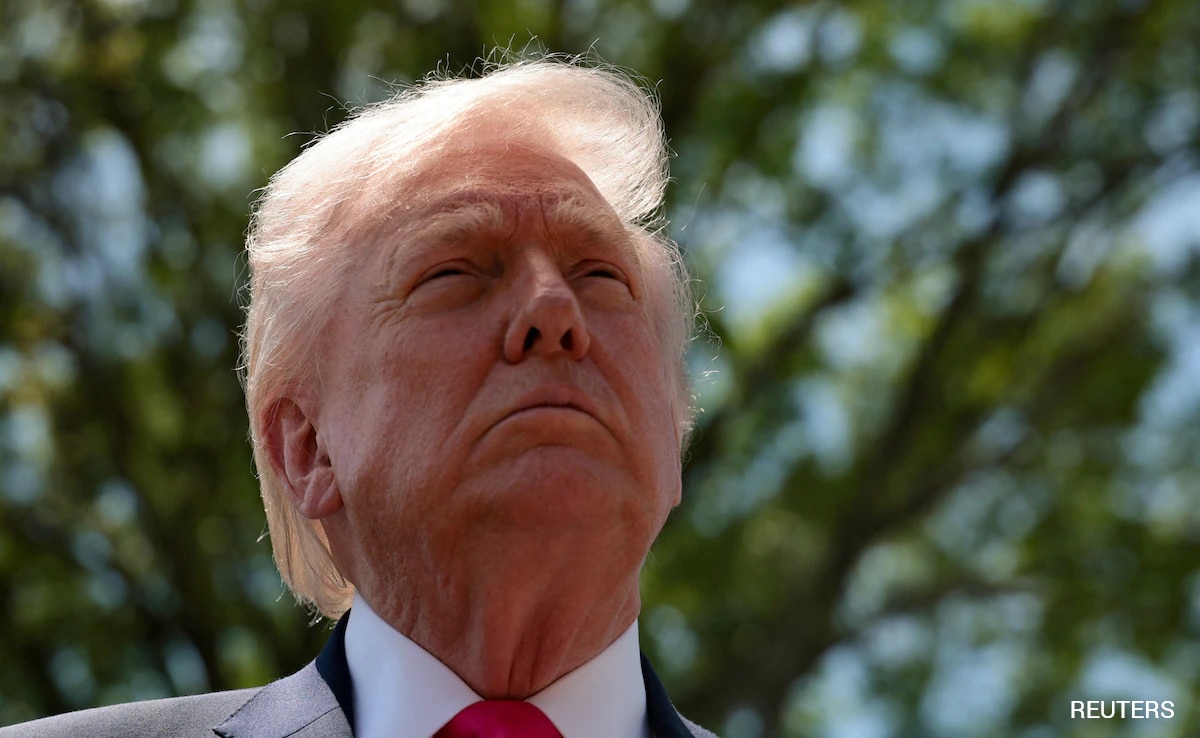
Donald Trump just reminded the Vatican that the White House is not a cathedral. On Thursday, the President brushed off concerns from Pope Leo XIV regarding the escalating conflict with Iran, delivering a blunt assessment that the pontiff needs to wake up to the realities of a "nasty world." The friction between Washington and the Holy See has reached a boiling point following the U.S.-Israeli joint offensive launched on February 28, a campaign that has already reshaped the Middle Eastern map and left global diplomacy in tatters.
At the heart of this dispute is a fundamental clash between two worldviews: one rooted in the moral absolutes of the Gospel and the other in the transactional, high-stakes brinkmanship of the "America First" doctrine. While the Pope calls for a ceasefire and warns of an "irreparable abyss," Trump is busy managing a volatile peace process in Islamabad, claiming he is closer than ever to a deal that would force Tehran to surrender its enriched uranium. The President isn't just ignoring the Pope; he is actively positioning the Vatican’s calls for peace as an obstacle to what he considers a historic security breakthrough.
The First American Pope vs The MAGA President
The tension is amplified by a historical anomaly. Pope Leo XIV is the first-ever American pontiff, a fact Trump has repeatedly weaponized to claim the Church is playing politics. On his social media platform, Truth Social, Trump alleged the College of Cardinals only chose an American because they thought it was the "best way to deal with" him. This personalizes a conflict that would usually stay in the realm of statecraft.
By framing the Pope as a "liberal" politician rather than a spiritual leader, Trump is attempting to insulate his Catholic base from the Vatican’s critiques. He isn't just debating foreign policy; he is challenging the Pope's authority to speak on "real world" issues like nuclear proliferation and national security.
A War Without Precedent
To understand why this spat is more than just a headline, one has to look at the sheer scale of the conflict that triggered it. This isn't the targeted drone strikes of a decade ago. The February offensive was a massive, coordinated air and ground assault that took out the 86-year-old Supreme Leader Ayatollah Ali Khamenei within hours.
Since then, the region has been a laboratory of modern warfare.
- Infrastructure Targeting: U.S. and Israeli forces have focused on "dual-use" facilities, including desalination plants and fuel tanks, aimed at crippling the Iranian state's ability to function.
- Retaliatory Reach: Iran has responded by striking U.S. allies in the Gulf, hitting a Bahraini desalination plant and disrupting global shipping lanes in the Strait of Hormuz.
- Civilian Risk: The Pope’s condemnation stems largely from Trump’s earlier threat—which he later partially walked back—to eradicate an "entire civilization" if Tehran did not capitulate.
The Nuclear Sticking Point
The "real world" Trump refers to is one defined by the binary of nuclear possession. His administration has maintained a rigid "no nukes" condition for any cessation of hostilities. In recent days, the President has claimed a breakthrough, suggesting that under the mediation of Pakistani officials, Iran has agreed to hand over its entire stockpile of enriched uranium.
However, the Vatican sees this path as inherently destabilizing. Pope Leo XIV has called for the total rejection of nuclear weapons, a stance that applies to both sides. By advocating for a ceasefire before a final nuclear agreement is reached, the Pope is effectively calling for a pause that the Trump administration fears would allow Iran to regroup and hide its remaining assets. This is the "common sense" Trump claims the Pope lacks: the belief that you cannot stop the pressure until the objective is 100% complete.
The Venezuela Connection
In a surprising twist, Trump also used this spat to bring up his administration’s recent operations in Venezuela. He criticized the Pope for expressing concern over U.S. intervention in Caracas, linking the two theaters of conflict under a single banner of "clearing out" threats.
The President’s logic is consistent, if brutal. He views foreign policy as a domestic cleanup operation. In his view, whether it is Iranian nuclear dust or Venezuelan migration, the solution is the application of maximum force followed by a dictated peace. The Pope’s focus on the "suffering of innocent victims" is, in the eyes of this White House, a distraction from the primary goal of American security.
The Looming Crisis of Legitimacy
The danger for the administration isn't a loss of military momentum, but a loss of moral standing. When the Pope uses words like "senseless and inhumane violence" and "scandal to the human family," he is speaking to a global audience that includes many U.S. allies in Europe and Latin America who are already uneasy with the scale of the Iran war.
If the negotiations in Islamabad fail to produce a signed treaty, Trump will be left holding a very expensive and bloody bag. The Pope’s warnings will then look less like "liberal politics" and more like a prophetic warning of a regional quagmire.
The Strategy of Discrediting
By attacking the Pope’s brother, Louis (who Trump claims is "all MAGA"), and suggesting the Church was "weak" during the COVID-19 pandemic, the President is using a standard domestic political playbook on a global stage. It is an attempt to devalue the Vatican’s "brand" among the very people who might be swayed by a call for peace.
This isn't just a disagreement over Iran; it is a battle for the soul of the international order. Trump is betting that in a "nasty world," people value the protection of a strongman over the prayers of a priest. He is gambling that his results—a neutralized Iran and a "Great Stock Market"—will provide a more compelling narrative than the Vatican’s appeals for reconciliation.
The result of this gamble will be written in the sands of the Middle East and the voting booths of the American heartland. If a deal is signed, Trump will claim he was right all along. If the war widens, the Pope’s "unreal world" of peace may become the only thing the international community is willing to buy.