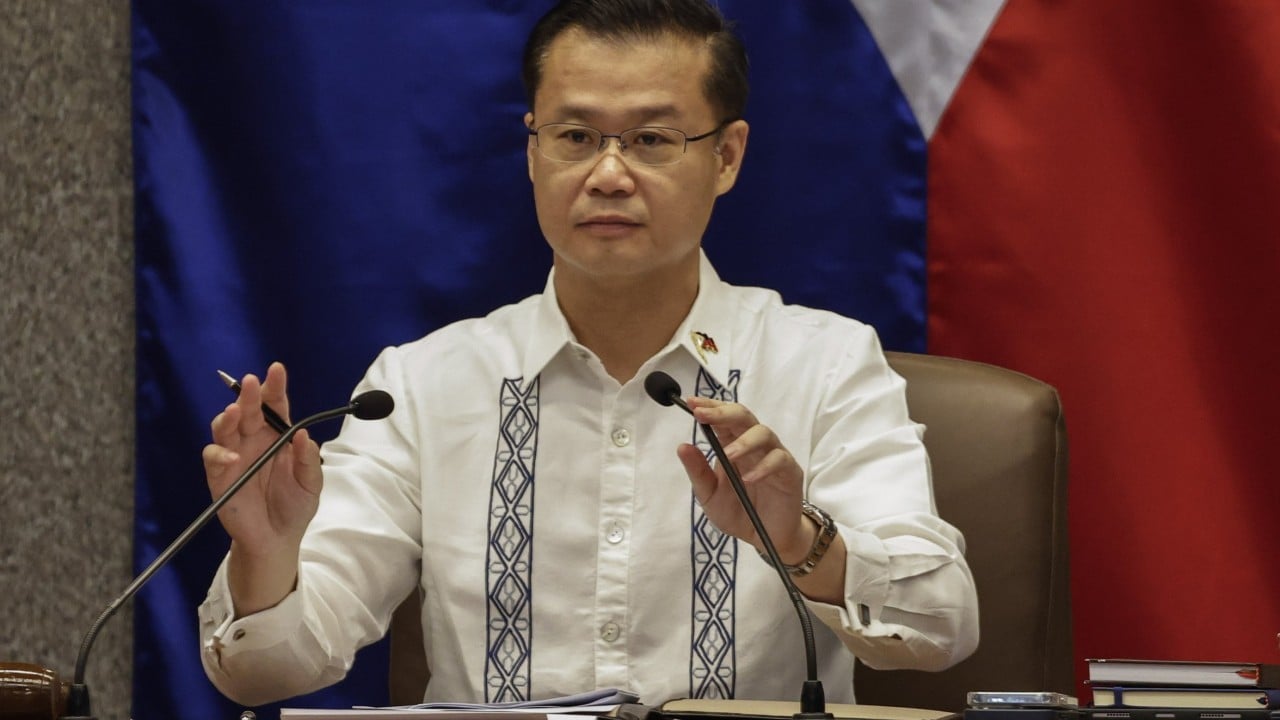
The removal of Senator Alan Peter Cayetano as Senate President on June 17, 2026, strips Vice President Sara Duterte of her final institutional shield just weeks before her July 6 impeachment trial. By electing Senator Sherwin Gatchalian to the top post during a high-stakes special session, the upper chamber has signaled a profound realignment of power in Manila. This numbers game effectively isolates the Vice President. For decades, the Philippine Senate operated as an independent, unpredictable body that frequently pushed back against executive overreach. That era of strategic neutrality evaporated when a razor-thin majority of thirteen senators overthrew the pro-Duterte faction.
The immediate consequence of this tactical strike is clear. The House prosecution panel, armed with bank records and a list of over thirty witnesses, now views the path to trial as entirely unhampered.
To understand the speed of this collapse, one must look at how the numbers shifted. In Philippine politics, loyalty is a liquid asset. The pro-Duterte minority group counted on the vote of Senator Joel Villanueva to maintain a deadlock. Instead, Villanueva jumped ship, handing the Gatchalian bloc the critical thirteenth vote needed to establish a functional majority. The sudden shift exposed a fatal miscalculation by the Duterte family, who assumed that the traditional independence of the Senate would protect them from the aggressive legal maneuvering of the House of Representatives.
The Arithmetic of Conviction
Securing the Senate leadership is not merely about prestige. It dictates the mechanics of the impending trial. Under the rules of the Senate acting as an impeachment court, the presiding officer controls the admission of evidence, the scheduling of hearings, and the issuance of subpoenas. With Gatchalian at the helm, the defense lost its ability to filibuster or suppress explosive financial documents.
The prosecution plans to introduce evidence from the Anti-Money Laundering Council regarding alleged unexplained wealth and the misuse of confidential funds. A friendly or even neutral Senate President could have tied these requests up in committee debates for months. Now, those documents will be served directly to the public record.
The real math, however, lies in the conviction threshold.
"Offices are temporary, titles are temporary, even majorities are temporary." — Alan Peter Cayetano, June 17, 2026
The constitutional requirement to remove a Vice President stands at a two-thirds majority of the Senate. In a standard twenty-four-member house, that means sixteen votes. But the chamber is currently operating under highly irregular conditions. One senator is in detention on corruption charges, and Senator Ronald "Bato" dela Rosa disappeared from public view shortly after a chaotic, gunfire-marred incident at the Senate on May 14, following an unsealed arrest warrant from the International Criminal Court.
With only twenty-two active lawmakers, a fierce legal battle is brewing over whether the two-thirds threshold should be calculated based on the full constitutional roster or the number of active, sitting members. The Gatchalian bloc’s ability to marshal thirteen votes during a special session suggests they are only three votes away from hitting the absolute minimum required for a historic conviction.
The Shattered Mirror of 2022
The proxy war between President Ferdinand Marcos Jr. and the Duterte clan has transformed from a bitter rhetorical feud into an institutional purge. The UniTeam coalition that swept the 2022 elections was always a marriage of convenience, combining the northern voter base of the Marcos family with the southern stronghold of the Dutertes. It was designed to consolidate power, not share it.
The breaking point arrived when the House of Representatives, led by Speaker Martin Romualdez and backed by the President's son, Representative Sandro Marcos, began systematically dismantling the Vice President’s financial network. The discovery of millions of pesos in rapidly spent confidential funds provided the political ammunition. The subsequent House plenary vote on May 11, 2026, which approved the articles of impeachment by an overwhelming eighty-one percent majority, proved that the legislative machinery was fully mobilized.
The Duterte strategy relied on holding the Senate as an unassailable fortress. When Cayetano briefly seized control of the chamber, it appeared the family might secure a stalemate. But that fortress fell because the political ground beneath it dissolved. Local politicians across the archipelago are watching the wind vane. With the mid-term dynamics shifting and the elder Rodrigo Duterte currently detained in The Hague by the ICC, the family's ability to punish defectors has diminished significantly.
Structural Vulnerabilities of the Vice Presidency
The position of Vice President in the Philippines is uniquely vulnerable during a political divorce. Unlike in the United States, where the President and Vice President run on a single ticket, Philippine voters select the two offices independently. This structural quirk frequently creates a situation where the second-highest official in the land is the de facto leader of the opposition.
When a Vice President loses cabinet portfolios—as Sara Duterte did when she resigned as Education Secretary—they are stripped of patronage networks and bureaucratic leverage. They become isolated figures, dependent entirely on their regional popularity and the loyalty of congressional allies.
The prosecution is capitalizing on this isolation by requesting real-time translation of the trial into multiple local dialects. This is not a benign public service. It is a deliberate public relations strategy designed to erode Duterte’s mass appeal in the provinces by broadcasting the highly technical evidence of financial misconduct directly to her voter base.
The defense strategy, which has focused heavily on long legal briefs challenging the validity of the House proceedings, appears increasingly decoupled from the reality of the Senate floor. In an impeachment trial, politics dictates the interpretation of the law. With the Gatchalian majority now organized and committee chairs reassigned, the defense will find fewer allies willing to sustain procedural objections. The trial starting on July 6 will not be a polite debate on constitutional technicalities. It will be an execution of political mathematics.