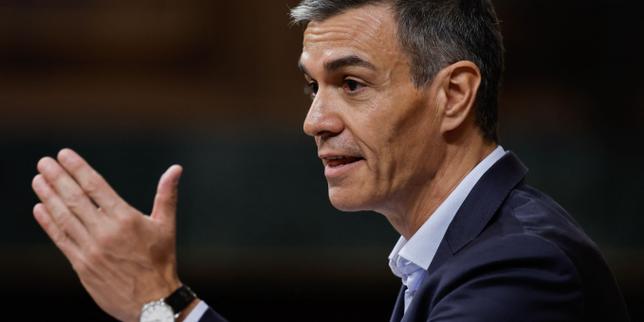
The Spanish parliament has degenerated into a theater of the absurd, but the laughter echoing through the benches of the opposition is anything but a joke for Prime Minister Pedro Sánchez. When the prime minister stood before lawmakers recently to deny a sprawling network of corruption allegations, his performance was met with open derision. Sánchez attempted to frame the judicial onslaught as a coordinated smear campaign orchestrated by far-right activists and conservative opponents. But the reality is far more perilous. Sánchez came to power in 2018 on a strict anti-corruption platform, weaponizing a scandal to topple his predecessors. Now, the exact same mechanism threatens to destroy his fragile coalition as criminal indictments strike the absolute inner circle of his administration and family.
This is no longer a matter of mere political theater. The supreme court recently handed down a twenty-four-year prison sentence to José Luis Ábalos, Sánchez’s former transport minister and long-time right-hand man, for bribery and embezzlement involving pandemic face mask contracts. Simultaneously, investigating judge Juan Carlos Peinado jolted the country by ordering the prime minister's wife, Begoña Gómez, to stand trial for influence peddling, embezzlement, and private-sector corruption. Gómez has been forced to surrender her passport and must report to court twice a month. With his brother David Sánchez also facing a trial for influence peddling, and former Socialist Prime Minister José Luis Rodríguez Zapatero under investigation for fraud linked to an airline bailout, the defensive walls around the Moncloa Palace are crumbling.
The Anatomy of the Moncloa Siege
To understand how Sánchez reached this point, one must look at the mechanics of the Spanish judicial system. Unlike Anglo-American systems where prosecutors hold the investigative reins, Spain utilizes independent investigating judges. These magistrates possess vast powers to compel testimony, order raids, and force defendants to trial. Judge Peinado has spent two years quietly assembling a case against Begoña Gómez, centering on allegations that she used public university resources and her marital status to secure lucrative technology and consulting contracts for private entities.
The government has responded by launching an unprecedented counter-attack against the judiciary. Minister of the Presidency Felix Bolaños labeled the judge's rulings incomprehensible and anomalous, suggesting that the judicial system itself must overturn the decisions. Transport Minister Óscar Puente went further, calling the travel ban and trial order a disgrace. This aggressive rhetoric reveals a deep executive panic. By attacking the courts, the ruling Socialist Party (PSOE) is attempting to delegitimize the legal process before the trial even begins.
The opposition, led by Alberto Núñez Feijóo of the conservative People’s Party (PP), is capitalizing heavily on this vulnerability. Feijóo directly targeted Sánchez in parliament, declaring that the corruption system was devised and operated within the prime minister's closest circle. The opposition's laughter during these debates is a calculated psychological tool. It signals to the public that Sánchez's narrative of victimhood has lost all credibility.
The Rickety Coalition Dilemma
Sánchez has survived numerous political near-death experiences, earning him a reputation as an escape artist. When the investigation into his wife first broke, he took an extraordinary five-day sabbatical to ponder his resignation, only to return with a vow to fight on. He maintains that he is the victim of raw judicial persecution.
The strategy might work in a majority government, but Sánchez commands a highly unstable minority coalition. He relies on the votes of regional Basque and Catalan separatist parties to pass legislation and stay in power. These smaller parties are highly transactional. They do not care about the survival of the Socialist Party; they care about securing concessions for their respective regions.
| Target of Investigation | Relationship to PM | Legal Status | Core Allegations |
|---|---|---|---|
| Begoña Gómez | Wife | Ordered to stand trial; passport seized | Influence peddling, embezzlement, university resource misuse |
| José Luis Ábalos | Former Right-Hand Man | Sentenced to 24 years in prison | Bribery, embezzlement via Covid mask procurement |
| David Sánchez | Brother | Awaiting court verdict | Influence peddling regarding public sector appointments |
| José Luis Rodríguez Zapatero | Close Ally / Former PM | Under active criminal investigation | Fraud and tax evasion linked to a 2021 airline bailout |
Every new court date, every headline regarding a seized passport, and every judicial raid increases the political cost for these coalition partners. If a formal vote of no confidence is introduced by the PP, it would only take a handful of abstentions from regional allies to collapse the government.
The Weaponization of Precedent
The bitter irony of the crisis is that Sánchez is being consumed by the very flames he kindled. In 2018, he ascended to the presidency by launching a historic, successful no-confidence motion against Mariano Rajoy. That move was triggered by the Gürtel case, a massive corruption scandal that implicated several high-ranking members of the PP. Sánchez campaigned on a message of moral renewal, presenting himself as the antidote to institutional decay.
The conservative opposition has never forgotten that maneuver. Their current strategy is an exact mirror image of the 2018 offensive, but with an added layer of personal animosity. They are not merely aiming at the Socialist Party; they are aiming at the Sánchez household. By highlighting the investigations into the prime minister's wife, brother, and closest former ministers, the PP is painting a picture of systemic familial corruption that makes Rajoy's transgressions look distant and institutional.
Sánchez's defense hinges entirely on proving a negative: that he knew nothing about his family's business dealings and had no hand in the multi-million-euro contracts or state bailouts currently under judicial review. But in the court of public opinion, that defense is deeply flawed. If he knew about the activities, he is complicit. If he did not know, he is blind to the actions of his closest advisors and family members inside his own residence.
The Limits of Political Resilience
A general election is looming on the horizon, and the current political gridlock cannot endure indefinitely. The Spanish police unions have already revolted against the judiciary's suggestions that officers could help Gómez flee the country, signaling that the institutional strain is spreading beyond parliament and into the security apparatus. The public is growing weary of an executive branch that spends more time fighting its judges than managing inflation or housing shortages.
Sánchez cannot laugh off the crisis because it attacks his single greatest political asset: his authority. Once a leader's survival depends entirely on the forbearance of judges and the transactional whims of separatist allies, the illusion of power vanishes. The trials will proceed, the evidence will be read into the public record, and the opposition will continue to laugh. They know that in politics, as in theater, the comedy ends when the curtain falls on the protagonist.
Spain PM's wife Begoña Gomez to stand trial for corruption
This video provides a concise television news report detailing the judge's order for Begoña Gómez to face trial, her travel restrictions, and the immediate political pressure building against Pedro Sánchez's coalition government.