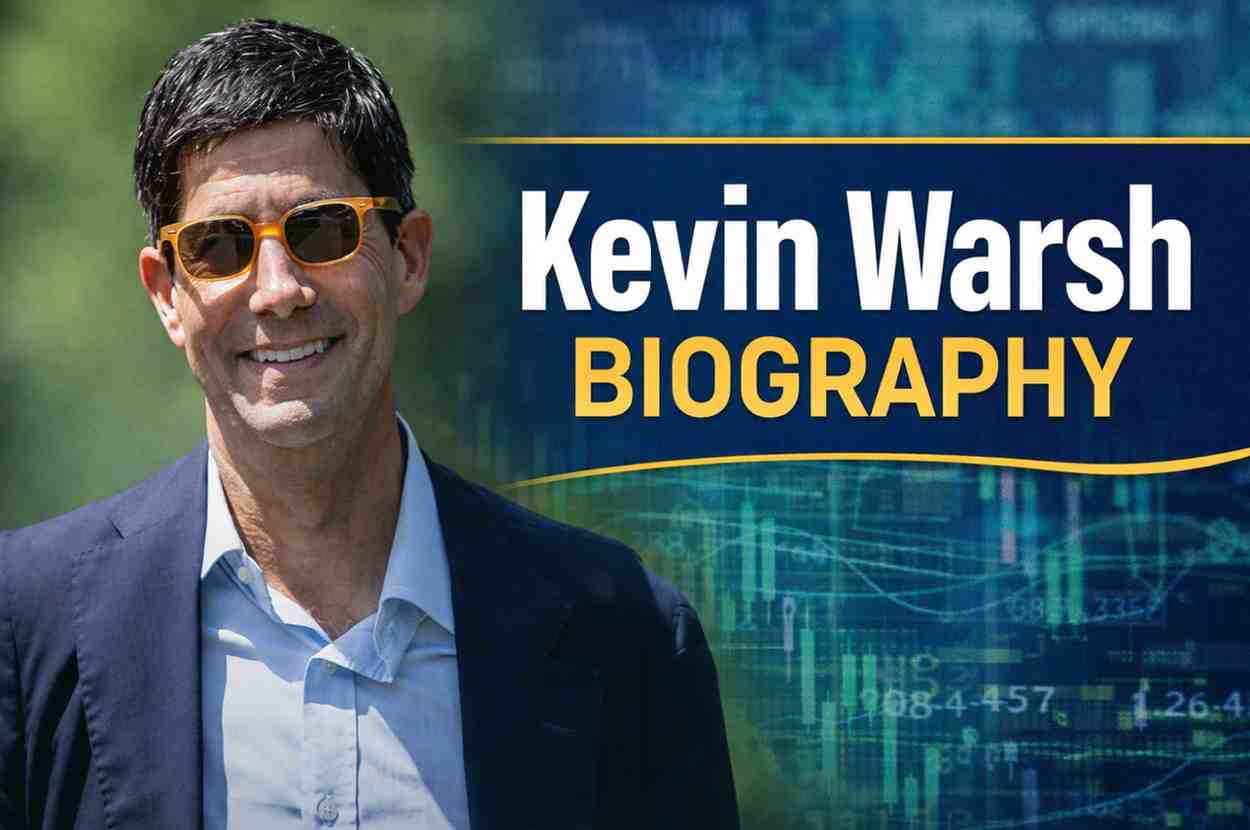
Kevin Warsh is not just auditioning for a job; he is pitching a coup against fifty years of central banking orthodoxy. As he sits before the Senate Banking Committee this April 2026, the former Morgan Stanley banker and youngest-ever Fed Governor is making a play that goes far beyond interest rate adjustments. He is calling for "regime change" at the Federal Reserve, a phrase that has sent tremors through the marble hallways of the Eccles Building. His goal is to strip the Fed of the expansive powers it seized during the 2008 crisis and the COVID-19 pandemic, forcing the institution to "stay in its lane" by shrinking its $6.7 trillion balance sheet and abandoning the "forward guidance" that has become the primary tool of Jerome Powell’s tenure.
While the headlines focus on whether Warsh will be a "hawk" or a "dove," that binary is obsolete. Warsh is positioning himself as a third option: a structuralist who believes the Fed has become a "proxy for the government's imprimatur over the economy." By advocating for a return to a "scarce reserve" regime—effectively starving the banking system of the excess liquidity it has relied on for nearly two decades—Warsh is proposing a fundamental shift in how American capitalism functions. For a closer look into this area, we recommend: this related article.
The AI Productivity Hedge
The most striking element of the Warsh pitch is his pivot on inflation. Traditionally viewed as a hawk who feared the ghost of 1970s-style price surges, Warsh has spent the last year rebranding himself around a high-growth, technology-driven mandate. He argues that the United States is in the midst of an AI-driven productivity boom that allows the economy to run much "hotter" without triggering inflation.
This is a calculated echo of Alan Greenspan’s "New Economy" thesis from the late 1990s. Warsh suggests that if productivity is rising, wages can climb without forcing companies to hike prices. This theory provides him with the perfect political shield: it allows him to support the low-rate environment demanded by the Trump administration while maintaining his intellectual credentials as a sound-money advocate. For broader context on this topic, comprehensive coverage is available on Forbes.
He isn't promising low rates because he’s a dove; he’s promising them because he believes the old models are broken. Warsh has been vocal in his disdain for the Fed’s "flexible average inflation targeting" framework, which he blames for the 2021-2022 inflation spike. He wants to replace subjective "data-dependence" with more precise, forward-looking indicators, specifically "trimmed averages" that filter out the noise of volatile sectors.
Breaking the Quantitative Easing Addiction
If Warsh is "soft" on interest rates, he is "hard" on the balance sheet. This is where his true radicalism lies. Since 2008, the Federal Reserve has operated on an "ample reserves" regime, essentially flooding the market with cash to ensure liquidity. Warsh views this as a historical mistake that has distorted market signals, fueled wealth inequality, and subsidized "wasteful" government spending.
The Warsh Doctrine on Monetary Assets
- Balance Sheet Drawdown: A move toward "scarce reserves," forcing banks to rely on private markets rather than the Fed’s balance sheet.
- End of Forward Guidance: Warsh believes the Fed should stop "whispering" its future moves to Wall Street, which he argues leads to market complacency.
- Fiscal Accountability: By shrinking the Fed's footprint, Warsh intends to stop the central bank from acting as a backstop for Congressional deficits.
The risk in this approach is a "taper tantrum" on steroids. The global financial system is currently addicted to the liquidity provided by the Fed's massive asset holdings. Warsh’s plan to work with the Treasury to aggressively offload these assets could cause a spike in yields that would make the 2023 banking crisis look like a minor tremor. He argues that the short-term pain is necessary to correct a "K-shaped" economy where those with assets (stocks and real estate) have seen their wealth explode while those relying on wages have seen their purchasing power eroded by the very policies meant to save them.
The Independence Paradox
Warsh faces a gauntlet of skepticism from both sides of the aisle. Democrats, led by Senator Elizabeth Warren, point to his tenure during the 2008 crisis as evidence of a "Wall Street first" mentality. They highlight the ethics waivers he received to deal with his former employer, Morgan Stanley, and characterize him as a "rubber stamp" for the current administration's agenda.
The irony is that while Warsh is the President’s nominee, his proposed reforms would actually limit the President’s power over the long term. A smaller Fed with a narrower mandate has fewer "favors" to give out. By removing the Fed's ability to engage in large-scale asset purchases (QE), Warsh would effectively take away the government's favorite credit card.
However, his refusal during testimony to defend the tenure of current Fed Governor Lisa Cook—who has faced removal threats from the administration—suggests a pragmatism that worries institutionalists. Warsh's defense is that the Fed must "stay in its lane," a phrase that sounds like a call for independence but could also be interpreted as a promise to stay out of the administration's way on broader economic policy.
The Dollar and the Digital Frontier
Warsh is also eyeing the plumbing of the financial system. He has been a vocal critic of "FedNow," the central bank's real-time payment system, which he dismissively refers to as "Fed Yesterday." He envisions a much more aggressive role for the U.S. dollar in the digital age, advocating for "substantial reform" in the payments system to ensure the dollar remains the world's premier reserve currency.
This includes a more welcoming stance toward stablecoins and private-sector digital assets, provided they are backed by the right regulatory framework. Warsh views the current Fed leadership as too slow and too reactive to the technological shifts occurring in global finance. He wants a Fed that doesn't just manage the dollar but actively competes to keep it relevant in a world where decentralized finance is no longer a fringe concept.
A High-Stakes Gamble
The "Warsh Pitch" is a gamble that the U.S. economy is resilient enough to handle a massive structural shift in how money is managed. If he is right about the AI productivity surge, he could oversee an era of high growth and low inflation that validates his "regime change." If he is wrong, and he aggressively shrinks the balance sheet just as the economy hits a traditional cyclical snag, he could trigger a liquidity crunch that freezes global markets.
Wall Street is currently pricing in a Warsh victory with a mixture of excitement and dread. The excitement comes from the prospect of a Chair who "speaks the language" of the markets and understands the nuances of private finance. The dread comes from his promise to take away the "Fed Put"—the long-standing belief that the central bank will always step in to bail out the markets when things get ugly.
Warsh isn't just asking for the keys to the Fed; he’s asking for permission to rebuild the engine while the car is moving at eighty miles per hour. The confirmation process will determine if the Senate believes he is the visionary the "New Economy" needs, or a radical who will break the very system he is meant to protect.