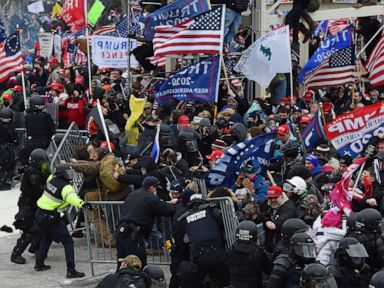
The federal government recently pulled the plug on the controversial $1.8 billion Anti-Weaponization Fund, but the hundreds of January 6 defendants eye-ing massive taxpayer payouts are not walking away empty-handed. While acting Attorney General Todd Blanche officially declared the central fund dead following fierce congressional pushback and a federal court freeze, a quiet backdoor remains wide open. Defendants plan to secure millions of dollars by bypassing the defunct commission entirely, instead exploiting standard administrative claims processes that give a sympathetic Department of Justice nearly unchecked authority to settle cases out of public view.
The collapse of the $1.776 billion fund, originally pitched as a remedy for victims of alleged political persecution, looked like a definitive defeat for the administration’s allies. It was not. For the lawyers and activist groups representing the roughly 1,600 individuals prosecuted over the Capitol riot, the formal end of the fund is merely a bureaucratic pivot. The legal apparatus to distribute money is changing, but the intent is exactly the same. For another view, check out: this related article.
The Quiet Reality Of Administrative Tort Claims
The public narrative focuses heavily on the dramatic congressional hearings where lawmakers forced the Justice Department to abandon its massive payout program. The reality inside the federal legal framework is far less dramatic and far more effective.
By law, any individual who believes they suffered harm or malicious prosecution by federal actors can file an administrative claim under the Federal Tort Claims Act. Normally, these claims face a wall of career government attorneys dedicated to protecting the federal treasury. Today, the personnel heading the Department of Justice have a completely different set of priorities. Further analysis on this trend has been provided by BBC News.
The mechanism is remarkably straightforward. A pardoned January 6 defendant files a claim alleging that the previous administration investigated, arrested, or imprisoned them due to political bias. Under standard operating procedures, the Justice Department has broad, unilateral discretion to settle these administrative claims out of court. They do not need a special $1.8 billion fund to write the checks. They can pull the money directly from the Judgment Fund, a permanent, indefinite congressional appropriation used to pay settlements against the United States.
Activists leading the charge are already signaling this shift. Organizers with defense advocacy groups, including pardoned participants, have confirmed that hundreds of individual packages are being prepared for submission. They are openly targeting figures that reach into eight fractions for a single claimant, citing lost wages, emotional trauma, and destroyed businesses. Because the administration has already established a policy posture that views these prosecutions as inherently flawed, the likelihood of swift, quiet settlements is high.
Why The Original Fund Was Built To Fail
The $1.776 billion Anti-Weaponization Fund was flawed from its inception, serving more as a political statement than a durable financial vehicle. Born out of a settlement resolving a private lawsuit against the Internal Revenue Service over leaked tax returns, the fund immediately attracted immense scrutiny. It was designed to be overseen by a five-member commission, a structure that invited a level of oversight the administration could not tolerate.
Congress found its leverage during the recent battles over immigration enforcement funding. Senate Republicans, facing a total legislative standstill after Democrats threatened to dismantle the compensation pool via budget amendments, ultimately forced the White House to recalculate. The optics of a taxpayer-funded pool open to individuals convicted of assaulting law enforcement proved too toxic even for some staunch allies.
A federal judge in Virginia dealt the final blow, halting the fund’s operation just days before Blanche’s formal retreat. The court order exposed the administration to prolonged discovery and public arguments regarding the legality of using an unrelated IRS settlement to fund a sweeping compensation program. Shifting the strategy to individual administrative claims completely sidesteps these sweeping constitutional challenges. Instead of defending a massive, legally fragile structure in open court, government lawyers can handle claims quietly, on a case-by-case basis.
The State Level Counter Attack
As the battle shifts away from Washington headlines and into the quiet rooms of the civil division, opponents of the payouts are searching for new points of leverage. Blue-state governors and lawmakers are discovering that their options to block federal settlements are severely limited by constitutional law.
Proposed State Responses to Federal Settlements
--------------------------------------------------
State Tax Levies         | 100% tax on weaponization payouts
Funding Diversion        | Redirecting safety grants to victim services
Litigation Interception  | Public interest lawsuits by state AGs
Several states have floated proposals to implement a 100% state income tax on any payout received from the federal government related to January 6 prosecutions. The strategy faces a nearly insurmountable hurdle in the preemption doctrine of the U.S. Constitution. Historically, states cannot pass laws designed specifically to frustrate or nullify the intent of federal financial actions. If the federal government explicitly awards damages to an individual, a state cannot use targeted, confiscatory taxation to seize that money back.
The more immediate consequence of this fiscal strategy is unfolding in the federal budget itself. To clear paths for these alternative remedies, the administration has steadily reduced or terminated hundreds of millions of dollars in federal public safety and victim-services grants. Funds previously directed toward child abuse prevention, domestic violence programs, and human trafficking investigations under the Office for Victims of Crime have shrunk. The money is moving elsewhere.
The Bureaucratic Path Forward
The pivot away from the omnibus fund means the process will take longer, but the outcome for individual claimants may be identical. Career attorneys within the civil division now find themselves managed by political appointees who have publicly questioned the validity of the post-2021 federal investigations.
When an administrative claim lands on a desk at Main Justice, the adversarial dynamic that typically protects public funds is absent. If the department chooses to stipulate that a prosecution was flawed, a settlement can be finalized with minimal judicial oversight. The public will only learn about the scope of these payments months or years later, buried deep inside mandatory Treasury Department reports detailing outlays from the Judgment Fund.
The formal scrapping of the multi-billion-dollar fund was treated by critics as a grand victory for accountability. It was actually a lesson in bureaucratic adaptation. By forcing the administration to abandon its centralized, highly visible slush fund, opponents merely drove the compensation machinery underground, into the standard, quiet channels of federal law.


