Northern Ireland remains the only corner of these islands where the "dumb" meter still reigns supreme. While households in Great Britain and the Republic of Ireland have spent a decade navigating the teething pains of digital energy tracking, Belfast has watched from the sidelines. That isolation is scheduled to end in 2028, but the wait has been anything but free.
The Department for the Economy (DfE) recently finalized its Design Plan for the Roll-out of Smart Electricity Meters, marking a definitive shift toward a 2028 deployment. This isn't just a technical upgrade. It is a fundamental rewiring of the Northern Irish energy economy that aims to fix a grid currently so congested that wind farms are being paid to stay idle while consumer bills remain among the highest in Europe.
The Price of Being Last
Being a late adopter is often framed as a strategic advantage. You let others pay the "pioneer tax," learn from their botched software updates, and wait for the hardware costs to plummet. In this case, Northern Ireland has missed a decade of data that could have mitigated the current price volatility.
The 2028 timeline means that for the next two years, NI households will continue to rely on manual readings and estimated bills—a relic of the 20th century that creates a "bill shock" cycle for the most vulnerable. While neighbors across the Irish Sea use Time-of-Use (ToU) tariffs to charge electric vehicles for pennies or run heat pumps during peak wind generation, NI consumers are stuck with flat-rate pricing that punishes off-peak usage.
Breaking the Wind Power Paradox
The most damning reason for the 2028 push is the "curtailment" crisis. Northern Ireland is a global leader in wind energy, yet the grid is often unable to handle the surge of power when the gales pick up. In 2024, wind farms were turned off roughly 30% of the time because there was nowhere for the power to go.
A smart grid allows for demand flexibility. Without a digital interface in every home, the system operator (SONI) cannot signal to thousands of appliances to switch on when wind power is at its peak. We are effectively throwing away clean, cheap energy because we lack the digital "nervous system" to distribute it.
The Gas Meter Abandonment
In a move that highlights the cold pragmatism of the DfE’s new strategy, smart gas meters have been scrapped entirely. A cost-benefit analysis completed in late 2022 determined that the "case for the implementation for gas smart metering has not produced a significant level of benefit for consumers."
This is a stark admission. It signals that the government views gas as a legacy fuel with a limited lifespan. Instead of investing hundreds of millions into digitizing a fossil fuel network, the focus has shifted exclusively to the electricity grid. For the consumer, this means a bifurcated home: a high-tech electric board side-by-side with a traditional gas dial. It is an awkward compromise, but one that avoids saddling the public with the cost of soon-to-be-stranded assets.
Learning from the GB Failure
The roll-out in Great Britain was, by many accounts, a logistical nightmare. It was hampered by "SMETS1" meters that lost their smart functionality when customers switched suppliers, and a "hard target" framework that pressured installers to prioritize speed over quality.
Northern Ireland’s plan avoids these pitfalls through a more centralized, industry-led approach.
- Interoperability: The 2028 meters will be compliant with the latest standards, ensuring that "switching" suppliers doesn't turn your expensive display into a paperweight.
- The One-Stop Shop: Following recommendations from the Energy Saving Trust, the NI roll-out will likely use a centralized advice service to help users actually understand the data they are seeing.
- Pre-Payment Evolution: Over 40% of NI customers use "Pay-As-You-Go" (PAYG) meters. The new system will allow for app-based top-ups, ending the era of the physical plastic card and the desperate hunt for a corner shop at 9:00 PM on a Sunday.
The Connectivity Wall
The biggest hurdle isn't the meters themselves, but the dirt beneath them. Northern Ireland’s unique geography and housing stock present significant Wide Area Network (WAN) challenges. Large areas of the west and the Glens of Antrim struggle with the cellular signals required to transmit meter data.
To solve this, the roll-out will likely require a hybrid of cellular and long-range radio technology. If the signal isn't 100% reliable, the "smart" meter becomes a very expensive "dumb" meter, and the business case collapses.
Data Privacy or Data Profit
There is a simmering skepticism among NI consumers regarding who actually owns their energy data. The Design Plan promises "consumer-centric" protections, but the reality is that the data generated by a smart meter is gold for energy suppliers.
By knowing exactly when you boil your kettle or shower, suppliers can build hyper-accurate profiles. While this enables Time-of-Use tariffs, it also opens the door for surge pricing—charging more during the 6:00 PM dinner rush. The Utility Regulator will face a monumental task in ensuring that "flexibility" doesn't become a euphemism for "price gouging" the working family who cannot shift their lifestyle to 3:00 AM.
The Technical Infrastructure Gap
The 2028 start date is not an arbitrary choice. It aligns with NIE Networks' "RP7" business plan, a £2 billion investment into the physical grid. You cannot put a smart brain on a decaying body. Before the first meter is installed, hundreds of local transformers must be upgraded to handle the two-way flow of electricity that comes with home solar panels and EV batteries.
The Labor Shortage
Where are the installers? The UK is currently facing a massive deficit in qualified electrical technicians. To hit the targets starting in 2028, Northern Ireland needs to train a small army of technicians now. Without a dedicated domestic skills pipeline, we will be forced to "import" labor at a premium, a cost that will eventually be passed back to the ratepayer through their standing charges.
Moving Beyond the Plastic Screen
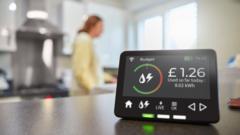
The biggest mistake made in other regions was the obsession with the In-Home Display (IHD)—that small plastic screen that sits on the kitchen counter. Evidence suggests that after six months, most people hide them in a drawer.
Northern Ireland’s roll-out must prioritize API integration. This allows the meter to talk directly to your smart home system, your EV charger, or your heat pump without you ever looking at a screen. True "smart" energy is invisible. It is a system that automatically shifts your heavy loads to the cheapest, cleanest hours of the day while you sleep.
The 2028 deadline is a high-stakes gamble. If executed correctly, it finally drags Northern Ireland into the modern era of energy management, potentially lowering the massive "curtailment" costs that currently plague the system. If it falters, it will be another expensive infrastructure project that arrives a decade late and a billion pounds short.
The strategy is now in place. The technology exists. The only remaining variable is the political and industrial will to ensure that when the "smart" switch is finally flipped, the lights actually stay on.
Audit your current energy usage and check if your supplier offers a "Keypad" meter with an app interface; it is the closest thing to a smart experience available in NI until the 2028 transition begins.


