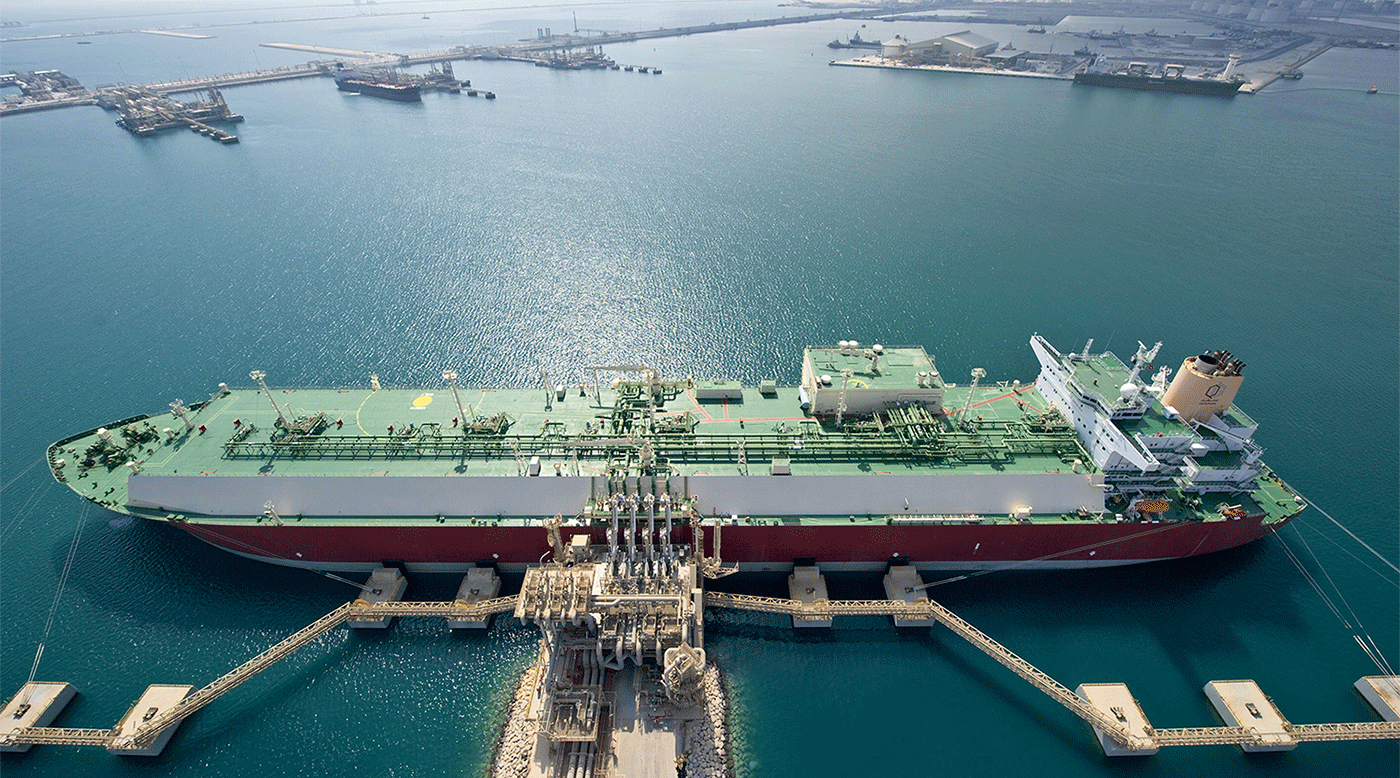
The smoke rising over Ras Laffan Industrial City on Wednesday afternoon did more than just char the steel of Qatar’s crown jewel. It signaled the definitive collapse of the "energy sanctuary" model that has defined the Persian Gulf for three decades. For years, Qatar operated under a silent pact with the world: no matter how hot the regional rhetoric became, the liquefied natural gas (LNG) must flow. That pact is now a casualty of war.
When QatarEnergy confirmed "extensive damage" following a barrage of Iranian missiles on March 18, 2026, the immediate shock hit the ledgers before the fires were even extinguished. This was not a symbolic strike or a stray drone. It was a calculated, multi-vector assault on the world’s most concentrated energy export hub. Ras Laffan is responsible for nearly 20% of global LNG trade. Within hours of the impact, European benchmark gas prices spiked by 6%, while Brent crude pushed past $107 per barrel.
The primary question for the global economy is no longer if supply will be disrupted, but how long the world can function without the 10.2 billion cubic feet of gas that Qatar pumps out daily.
The Myth of the Iron Dome for Industry
The failure to fully protect Ras Laffan exposes a brutal reality about modern industrial defense. Qatar has spent billions on high-tier missile defense systems, including Patriot batteries and early-warning radars. Yet, preliminary reports indicate that while several projectiles were intercepted, the sheer volume of the Iranian salvo—which Tehran explicitly signaled hours prior—overwhelmed the local Aegis and land-based shields.
Industrial cities are uniquely difficult to defend. Unlike a moving carrier strike group or a reinforced military bunker, an LNG terminal is a sprawling, static target filled with highly pressurized, flammable material. Even a successful interception can be catastrophic if the debris falls into a cryogenic storage tank or a liquefaction train. The "extensive damage" cited by QatarEnergy suggests that the kinetic energy of the impact, combined with secondary fires, has compromised the delicate machinery required to supercool gas for export.
Why Neutrality Failed the Al Thani Doctrine
For twenty years, Doha played a sophisticated game of geopolitical hedging. It hosted the largest U.S. airbase in the region at Al Udeid while simultaneously sharing the massive North Field gas reservoir with Iran. This "neighborly" cooperation on the world’s largest gas field was supposed to be Qatar's ultimate insurance policy.
That insurance policy was voided the moment the current conflict escalated into direct strikes on Iranian gas treatment plants at South Pars. Tehran’s logic is as cold as the LNG it just disrupted. If Iran’s ability to process its share of the field is crippled by U.S.-Israeli strikes, it will ensure that no one else benefits from that reservoir either. By striking Ras Laffan, Iran is effectively holding the global heating and electricity market hostage to ensure its own infrastructure remains off-limits in future rounds of escalation.
The Invisible Casualty of the Logistics Chain
While the headlines focus on the fires and the missiles, the real long-term damage is happening in the insurance and shipping markets.
Ras Laffan is a logistics machine. It requires a constant, rhythmic rotation of massive LNG carriers to keep the tanks from hitting capacity and forcing a total production wellhead shut-in. Even if QatarEnergy repairs the physical "extensive damage" to its liquefaction trains within weeks, the maritime industry may not return for months.
Lloyd’s of London and other major underwriters are already reclassifying the entire Qatari coastline as a "high-risk" zone. This move triggers "war risk" premiums that make the cost of transporting a single cargo of LNG prohibitive for all but the most desperate buyers in Tokyo or Berlin. We are entering a phase where the physical availability of gas matters less than the ability to legally and safely move it through the Strait of Hormuz.
The Technology Gap in Hardening Infrastructure
The Ras Laffan attack highlights a massive oversight in the global energy transition. We have spent a decade focusing on the "greenness" of our energy sources while neglecting their physical security.
Cryogenic liquefaction trains are marvels of 21st-century engineering, but they are incredibly fragile. They rely on massive turbines and heat exchangers that cannot be 3D-printed on-site or replaced overnight. The lead time for a specialized heat exchanger can be 18 to 24 months. If the "extensive damage" reported by Qatar includes these core components, the 77 million tonnes per annum (mtpa) of capacity the world relies on won't just be "disrupted"—it will be partially erased from the global balance sheet until 2027 or 2028.
The Asian Pivot to Chaos
The fallout will be most acute in Asia. Approximately 80% of Qatari LNG is earmarked for Asian markets, specifically Japan, South Korea, China, and India. These nations do not have the luxury of "switching" to American shale gas overnight; the tankers are already at sea, and the liquefaction capacity in the U.S. Gulf Coast is already running at 100%.
We are likely to see a predatory scramble for "spot" cargoes. In this environment, the wealthiest nations will outbid the developing ones, leading to potential blackouts in South Asia and Southeast Asia. This is the "why" that the initial news reports missed: the missile that hit Ras Laffan didn't just break a pipe; it broke the energy security of three billion people.
The Intelligence Failure
There is a final, darker question involving the "how" of this attack. Ras Laffan is one of the most monitored patches of earth on the planet. For a missile barrage to achieve "extensive damage" against a target with active defense suggests either a leap in Iranian saturation tactics or a significant failure in regional intelligence sharing.
If the U.S. and its allies knew the strike was coming—which Tehran’s public warnings suggest they did—the inability to prevent a strike on a "civilian" industrial site of this magnitude points to a strategic paralysis. The world was watching the front door while the house was being burned down from the side.
The era of assuming that global energy hubs are "too big to hit" is over. Every major energy terminal from the Gulf of Mexico to the North Sea is now looking at the satellite photos of the fires in Qatar and realizing they are essentially undefended against a determined nation-state actor. The cost of energy is about to include a massive, permanent "security tax" that no amount of diplomacy can mitigate.
Check the current status of your regional energy storage levels; the buffer between the current price and a total market freeze is thinner than most analysts dare to admit.