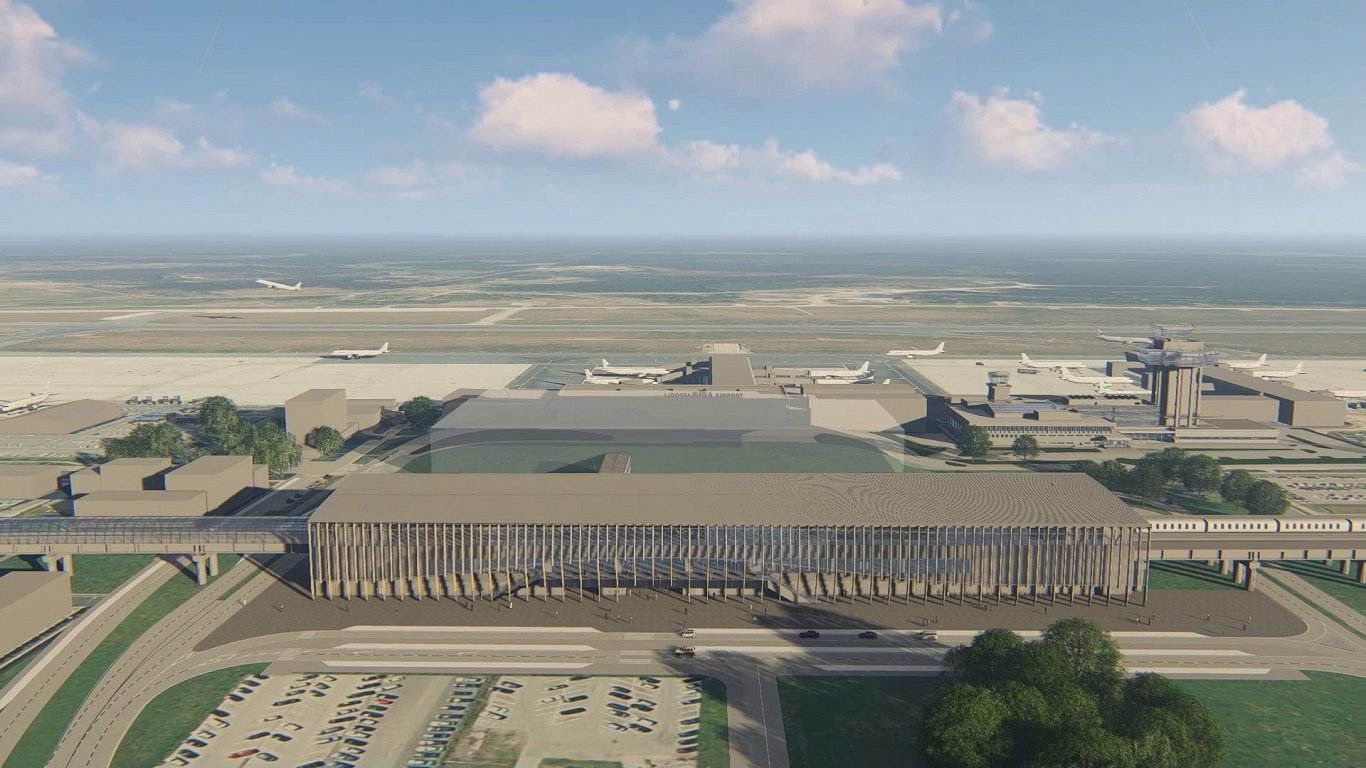
Europe’s most ambitious infrastructure project is hit by a cold reality check. Rail Baltica was supposed to be the shining symbol of Baltic integration with the West. It promised a high-speed line stretching from Warsaw to Tallinn, moving people and goods at 249 km/h. Now, that dream is hitting the brakes. The reason is simple and grim. The money isn't there because every spare Euro is being funneled into bunkers, ammunition, and border fences.
You can't blame the planners for being nervous. Living next to a hostile neighbor changes your math. For Estonia, Latvia, and Lithuania, the Russian invasion of Ukraine shifted the priority from "convenient travel" to "national survival." I've watched these budgets shift in real-time. When you have to choose between a shiny new train station in Riga and a battery of HIMARS, the missiles win every single time.
It’s a brutal trade-off.
Why the Rail Baltica timeline is falling apart
The original goal was to have the line operational by 2026. That’s clearly not happening. Current estimates push the full completion back toward 2030 or even later. Costs have ballooned from an initial €5.8 billion to a staggering €15 billion or more. Inflation in the construction sector is one thing, but the complexity of building to European standard gauge (1435 mm) through a region historically locked into Russian wide-gauge (1524 mm) is a massive technical headache.
The European Union covers up to 85% of the costs through the Connecting Europe Facility (CEF). However, the remaining 15% must come from national budgets. This is where the friction starts. In 2024 and 2025, Baltic governments have pivoted hard toward defense spending, with some aiming for 3% or even 4% of GDP. That’s money that was supposed to lay tracks.
Military mobility is the new justification
Project leaders are now trying to save the rail link by rebranding it. It’s no longer just a passenger project. It’s a "military mobility" necessity. NATO needs to move heavy equipment from Germany to the Estonian border fast. Currently, the gauge break at the Polish-Lithuanian border acts as a massive bottleneck. You have to lift tanks off one train and put them on another. It's slow. It's vulnerable.
Rail Baltica solves this. By extending the European gauge all the way to Tallinn, NATO could theoretically move a brigade across the region in days rather than weeks. This shift in narrative is the only reason the project hasn't been mothballed entirely. But even this military utility has its limits. If the tracks aren't built because the money went to the shells the tanks fire, the point becomes moot.
The Latvian bottleneck
Latvia is in a particularly tough spot. The central node in Riga is a massive, expensive undertaking. There’s been talk of bypasses or scaling back the city-center connection just to get the main line running. It's a mess. Local politicians are taking heat for the rising costs, and the public is starting to wonder if they'll ever actually ride the thing. Honestly, the sight of half-finished concrete piers in the middle of a capital city isn't a great look for a project meant to represent progress.
The risk of a bridge to nowhere
The worst-case scenario is a fragmented railway. We might see a functional line from Poland to Kaunas, but then a series of disconnected segments further north. A high-speed rail line only works if it’s a network. If you have to switch to a slow bus halfway through your journey because the Estonian segment is delayed, you’ll just fly instead.
Construction firms are also feeling the squeeze. Labor costs in the Baltics are rising. Many workers who would be building the rail line are instead being diverted to build the "Baltic Defense Line"—a series of hundreds of bunkers and obstacles along the Russian and Belarusian borders. Steel prices haven't helped. Everything is more expensive than it was three years ago.
What happens next for the Baltics
There is no easy way out of this. The project is too big to fail but too expensive to finish on time. Expect to see more "phased" openings. This is code for "it's going to be late and we're doing it in tiny pieces."
Lithuania is likely to make the most progress because they’re the gateway to the rest of Europe. They've already got some standard gauge tracks running to Kaunas. Estonia is pushing hard too, but the Gulf of Finland tunnel to Helsinki remains a distant fantasy at this point.
If you're tracking this as an investor or a traveler, don't hold your breath for a 2027 trip. Look at the defense budgets instead. Until the security situation on the eastern flank stabilizes, the sound of hammers on the rail line will be drowned out by the sound of military drills.
Keep an eye on the next round of EU funding. If the CEF doesn't provide a massive top-up to account for inflation, the project might face even more drastic cuts. For now, the dream of a seamless European rail journey from Berlin to Tallinn is on a very long sidetrack.
Check the official Rail Baltica progress reports every quarter. They’ve become much more transparent about the delays lately. If you’re a business relying on future freight capacity, start looking at sea or road alternatives for the next decade. The rail isn't coming to save your logistics chain anytime soon.