You do not think about the drawer.
It sits beside the bed, a collection of forgotten receipts, a rogue earring, a charging cable, and a small, silver-foil square. It is a sentinel. It exists to be ignored, a quiet insurance policy against the chaos of biology. For most of us, this small item is something we grab without checking the price, a commodity as basic as milk or toothpaste. Read more on a connected issue: this related article.
But the drawer is changing. The silver foil inside it is about to get significantly more expensive.
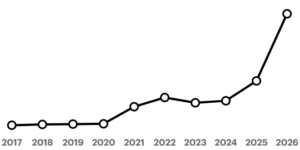
Karex Berhad, a Malaysian giant that produces one out of every five condoms on the planet, has signaled a shift. Due to the friction of a world at war—supply chain tremors, escalating energy costs, and the sudden, violent scarcity of raw materials—prices for the world’s most crucial contraceptive are climbing by 30 percent. More analysis by Reuters Business explores comparable perspectives on this issue.
This is not a story about corporate accounting. It is a story about the hidden architecture of human connection and the silent, terrifying fragility of our most personal systems.
To understand why a war thousands of miles away dictates the price of a night in Chicago, London, or Nairobi, you have to follow the latex.
Start in the plantation. It is humid. The air clings to you, thick with the scent of damp earth and greenery. A tapper slices the bark of a Hevea brasiliensis tree. White sap drips into a cup. This is the beginning. This is the raw reality before the branding, the packaging, and the marketing campaigns that turn a rubber sheath into a product.
For years, this flow was steady. The world’s factories, particularly those run by Karex, operated on a rhythm of precision and predictability. Then, the machinery of global conflict shuddered.
When war enters the equation, it does not just destroy infrastructure; it erodes the delicate trust that allows international trade to function. Shipping lanes become unpredictable. Fuel prices, the blood of the global supply chain, spike. The cost to ship a container, the cost to heat the drying ovens, the cost to package the product—everything inflated.
The market does not care about the human necessity of what is inside the box. The market only cares about the ledger.
Karex, squeezed by these rising costs, had to make a choice. They could not continue to absorb the hemorrhage of capital. So, they passed the burden down the line. And the line ends with you.
Consider the perspective of someone like Elena. She works in a crowded community health clinic on the edge of a mid-sized city. She is the one who hands out the supplies. She watches the faces of the people who walk in—the teenagers terrified of their own biology, the struggling families trying to keep their heads above water, the college students rationing every dollar.
"When I tell someone that the price has moved up, I don't see a consumer reacting to a surcharge," Elena says. "I see a panic. They start doing the math in their heads. Do I buy the protection, or do I buy lunch? Do I buy the protection, or do I pay the transit fare to get to work?"
A 30 percent increase is not a rounding error. It is a barrier.
We often discuss inflation in terms of abstract concepts like "interest rates" or "CPI baskets." We look at graphs and nod at the lines moving upward. We rarely talk about what happens when the cost of prevention becomes an object of luxury. When people cannot afford the barrier, they do not simply stop having intimacy. They stop having protection.
The math of the unintended is grim.
It is easy to look at a 30 percent hike and think of it as a nuisance, a slight pinch on the wallet for a night out. That assumes privilege. It assumes a disposable income where 30 percent is the difference between a name-brand soda and a generic one.
But for the person standing in front of the drugstore shelf, or the worker at a clinic with a shrinking supply budget, this is not a surcharge. It is a tax on reproductive autonomy.
There is a strange, modern taboo surrounding this topic. We are comfortable debating the price of oil, the cost of housing, even the absurdity of the price of eggs. But we go quiet when the conversation turns to the price of the items that prevent the most life-altering of biological accidents. We treat sexual health as a separate, private sphere, immune to the grinding gears of economics.
This is our delusion.
Every product is subject to the world’s instability. When the global order falters, nothing is safe. Not the grocery store shelf. Not the hospital supply room. Not the bedside drawer.
The tragedy here is the silence.
The companies, struggling to balance their books, issue press releases about "supply chain volatility" and "operational costs." They use the language of the boardroom to sanitize the reality of the bedroom. They speak of percentages and margins. They never mention the teenage girl who will forgo the protection because the price tag felt like a judgment. They never mention the health consequences—the preventable spikes in STIs or the rise in unintended pregnancies—that follow the trail of an inflated price point.
We are entering a period where the mundane is becoming dangerous. When simple, prophylactic measures become inaccessible, the consequences bleed out into the public sphere, straining healthcare systems and community resources. It is a domino effect that starts with a shipping delay in a conflict zone and ends with a medical crisis in a local clinic.
We need to stop pretending that this is a private matter.
If you are a consumer, you will feel the pinch. You will see the shelf prices creep up. You might grumble, pay the extra, and move on. But look closer. Understand that you are paying for the fragility of a world that is struggling to knit itself back together.
If you are a policymaker or a public health advocate, you should see this not as an economic inevitability, but as a warning. We have allowed the mechanisms of global trade to become so precarious that our most basic, vital tools are now subject to the whims of geopolitical turmoil.
The drawer stays shut.
You go to sleep, the small silver packet hidden away, a relic of a time when the price of protection was a given, not a question. The world outside the window is loud, complicated, and increasingly expensive. You try to shut it out.
But the reality remains. Every item in that drawer is a story about the world. And right now, the story is getting harder, and more expensive, to tell.