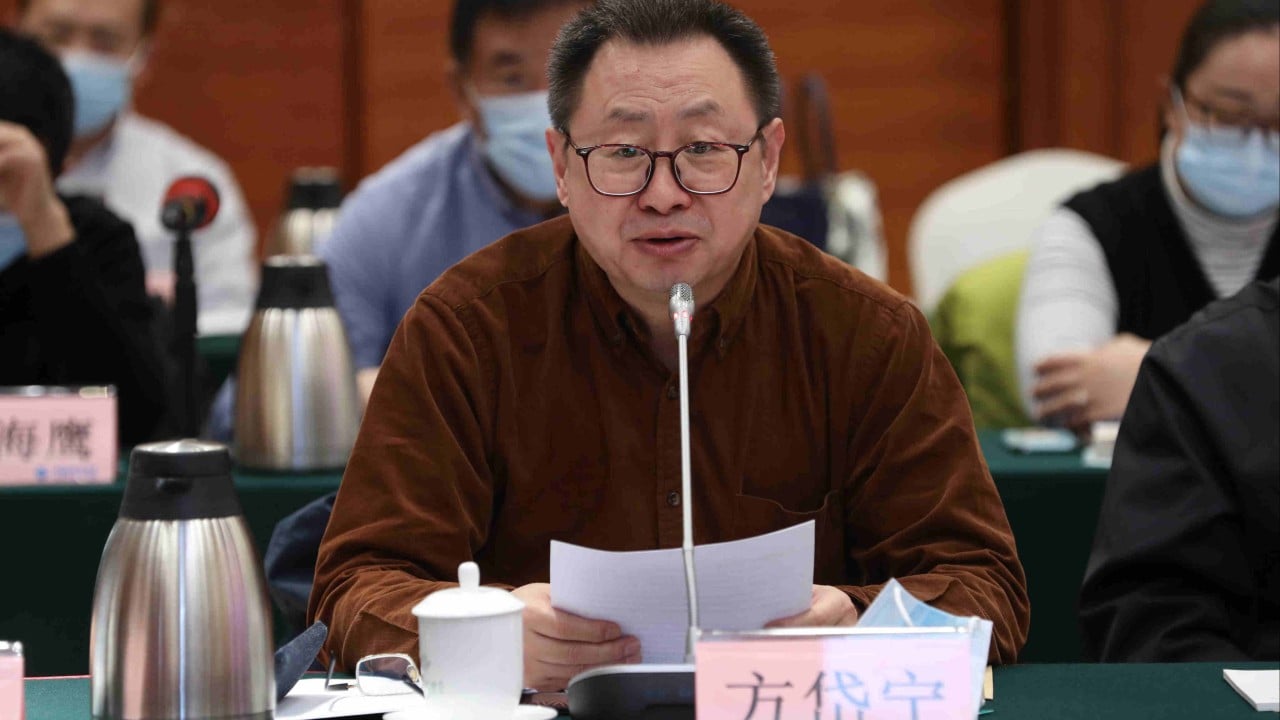
Chinese social media is currently scrubbed clean of any mention of Fang Daining. If you try to search for his name on Weibo today, you'll likely hit a wall of "no results found" or carefully curated official bios. Yet, an obituary notice on a whiteboard at the Beijing Institute of Technology (BIT) tells a different story. It says Fang, one of the most brilliant minds behind China’s hypersonic missile program, died on February 27, 2026, at the age of 68.
The silence from Beijing is deafening. Usually, when a top-tier scientist of the Chinese Academy of Sciences (CAS) passes away, there’s a flurry of state-sponsored tributes. For Fang, there’s only a blurry photo of a hand-written notice and a lot of deleted posts. Why is a man who helped build the weapons that keep the Pentagon awake at night being ushered out the back door of history? If you liked this post, you should read: this related article.
The man who made missiles dance at Mach 10
To understand why Fang’s death is such a sensitive topic, you have to look at what he actually did. He wasn't just some desk-bound academic. He was a specialist in ultra-high-temperature materials. When a missile like the DF-17 re-enters the atmosphere at five to ten times the speed of sound, the friction creates heat so intense it would melt most known substances.
Fang developed the "skin" and the internal structures that allow these vehicles to survive that heat while still being able to maneuver. Without his work on advanced mechanics and composite structures, China’s hypersonic gliders would just be expensive shooting stars that burn up before hitting a target. He was the guy who figured out how to make materials that are both incredibly light and impossibly strong. For another look on this event, check out the latest coverage from TIME.
His importance was recognized globally, even by those who viewed his work as a threat. In 2022, the US National Academy of Engineering elected him as a foreign member. He was the only academic from a mainland Chinese university to get that nod at the time, sharing the list with people like Elon Musk.
That viral Zoom scandal you probably remember
If the name Fang Daining sounds familiar but you aren't a rocket scientist, it’s probably because of the "kissing scandal" of October 2022. During a live-streamed academic conference, a young woman—later identified as a postdoctoral researcher—walked into Fang’s camera frame and started kissing him repeatedly on the face.
The footage went viral instantly. It was a PR nightmare for the CAS and BIT. In a culture that prizes "academic morality" and the dignity of its elder statesmen, the video was a massive fall from grace. Fang was investigated, stripped of some of his administrative titles, and basically told to disappear from the public eye.
But he didn't stop working. He couldn't. His expertise was too specialized. He continued leading research at the Institute of Advanced Structure Technology, the very place where his obituary eventually appeared. He became a "ghost scientist"—critical to the state, but too "morally tainted" for the evening news.
Rumors of a South African medical emergency
The official line in the BIT obituary is that Fang "died of illness." But the internet doesn't like vague explanations. Before the censors got to work, rumors were flying that Fang suffered a sudden medical episode during a work trip to South Africa.
Is it true? We don't know. What we do know is that top Chinese defense scientists don't usually travel abroad for vacation. If he was in South Africa, it was for work. China has been aggressively expanding its global scientific and military footprint, and South Africa is a key partner in BRICS.
The fact that social media users reported being told not to photograph the funeral notice at BIT adds another layer of weirdness. In China, when the state tells you to put your phone away at a funeral, it’s because they don't want the event to become a focal point for discussion. They want the person to fade away quietly.
Why his death actually matters for 2026
Losing Fang Daining isn't just a blow to China’s ego; it’s a massive loss of "institutional memory." We're currently in a period where hypersonic weapons are shifting from "experimental" to "mass-deployed." As the US races to catch up with its own laser-based defenses and its own hypersonic programs, losing a pioneer like Fang creates a gap in China’s R&D cycle.
You can't just replace 40 years of experience in ultra-high-temperature testing with a new hire. Fang was the one who independently developed the testing platforms that the entire Chinese aerospace industry now uses. He was the architect of the foundation.
- Materials Gap: His work on "lattice main load-bearing structures" is what allows satellites to be 3D-printed and still survive launch.
- Defense purges: This death comes at a time when China’s military-industrial complex is already under pressure from internal purges and corruption investigations.
- The 2027 Timeline: With experts suggesting China wants to be "conflict-ready" by 2027, losing a lead scientist in 2026 is a significant setback for the final polish of their weapon systems.
What to watch for next
The story isn't over just because the posts are deleted. If you're tracking Chinese defense tech, keep an eye on the publications coming out of the Beijing Institute of Technology. Watch for who takes over his lead roles at the Institute of Advanced Structure Technology.
If there’s no official state memorial within the next month, it confirms that the "scandal" of 2022 permanently erased his right to a hero’s farewell. It’s a cold reminder that in the world of high-stakes defense research, your value to the state only buys you a quiet exit, not a forgiven past.
Don't expect a sudden transparent report on his cause of death. Instead, look for shifts in how China talks about its hypersonic progress. If there’s a sudden slowdown in testing or a pivot in the materials they're bragging about, we’ll know just how big a hole Fang’s death really left. Keep an eye on the CAS member list; when his name is officially moved to the "deceased" section without a tribute, the erasure will be complete.