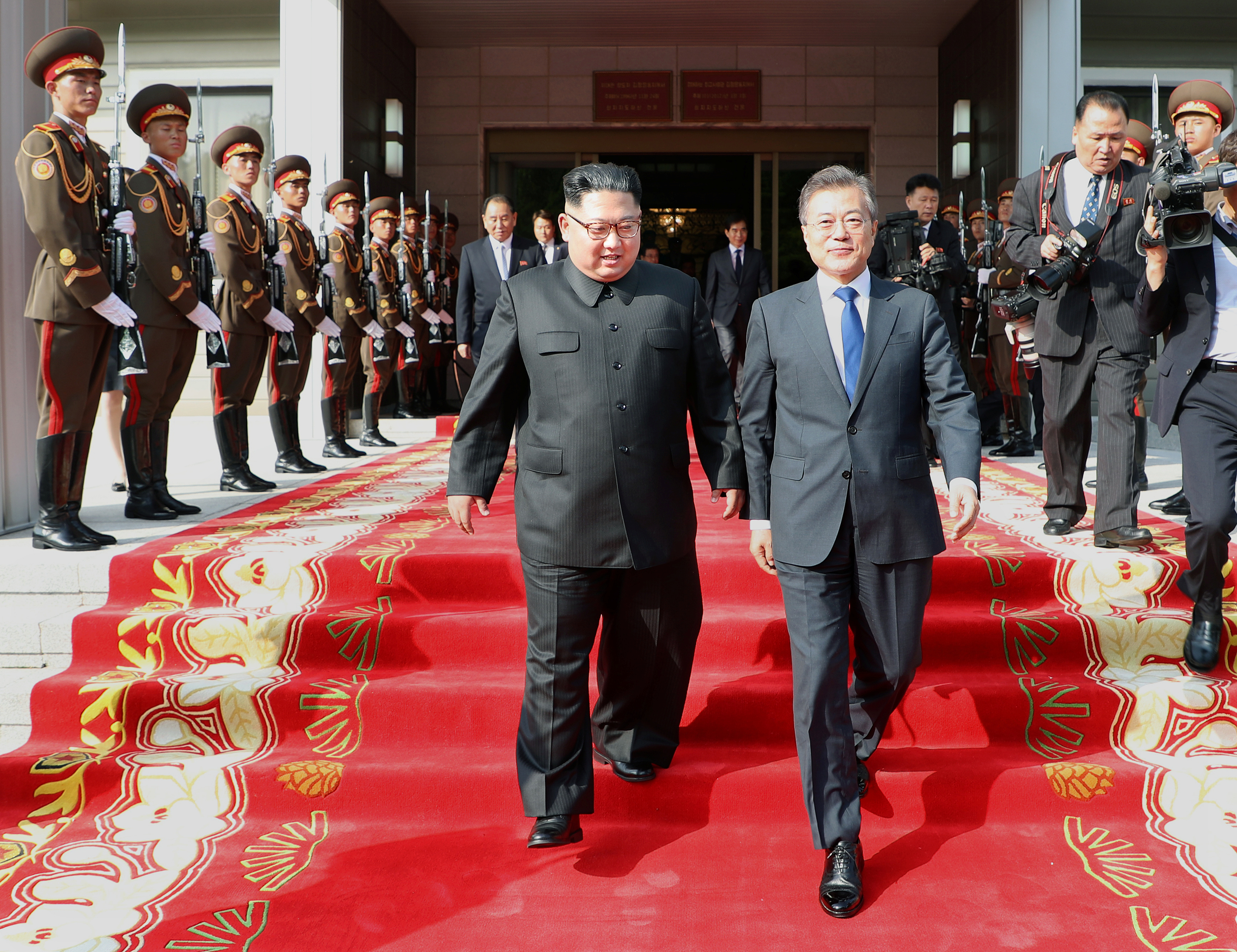
The Democratic People’s Republic of Korea (DPRK) has transitioned from a dual-track policy of simultaneous economic and nuclear development to a singular, integrated strategy of survival through vertical self-reliance. At the recent Supreme People’s Assembly (SPA), Kim Jong Un codified a five-year economic plan that functions less as a growth roadmap and more as a defensive fortification against persistent sanctions and global supply chain isolation. By decoupling the national economy from volatile external markets and tethering it to the military-industrial complex, the North Korean leadership is attempting to solve the fundamental contradiction of maintaining a sovereign nuclear state within a resource-constrained environment.
The Dual-Loop Economic Model: Military Overflows and Civilian Stagnation
The failure of previous economic cycles was largely due to the "leakage" of resources into unproductive sectors. The current five-year plan introduces a Dual-Loop Model designed to prioritize the defense sector as the primary driver of technological innovation, which then cascades into heavy industry. Expanding on this idea, you can also read: Why the Green Party Victory in Manchester is a Disaster for Keir Starmer.
- The Internal Loop (Defense): Capital, energy, and high-tier labor are funneled into the nuclear and missile programs. This loop is closed; its outputs are security and political leverage, not tradable goods.
- The External Loop (Civilian/Trade): This loop is currently throttled. The SPA signaled a shift toward "Juche-fication," meaning the systematic replacement of imported raw materials with domestic substitutes, regardless of the cost-per-unit inefficiency.
This strategy accepts a lower standard of living in exchange for a higher "survival floor." The logic follows a clear cost function: the regime views the risk of political instability from economic hardship as lower than the risk of regime change via external intervention. Therefore, the economic plan is a tool for managing scarcity, not eliminating it.
Technical Specifications of the Nuclear Deterrent Expansion
The rhetoric surrounding "enhanced nuclear capabilities" is often dismissed as posturing. However, the legislative outputs of the SPA indicate a specific shift toward Tactical Nuclear Integration. This involves miniaturizing warheads for use on short-range ballistic missiles (SRBMs) and cruise missiles, changing the calculus for regional adversaries. Observers at The Guardian have shared their thoughts on this trend.
The Shift from Strategic to Tactical
Historically, the DPRK focused on Intercontinental Ballistic Missiles (ICBMs) intended for strategic deterrence against the United States. The new directive emphasizes:
- Solid-fuel propulsion systems: These reduce launch preparation time from hours to minutes, increasing the survivability of the mobile missile force.
- Diversification of delivery platforms: Utilizing train-launched, submarine-launched, and silo-based systems creates a "second-strike" capability that complicates any pre-emptive strike logic.
- Multi-warhead technology (MIRV): Developing the capacity to hit multiple targets with a single launch vehicle overwhelms existing Aegis and THAAD missile defense systems.
These advancements are not merely technical milestones; they are designed to decouple the U.S.-South Korea alliance. If Pyongyang can reliably threaten the U.S. mainland while simultaneously threatening Seoul with tactical nuclear strikes, it forces Washington to weigh the cost of defending an ally against the risk of its own destruction—a classic Cold War "decoupling" maneuver.
Structural Bottlenecks in the Juche-fied Economy
The ambition of the five-year plan faces three immovable constraints: the Energy Deficit, the Metallurgical Crisis, and the Digital Isolation Gap.
The Energy Deficit
North Korea’s industrial capacity is directly proportional to its coal-to-electricity conversion efficiency. Sanctions have blocked the import of high-efficiency turbines and spare parts for aging power plants. The plan’s focus on tidal and nuclear power remains aspirational; in the immediate term, the regime must rely on "Super-Saving" measures—essentially rationing electricity to the civilian sector to keep the military factories operational. This creates a bottleneck in the chemical industry, particularly the production of fertilizers, which are energy-intensive to manufacture and essential for the fragile agricultural sector.
The Metallurgical Crisis
The "Metal Industry as the Pillar" directive reflects a need to modernize the steel and iron sectors without coking coal, which is largely imported. By pushing for "Oxygen-Blast Furnace" technology, the DPRK is trying to use domestic anthracite. The thermodynamic reality, however, is that this process yields lower-quality steel. This creates a ripple effect: poor-quality steel leads to shorter lifespans for agricultural machinery and construction equipment, increasing the long-term maintenance burden on the state.
The Digital Isolation Gap
While the DPRK has a sophisticated cyber-warfare unit, its domestic industrial automation lags significantly. The SPA emphasized "Science and Technology as the Frontline," but without access to global semiconductor markets or high-end CNC (Computer Numerical Control) machines, the modernization of factory floors remains localized and manual. The regime's solution is a "Technical Innovation Movement," which relies on grassroots "macgyvering" rather than systemic technological upgrades.
The Geopolitical Arbitrage: Leveraging the New Cold War
The strategic logic of the latest SPA session is grounded in the observation of a fragmented global order. Pyongyang has identified a narrowing window where it can exploit the friction between the G7 and the Russia-China axis.
- The Russian Connection: By supplying conventional munitions to Moscow, the DPRK secures vital imports of oil, grain, and potentially aviation or satellite technology. This bypasses the UN sanctions regime entirely, as a permanent member of the Security Council is now an active partner in its violation.
- The Chinese Buffer: Beijing views a nuclear North Korea as a nuisance but a collapsed North Korea as a catastrophe. The five-year plan relies on China’s continued "gray-zone" trade—ship-to-ship transfers and illicit border commerce—to maintain the minimum viable economy.
The DPRK is not seeking a "return to the table." It is seeking a "new status quo" where it is recognized as a permanent nuclear power, similar to Pakistan or India, effectively ending the denuclearization era of diplomacy.
Strategic Forecast: The Pivot to Permanent Mobilization
The DPRK is transitioning into a permanent mobilization state. The legislative changes at the SPA suggest that the "Arduous March" of the 1990s is no longer viewed as a temporary crisis, but as a permanent operating environment. The Five-Year Plan is a defensive crouch.
The next 24 months will likely see:
- A Seventh Nuclear Test: Focused on a tactical warhead to validate the "tactical nuclear" doctrine.
- Agro-Military Integration: Deploying military units into the agricultural sector not just for labor, but for the enforcement of grain collection quotas.
- Cyber-Financing Scaling: Increasing state-sponsored cryptocurrency heists and IT worker infiltration into global markets to provide the hard currency that the Juche economy cannot generate through trade.
Observers should stop looking for signs of "reform" or "opening." The structural evidence points toward a tightening of the command economy and a refinement of the nuclear shield. The strategy is to wait out the West’s patience while making the cost of military intervention prohibitively high. Any diplomatic engagement that does not account for this shift toward hardened, vertical self-reliance will fail.
The immediate move for regional actors is to shift from "denuclearization" frameworks to "risk reduction" and "containment" models. Pyongyang has signaled that its nuclear status is non-negotiable and its economy is prepared for long-term isolation. The focus must now be on hardening the physical and cyber defenses of neighboring states while monitoring the DPRK’s tech-transfer agreements with Russia for signs of advanced missile guidance upgrades.