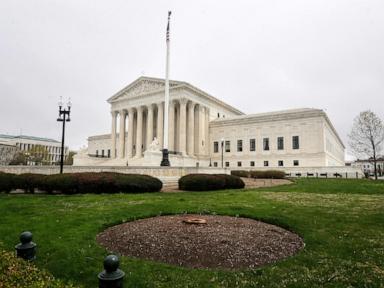
The standard narrative surrounding the Supreme Court’s scrutiny of federal regulatory power is as predictable as it is wrong. If you listen to the mainstream tech press, you’ll hear a choir of alarmists singing the same tune: that any limit on the "administrative state" is a death knell for data privacy. They want you to believe that without unelected bureaucrats wielding broad, elastic mandates, Silicon Valley will turn your personal life into a digital garage sale.
This isn’t just a misunderstanding of law; it’s a fundamental misunderstanding of how innovation and protection actually work. The "lazy consensus" assumes that more regulation equals more safety. In reality, the vague, sprawling authority currently enjoyed by agencies like the FTC and the SEC creates a "compliance theater" that protects the biggest players while leaving your data more vulnerable than ever. If you liked this post, you should read: this related article.
We don’t need more federal overreach. We need a return to precise, statutory clarity. The Supreme Court isn't threatening your privacy; it's threatening the comfortable, stagnant status quo that keeps tech giants in power.
The Myth of the Agile Regulator
Pundits love to argue that because technology moves fast, regulators need "flexibility" to adapt without waiting for Congress. This sounds logical until you actually look at the results. When an agency operates on a vague mandate—like "preventing unfair or deceptive practices"—it doesn't actually stop the next Cambridge Analytica. Instead, it spends years litigating definitions while the technology in question becomes obsolete. For another angle on this story, check out the recent update from Mashable.
I’ve watched companies burn through eight-figure legal budgets not to protect data, but to guess what a regulator might find "unfair" next Tuesday. This creates a massive barrier to entry. If you’re a startup with a better, more private way to handle social media, you can’t compete if you need a hundred lawyers just to navigate the regulatory fog.
The current system rewards the incumbents. Meta, Google, and Amazon love vague regulations because they can afford the "tax" of compliance. They have the lobbyists to help "shape" the ambiguity. By forcing agencies to stick to the letter of the law passed by Congress, the Supreme Court is actually demanding that we have a real, public debate about privacy rules, rather than letting them be decided in wood-paneled rooms in D.C.
Why Chevron Deference Was a Privacy Disaster
At the heart of this legal battle is the ghost of Chevron deference—the idea that courts should defer to an agency’s "reasonable" interpretation of an ambiguous law. For decades, this has been the ultimate get-out-of-jail-free card for federal regulators.
When Congress passes a law that says "protect consumer data," and an agency decides that means "ban this specific encryption method because we can't track it," Chevron forced the courts to nod along. This isn't protection; it's whim-based governance.
Real privacy is built on predictable rules. When the rules change every four years based on who is sitting in the White House, companies don't invest in long-term security architecture. They invest in political contributions. If we remove the "reasonable interpretation" crutch, Congress is forced to do its job: write specific, technical laws that actually address the nuances of 21st-century data flows.
The "Notice and Consent" Lie
Regulators have spent twenty years obsessing over "Notice and Consent." You know this as the "Accept All Cookies" button that you click without reading. This is the crowning achievement of the administrative state’s privacy efforts. It’s a failure.
Federal agencies pushed this model because it was easy to enforce. It created a paper trail. But it did nothing to actually stop the harvesting of your metadata. By focusing on the process of notification rather than the substance of data ownership, regulators gave tech companies a legal shield. "Well, they clicked 'I Agree,'" the companies say. And the regulators go home happy because the boxes were checked.
A more constrained regulatory environment forces a shift toward Property Rights in Data. Imagine a scenario where your data isn't something you "consent" to share, but something you legally own, governed by clear property laws rather than murky administrative rules. You can't get there as long as the FTC is allowed to make up the rules of the road as they go.
Precision Over Power
The contrarian truth is that a "weakened" regulator is often a more effective one. When an agency has a narrow, sharp mandate, it hits harder.
Look at the difference between the broad "unfairness" authority and specific statutes like the Children's Online Privacy Protection Act (COPPA). COPPA isn't perfect, but it provides a clear line in the sand. Companies know exactly what they can and cannot do regarding kids' data. There is no "interpretation" required.
The Supreme Court’s skepticism of broad federal power is an invitation to move toward this "Sniper Model" of regulation.
- Define the harm. (e.g., selling location data to third-party brokers).
- Codify the ban.
- Enforce the penalty.
This is vastly superior to the "Shotgun Model" where an agency fires a blast of vague guidelines and hopes it hits the bad guys without killing the innovators.
The Downside of the Status Quo
To be fair, the transition away from administrative dominance will be messy. If the Supreme Court limits federal agencies, we will see a temporary "Wild West" period where Congress fumbles to write new laws. The lobbyists will descend like locusts. There is a genuine risk that for a few years, certain predatory practices will go unchecked while the legislative gears grind.
But that pain is a necessary fever. The alternative is a permanent state of digital feudalism where the rules are written by the highest bidder and enforced by a bureaucracy that doesn't understand the difference between a hash function and a hashtag.
The People Also Ask (And Are Wrong)
"Won't tech companies just do whatever they want if the FTC is limited?"
They are already doing whatever they want. They just hire former FTC staffers to tell them how to phrase it so it looks like they aren't. A limited FTC forces the conversation into the light of the court system and the halls of Congress, where they can’t hide behind "interpretive memos."
"Is privacy even possible without a strong central regulator?"
Privacy isn't a gift from the government. It’s a technical and legal requirement. Stronger encryption and decentralized protocols protect your data better than a thousand FTC lawsuits. By removing the regulatory safety net that protects incumbents, we actually incentivize the market to build "Privacy by Design" because "Privacy by Regulation" has clearly failed.
Stop Asking for Protectors and Start Asking for Rights
We’ve been conditioned to look to the federal government as our digital bodyguard. But this bodyguard has a habit of looking the other way when the bully is a campaign donor. The Supreme Court's current trajectory isn't an attack on your safety; it's an eviction notice for a system that has outlived its usefulness.
The path forward isn't to give agencies more power to "interpret" old laws. It’s to strip that power away so they are forced to act only on the specific, democratic will of the people as expressed through clear legislation.
If you want real data privacy, stop cheering for the bureaucrats. Start demanding laws that treat your data like your house—something the government can't just "interpret" its way into whenever it feels like it. The end of administrative overreach is the beginning of actual digital liberty.
The era of the "expert" bureaucrat as your digital savior is over. Good riddance.