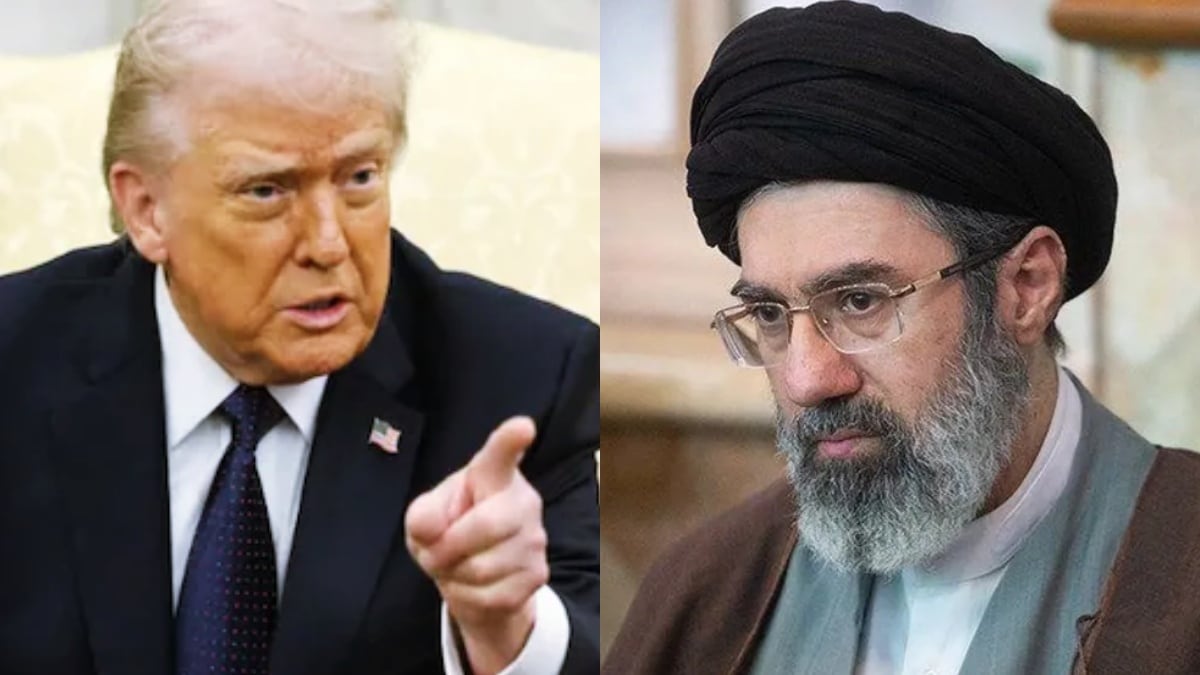
The global energy market does not run on supply and demand alone. It runs on fear, ambition, and the sheer force of political will. When Donald Trump threatened to hit Iran "very hard" and implement a "Venezuela-like control" over its oil reserves, the words radiated far beyond the immediate geopolitical chessboard. They struck at the very heart of the global economy, threatening to reshape the daily lives of millions of ordinary people who will never see an oil derrick or sit in a situation room.
To understand the weight of these statements, we have to look past the bluster of political rhetoric and examine the fragile machinery of the global oil trade. A sudden, massive disruption to Iranian oil output is not just a headline. It is a catalyst for a chain reaction that moves from the trading floors of New York and London directly to the gas pumps of suburban neighborhoods and the spreadsheets of small business owners trying to survive fluctuating overhead costs.
Consider the reality of a logistics manager named Marcus. He runs a mid-sized delivery fleet. He does not study Middle Eastern policy. He does not track the intricacies of economic sanctions. Yet, a single escalation thousands of miles away dictates whether his business turns a profit or falls into the red. When geopolitical tensions spike, crude oil prices react instantly. For Marcus, that means a sudden, unpredictable surge in diesel costs. It forces him to make hard choices about cutting routes, freezing hiring, or passing those expenses onto consumers who are already stretched thin. His reality demonstrates how abstract threats of economic dominance translate into immediate, tangible pressure on ordinary citizens.
Iran produces millions of barrels of crude oil every day. It remains a critical pillar of the global energy supply despite years of heavy sanctions. Removing that volume from the market, or attempting to completely choke off its export capabilities, creates a sudden deficit that other producing nations cannot instantly replicate.
When the United States contemplates "Venezuela-like control," it references a precedent of maximum pressure. In Venezuela, severe sanctions and political isolation crippled the national oil company, PDVSA, causing production to plummet from over two million barrels a day to a mere fraction of that volume. The economic fallout devastated the local economy and triggered a massive humanitarian crisis, while forcing global markets to recalibrate where they sourced heavy crude.
Applying that same playbook to Iran involves staggering risks. Iran is not isolated in its hemisphere. It sits directly on the Strait of Hormuz, a narrow maritime choke point through which one-fifth of the world’s total oil consumption passes daily.
A military or economic stranglehold that pushes Iran to the brink risks a retaliatory closure of this strait. If shipping lanes in Hormuz are compromised, the global economy faces an immediate supply shock.
The mechanics of an oil shock are brutal and swift.
[Geopolitical Escalation]
       │
       ▼
[Strait of Hormuz Risk]
       │
       ▼
[Global Supply Deficit]
       │
       ▼
[Surging Crude Prices]
       │
       ▼
[Rising Consumer Inflation]
When supply drops, prices skyrocket. This does not just mean it costs more to fill up a sedan on a Tuesday morning. Oil is the foundational ingredient of modern civilization. It fuels the container ships carrying electronics across the Pacific. It powers the trucks delivering fresh produce to grocery stores. It is refined into the plastics used in medical equipment and the fertilizers required to sustain global agriculture. When you artificially restrict the flow of oil, you inflate the cost of eating, manufacturing, and surviving.
The strategy of total economic strangulation relies on the assumption that alternative producers, such as Saudi Arabia or domestic shale operators in the United States, can simply turn on a faucet to make up the difference. This assumption is deeply flawed. Increasing oil production requires massive capital investment, years of infrastructure development, and a willingness by competing nations to deplete their spare capacity. It is not an instantaneous fix.
Furthermore, aggressive maneuvers in the Middle East alter the geopolitical alignments of major global consumers. Countries like China, which rely heavily on Iranian crude to fuel their massive industrial sectors, will not simply accept a forced halt to their energy imports. Instead, they seek alternative, often covert, supply chains. This creates a parallel, unregulated global economy that weakens the efficacy of traditional international banking systems and deepens the divide between global superpowers.
We often view these international standoffs through the lens of national security and political strategy. We dissect the speeches, analyze the military postures, and debate the merits of containment versus engagement. But the true stakes are measured in human capital. They are felt by families watching their disposable income erode as utility bills climb, and by communities experiencing the destabilizing ripple effects of global inflation.
The pursuit of absolute control over an adversary's primary resource is an intoxicating narrative for political leaders looking to project strength. It promises a swift, decisive victory through economic might. The historical record, however, reveals a far more complex and hazardous reality. True stability is rarely achieved through economic devastation. Instead, aggressive containment strategies often yield unpredictable blowback, prolonged instability, and a volatile economic environment that punishes the vulnerable while failing to achieve its core political objectives.
The rhetoric of hitting an adversary hard and seizing control of their economic lifeblood makes for a powerful soundbite. But the global energy infrastructure is too interconnected, and too fragile, to be manipulated without severe consequences. The invisible ties that bind a drilling rig in the Persian Gulf to a manufacturing plant in Ohio or a kitchen table in Europe ensure that when one nation is squeezed, the pressure is felt by all.