The steel deck of a modern container ship is an unimaginably loud place, but it is a predictable kind of noise. It is the rhythmic, reassuring thrum of a multi-story diesel engine driving thousands of tons of global commerce through the water. For the crew aboard the Singapore-flagged M/V Ever Lovely, navigating the narrow, sun-bleached corridor of the Strait of Hormuz, that noise was the sound of a fragile normalcy returning. Just a week prior, a memorandum of understanding signed in Switzerland had promised a 60-day pause to months of bitter conflict. It was a collective deep breath for global shipping lanes.
Then came the buzzing.
It is a high-pitched, weed-whacker whine that anyone who has spent time in modern conflict zones recognizes instantly. It is the sound of a one-way attack drone. On Thursday, four of these low-cost, high-consequence weapons streaked across the water from the Iranian coast. American defensive systems managed to swat three of them out of the sky, but the fourth found its mark. It slammed squarely into the upper deck of the cargo vessel, detonating near the bridge.
The explosion tore through steel, shattering glass and scattering shrapnel across the command hub. Miraculously, no one was killed. The ship, bruised but functional, maintained propulsion and limped out of the immediate danger zone along the coast of Oman. But while the physical damage to the Ever Lovely could be measured in weld lines and replaced wiring, the blast did something far more destructive: it fractured the delicate illusion of a diplomatic breakthrough.
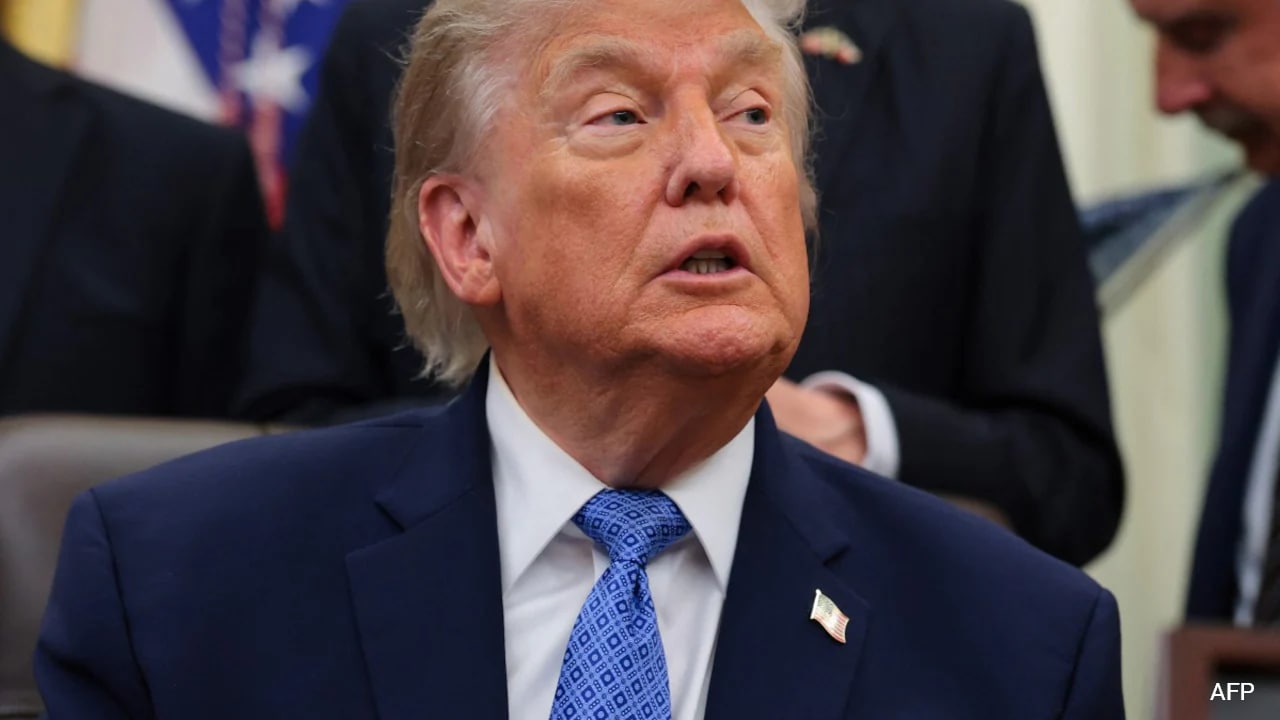
Hours later in Washington, the reality of the strike landed on the desk of President Donald Trump. Speaking to reporters at the White House before launching a wave of retaliatory airstrikes, his assessment was characteristic in its phrasing but heavy with geopolitical consequence.
"I don't like the fact that they took a shot yesterday," Trump said, his voice carrying the blunt irritation of a businessman whose counterparty had just altered the terms of a deal on the fly. "They shouldn't be doing that." On social media, he expanded the thought, calling the attack a "foolish violation of our ceasefire agreement."
When pressed by reporters on how the United States would react, Trump offered a brief, ominous preview: "You'll find out."
The answer came swiftly. American aircraft under U.S. Central Command streaked over the horizon, targeting the coastal radar installations, drone storage facilities, and missile sites that peppered the Iranian shoreline. The dynamic of the region, so briefly tilted toward a hard-fought peace, snapped back to the familiar cadence of kinetic escalation.
To understand why a single drone strike on a commercial vessel matters so deeply, one must look past the military jargon and see the Strait of Hormuz for what it actually is. It is not just a line on a map. It is a twenty-one-mile-wide choke point through which roughly one-fifth of the world’s petroleum and liquefied natural gas must pass every single day. It is the jugular vein of the global economy.
Consider a hypothetical captain—let’s call him Marcus—standing on the bridge of a similar merchant vessel just outside the Persian Gulf. Marcus isn’t a combatant. He is a merchant mariner responsible for thirty lives and hundreds of millions of dollars in cargo. When a ceasefire is announced, insurance premiums dip, shipping companies resume normal routing, and crews breathe easier. But when a drone breaches that ceasefire, everything changes instantly. The United Nations maritime agency immediately paused the evacuation of stranded vessels in the area. Actuaries in London rewrite risk calculations in real time. The price of moving everyday goods spikes.
The underlying friction isn't just about military posturing; it is a fundamental disagreement over who owns the right of passage. Following the attack, the Islamic Revolutionary Guard Corps Navy made its stance clear via state television, asserting that transit through the strategic waterway would only be permitted along routes strictly approved by Tehran.
"The only law that governs this region is still the law of the Islamic Republic of Iran," the state broadcast declared.
This directly clashes with the position held by Western allies and Gulf states, who maintain that international law guarantees free, unconditional, and unrestricted navigation through the strait. Iran has even floated the idea of charging "transit fees" or tolls for vessels passing through the corridor—a concept flatly rejected by U.S. Secretary of State Marco Rubio and regional partners.
This creates a terrifying ambiguity for those on the water. On one side of the ledger, diplomats in luxury Swiss hotels sign documents mapping out a 60-day path to regional stability. On the other side, commander-level officials on the Iranian coast treat the ceasefire not as a hard stop, but as a framework to be tested. Ebrahim Azizi, head of the Iranian parliament’s national security commission, captured this worldview perfectly when he wrote on social media: "This is not a violation of the ceasefire; it is ceasefire management."
But management via exploding drones is a high-wire act with zero margin for error.
The tragedy of the situation lies in the profound mismatch between the language of high-stakes diplomacy and the sudden, violent reality on the water. A president speaks of a "foolish violation," an Iranian official speaks of "management," and meanwhile, a crew of merchant sailors stands on a smoking deck off the coast of Oman, extinguishing fires caused by a weapon designed to kill.
The interim pact was supposed to buy time to address the structural issues plaguing the relationship between the two nations, from uranium stockpiles to regional proxy networks. Instead, the window for dialogue is shrinking under the heat of fresh engine fires and retaliatory missile strikes. The global economy watches the oil tickers, shipping companies redraw their routes around Africa, and the men and women navigating the narrow waters of the Gulf are left to look at the sky, wondering if the next sound they hear will be the hum of commerce or the whine of an incoming strike.