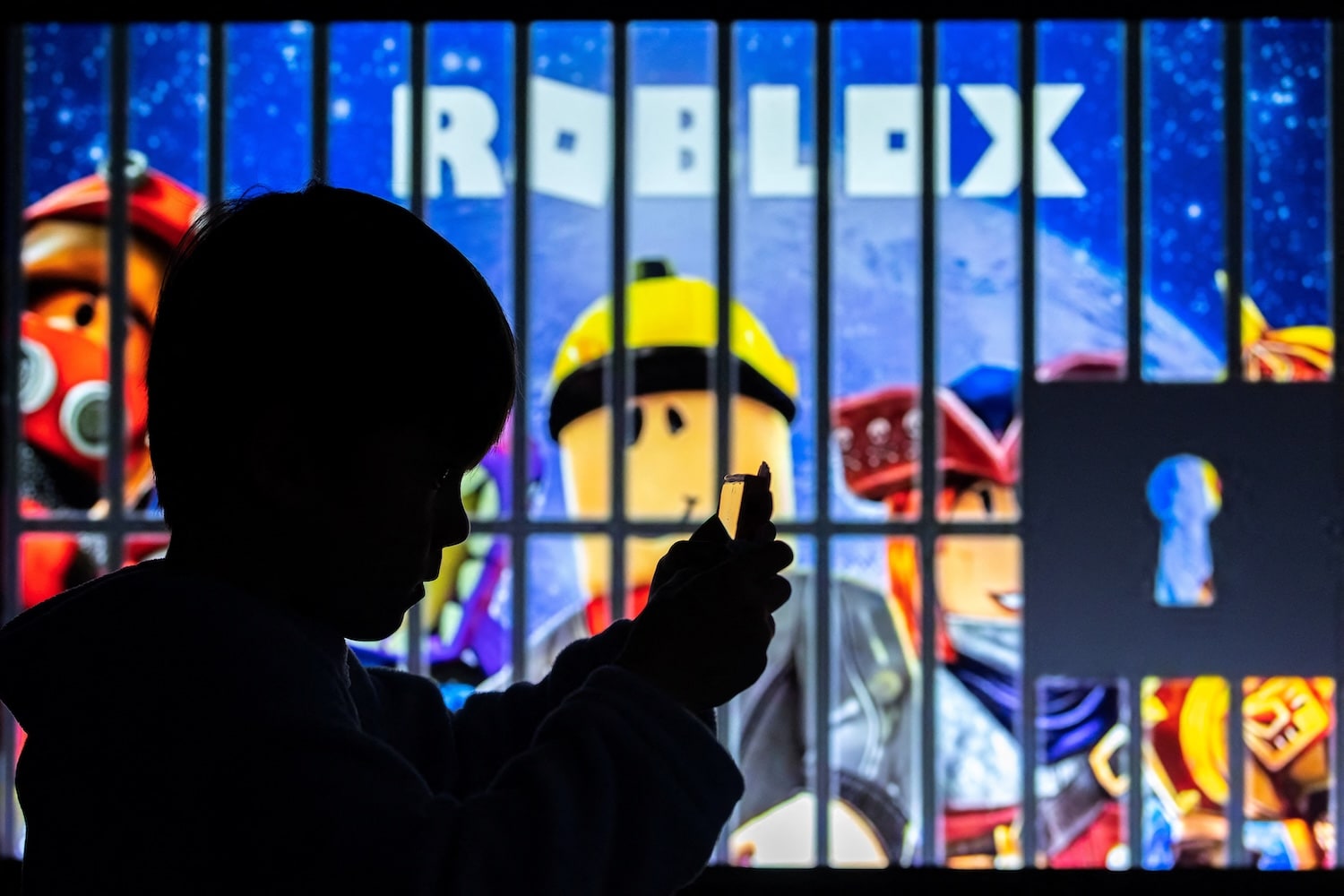
Roblox has officially hit the limits of its "platform, not a publisher" defense. After years of dodging accountability for the chaotic social ecosystem thriving under its hood, the company has agreed to a $12 million settlement with the state of Nevada. This isn't just another fine tucked into a quarterly earnings report. It is a fundamental admission that the current systems used to protect millions of children are broken. The settlement forces the company to overhaul its age verification protocols and implement stricter safety controls, marking a shift from passive moderation to active policing.
For a company valued in the billions, $12 million is a rounding error. However, the legal precedent set by Nevada Attorney General Aaron Ford creates a blueprint for other states to follow. The core of the complaint centered on the ease with which minors could bypass existing safeguards to access adult-themed content, gambling-adjacent mechanics, and unmonitored communication channels. By settling, Roblox avoids a discovery phase that could have laid bare exactly how much the company knew about these vulnerabilities—and how long it chose to ignore them in favor of rapid user growth. For a closer look into this area, we recommend: this related article.
Beyond the Settlement Figures
The financial penalty serves as a smokescreen for the more demanding operational requirements. Nevada didn't just want the money; they wanted the keys to the kingdom. Roblox is now mandated to implement biometric-grade age verification for specific features and must provide clearer, more accessible reporting tools for parents.
The industry has watched Roblox grow into a digital behemoth by offloading the labor of content creation to its users. This "user-generated content" model allowed the company to scale at a pace traditional developers couldn't match. But that same model created a massive blind spot. When you give millions of people the tools to build anything, some will inevitably build harm. The settlement effectively ends the era where Roblox could claim ignorance of what was happening in its "experiences." To get more background on the matter, extensive coverage is available on The New York Times.
The Illusion of Safety in the Sandbox
For years, the company relied on automated keyword filters and a reactive moderation team to maintain order. It didn't work. Bad actors developed "leetspeak" and coded visual languages to bypass text filters. Predators found ways to move conversations from the platform's monitored chats to encrypted external apps like Discord or Telegram.
The Nevada investigation highlighted that the "Parental Controls" were often too complex or buried too deep in the UI to be effective for the average household. Under the new agreement, these controls must be front-and-center. More importantly, the default settings for younger users must be set to the most restrictive levels, flipping the "opt-in" safety model on its head. This "safety by design" requirement is a direct challenge to the company's engagement-first philosophy.
The Growth Versus Governance Conflict
Wall Street loves Roblox because of its "network effect." Every new user makes the platform more valuable for everyone else. However, keeping those users safe is expensive. Real-time human moderation for a global audience of 70 million daily active users costs a fortune. Until now, Roblox has balanced the books by leaning heavily on AI-driven moderation that lacks the nuance to catch sophisticated bad actors.
The $12 million deal signals that the cost of doing business is about to rise. If Roblox has to verify the identity of every user who wants to access social features, the friction in the sign-up process will increase. Friction is the enemy of growth. We are seeing a collision between the requirements of a public company to show ever-increasing user numbers and the legal requirement to ensure those users aren't being exploited.
Mandatory Transparency and the Third-Party Watchdog
A critical, often overlooked component of the Nevada deal is the requirement for independent auditing. Roblox can no longer grade its own homework. An outside firm will now have the authority to review the company’s internal safety data and report directly to state regulators.
This level of transparency is unprecedented for a private tech firm. It means every time a new "glitch" allows explicit content to trend on the front page, the Attorney General’s office will be notified. This isn't just about protecting kids in Las Vegas; it sets a standard for a global compliance framework. If Roblox builds these tools for Nevada, they will likely have to roll them out globally to maintain a unified codebase, effectively allowing one state to dictate the safety standards for the entire world.
The Gambling Loophole and Virtual Economies
One of the stickiest points in the investigation involved the "grey market" for Robux. While Roblox officially prohibits gambling, the platform is littered with experiences that mimic slot machines, loot boxes, and high-stakes trading. Because Robux can be converted back into real currency through the Developer Exchange (DevEx) program, these in-game activities have real-world financial consequences.
The Nevada settlement touches on these "dark patterns"—design choices that nudge children into spending money or staying on the platform longer than they intended. By forcing tighter age checks, the state is targeting the "whales" of the Roblox ecosystem: minors who spend thousands of dollars on digital items.
- Identity Verification: Users claiming to be over 13 or 17 will now face more rigorous proof-of-age requirements.
- Default Privacy: Accounts for children under 13 will have restricted direct messaging by default.
- Advertising Clarity: Branded content must be more clearly labeled to prevent the blurring of play and promotion.
This crackdown on the virtual economy is a warning shot to other platforms like Fortnite and Minecraft. The regulators are finally looking past the "it's just a game" excuse and seeing these platforms for what they are: massive, unregulated financial ecosystems.
The Technical Debt of Moderation
Roblox was built on legacy code that wasn't designed for the hyper-social, high-risk environment it has become. Retrofitting safety into an existing architecture is significantly harder than building it from the ground up. The company now faces a massive engineering challenge. They have to integrate high-fidelity ID scanning and real-time behavioral analysis without tanking the performance of the app on low-end mobile devices, which make up the bulk of their user base.
The settlement specifically mentions the need for better cross-platform tracking. If a user is banned for predatory behavior in one "experience," the system needs to be better at ensuring they can’t just hop into another one under a different alias. This requires a level of data sharing and user tracking that raises its own set of privacy concerns, creating a paradox where more surveillance is the only path to more safety.
The Role of the "Protective Parent"
The narrative from Roblox has often shifted the burden of safety onto the parents. "We provide the tools; you provide the supervision," was the unspoken mantra. Nevada’s legal action rejects this premise. The settlement argues that the platform is too vast and too complex for any parent to reasonably monitor.
By mandating that Roblox take a more proactive role, the state is treating the platform more like a physical playground or a school than a neutral utility. If a swing set is broken, the park department is liable. If a digital space is dangerous, the developer is liable. It is a simple concept that has taken a decade to codify in the digital realm.
A Pivot Point for Digital Rights
This $12 million settlement is the beginning of a larger legislative trend. We are moving away from the era of "move fast and break things" and into an era of "move slowly and show your ID." While some privacy advocates worry about the amount of personal data Roblox will now be forced to collect for verification, the alternative—a lawless digital space where children are the primary target—has become politically and socially untenable.
The company's stock might fluctuate based on these legal headwinds, but the real impact will be felt in the user experience. The "Wild West" days of Roblox are ending. Every update from this point forward will be viewed through the lens of compliance rather than just creativity.
The move by Nevada proves that states aren't waiting for a gridlocked Congress to act on federal privacy laws. They are using their own consumer protection statutes to force the hands of tech giants. Roblox is the first major domino to fall in the gaming sector, but it won't be the last. Any platform that monetizes the attention of minors is now on notice. The cost of a "free" platform just went up.
Stop looking at the $12 million as a fine. Look at it as the first installment of a permanent tax on the business of digital childhood.