The ink on an official European Union decree dries quickly. In Brussels, the air conditioning hums, translators shuffle translated drafts, and diplomats sip espresso from porcelain cups. The document sits on a mahogany table, neat and binding. It lists six names. Six human beings who, until recently, operated in the blind spots of global awareness, assuming their daily routines inside the Russian penal system would remain invisible to the outside world.
But thousands of miles away, past the Ural Mountains and deep within the Arctic Circle, the air does not hum. It bites. It freezes the breath inside your lungs until every exhalation feels like swallowing shattered glass. This is Kharp, home to the IK-3 penal colony, colloquially known as the Polar Wolf. Here, winter is not a season. It is a permanent psychological weight.
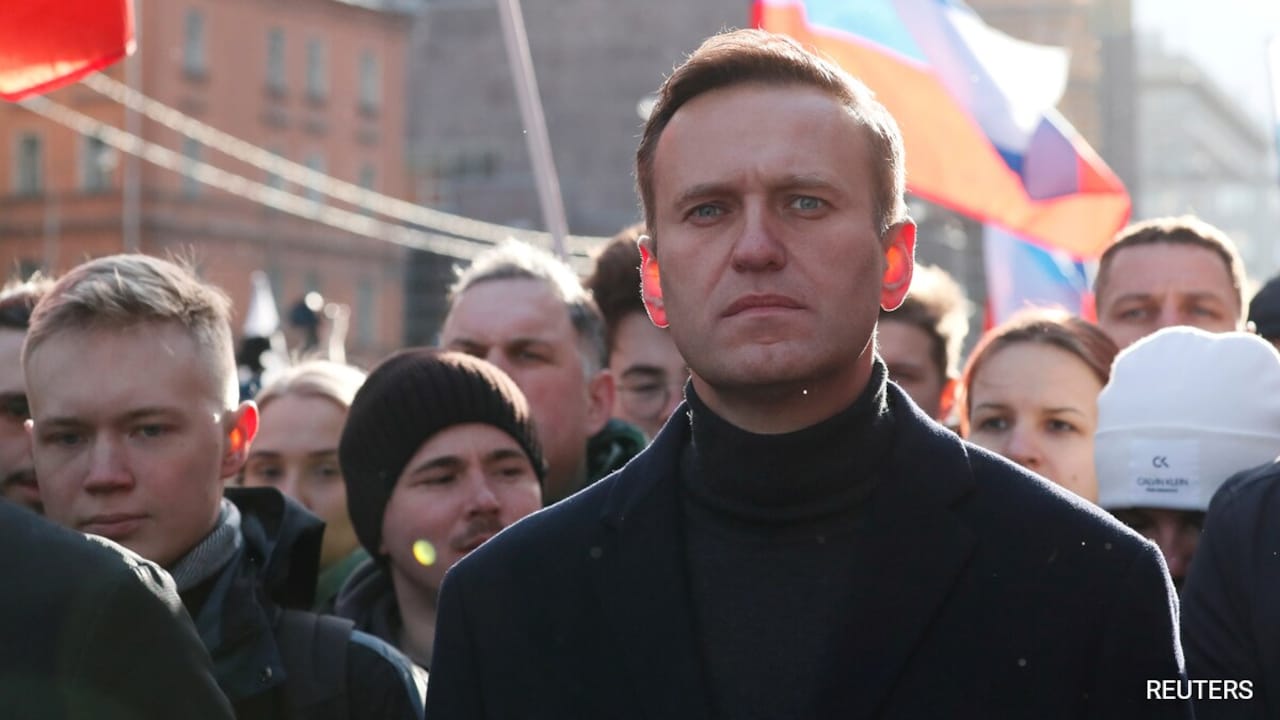
In February, that weight crushed Alexei Navalny.
When news of the opposition leader’s death leaked from the frozen perimeter of IK-3, the world reacted with predictable cycles of outrage, grief, and condemnation. Headlines shouted. Pundits speculated. Yet, behind the geopolitical theater lies a deeply human calculation about the value of a single voice and the terrifying mechanics of bureaucratic cruelty. The recent EU sanctions targeting six individuals directly tied to Navalny’s final months are more than mere political maneuvers. They represent a desperate, necessary attempt to pierce the veil of anonymity that shields perpetrators of state-sponsored violence.
To understand the weight of these sanctions, we have to look past the dry press releases. We must look at the specific machinery that ground a man down to nothing.
The Architecture of Isolation
Consider a hypothetical prison guard walking the concrete corridors of a maximum-security colony. Let us call him Mikhail. Mikhail is not a grand strategist of global politics. He does not sit in the Kremlin or draft national security doctrines. He wakes up, puts on a thick uniform, and ensures that the prisoners under his watch remain completely, utterly isolated. To Mikhail, compliance is a metric. Silence is a successful shift.
This is where abstract tyranny becomes tangible. For months, Navalny was subjected to a relentless regime of solitary confinement. The punishment cell, or ShIZO, is a concrete box designed to erode the human mind. It is cramped. The light is either perpetually blinding or non-existent. The heat is dialed down to levels that demand constant movement just to keep the blood flowing.
The official reports list medical failures and sudden collapses. The reality of state control is far less dramatic and far more sinister. It is a slow, systematic denial of basic human needs. Denying a blanket in sub-zero temperatures. Denying books. Denying the sound of another human voice that does not carry an order.
The European Union’s blacklisting of these six specific individuals—ranging from prison officials to members of the judiciary who rubber-stamped his treatment—is an acknowledgment of this micro-level brutality. It states, with legal finality, that the person who turns the key is just as culpable as the leader who gives the speech.
The Men Behind the Forms
Bureaucracy functions because it distributes guilt until the individual feels entirely blameless. A judge signs an extension for solitary confinement, thinking they are merely following legal protocol. A warden orders a restriction on medical supplies, convincing himself he is maintaining discipline. A guard enforces a freezing cell temperature, telling his conscience that he is just a cog in a vast machine.
The EU sanctions shatter that illusion of innocence.
By freezing assets and banning travel for these six men, international law strips away their anonymity. It drags them out of the shadow of the state apparatus and holds them up to the light as individual actors. These are men who thought their actions carried no personal risk. They believed the vastness of the Russian wilderness and the opacity of the Kremlin would protect them forever.
But the world remembers.
The sanctions hit where it hurts most for men of this ecosystem: the quiet dream of eventual escape. Many lower-level officials in oppressive regimes operate under the assumption that their dirty work will buy them a comfortable retirement. They imagine future vacations in Mediterranean coastal towns, European bank accounts to shield their wealth, and a quiet life away from the bleakness they inflicted on others. The stroke of a pen in Brussels ensures that their world remains precisely as small, cold, and confined as the prison cells they managed.
The Human Cost of Standing Up
It is easy to romanticize dissent from afar. We watch videos of protests, read translated tweets, and marvel at the courage of individuals who stare down authoritarian regimes. We treat them like characters in a film, immune to the physical realities of suffering.
Navalny was not a character. He was a husband, a father, and a human being who knew exactly what was waiting for him when he chose to return to Russia after surviving a novichok poisoning. He understood the mathematics of the system he was fighting. He knew that the regime does not negotiate; it consumes.
The letters he sent from prison, often filled with dark humor and profound optimism, show a man consciously fighting the freezing of his own humanity. He joked about his meager rations. He wrote about the books he was reading. He refused to let the gray walls of the Polar Wolf dictate the color of his thoughts.
But the body has limits. The human heart, no matter how resilient the spirit behind it, requires warmth, nutrition, and rest. When those are systematically stripped away over hundreds of days, the outcome is not an accident. It is a mathematical certainty.
The Ripple on the Surface
Critics often dismiss sanctions as symbolic gestures. They argue that a travel ban does little to change the behavior of a regime that has already decoupled itself from Western norms. They point out that these prison officials are unlikely to have villas in France or millions stored in German banks.
This perspective misses the psychological core of the action.
Sanctions are a message to the entire hierarchy of enforcement. They signal to the next judge, the next warden, and the next guard that the ledger is being kept. It forces a terrifying question into the minds of those currently carrying out oppressive orders: Is my loyalty worth my permanent exile?
When the state can no longer guarantee the total protection of its foot soldiers, the foundation of that state begins to fracture. The fear shifts, if only by a millimeter. The absolute certainty that one can abuse power with impunity vanishes.
A Broken Silence
The story of Alexei Navalny did not end in the snow of Kharp. It continues in the frantic efforts of his allies to keep his work alive, in the quiet defiance of ordinary citizens who still place flowers at makeshift memorials, and in the legal frameworks now being built to punish his tormentors.
The six names added to the EU’s sanctions list are now part of a permanent historical record. They are no longer anonymous bureaucrats executing orders in the dark. They are marked.
We often feel helpless in the face of massive, shifting geopolitical forces. The news cycle moves on with brutal speed, replacing one tragedy with another, leaving us with a sense of numbness. But the act of naming perpetrators, of documenting the specific mechanisms of cruelty, is an act of resistance against that numbness.
The mahogany tables in Brussels and the frozen concrete of the Polar Wolf exist in the same world. For a long time, the people running the prisons believed those two worlds would never intersect. They believed the ice would swallow the truth.
They were wrong.
The ink has dried. The names are public. The world is watching, and the long, slow march toward accountability has begun.