The ticker on the wall of the trading floor does not bleed. It flashes in neon green and harsh crimson, blinking with a cold, rhythmic indifference to the world outside. To a commodities trader in Chicago, a sudden spike in geopolitical tension is not a human tragedy. It is a margin call. It is volatility. It is a number on a screen that determines whether they buy a second home or watch their fund evaporate before lunch.
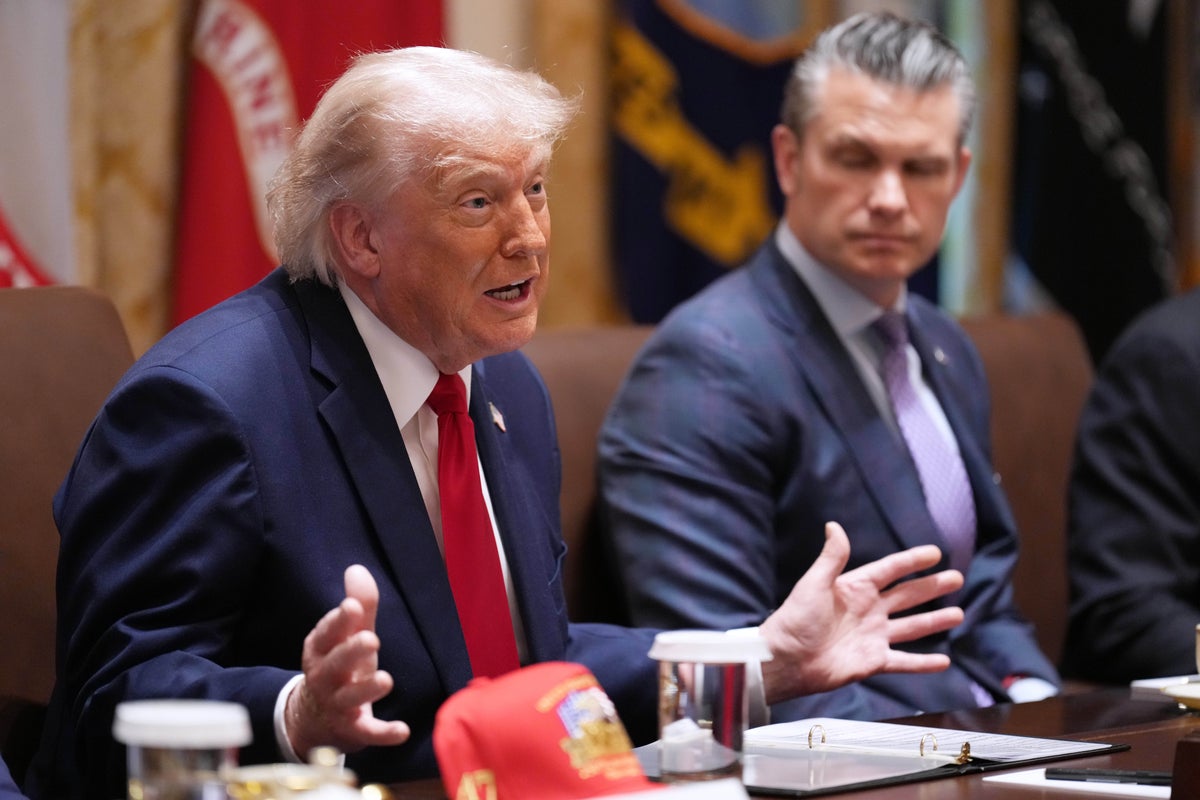
When Donald Trump stood before a crowd and declared that he "couldn't care less" about brokering peace in Iran because "oil will be dropping like a rock," he wasn't just making a campaign statement. He was articulating a brutal, transactional philosophy that reduces global diplomacy to a supply-and-demand curve.
For decades, the standard playbook of American foreign policy treated Middle Eastern stability as a vital national interest, primarily because a flickering match in the Persian Gulf could instantly ignite inflation at home. But the calculus has fundamentally shifted. The old anxiety has been replaced by a new, aggressive indifference. When a superpower decides that the price of crude matters more than the architecture of global peace, the ripples extend far beyond the gas pumps of Ohio. They reach into the lives of people who will never see a oil rig, yet find their futures traded away for a cheaper gallon of unleaded.
The Ghost in the Ledger
Consider a hypothetical truck driver named Marcus. He lives in eastern Pennsylvania, driving an eighteen-wheeler across state lines to keep a regional grocery chain stocked. Marcus does not read OPEC press releases. He does not track the diplomatic cables flying between Washington, Tehran, and Riyadh. But Marcus feels foreign policy in his chest every Monday morning when he swipes his fleet card at the diesel island.
If the price of diesel climbs past five dollars a gallon, Marcus’s margins contract until he is essentially working for free. His stress levels spike. He stays on the road longer, missing his daughter’s basketball games, fueled by black coffee and anxiety. To Marcus, a president promising that oil will drop "like a rock" sounds like a lifeline. It sounds like survival.
This is the political potentcy of cheap energy. It is an immediate, tangible relief that voters can feel in their wallets every single week. When a politician aligns themselves with that immediate relief, they win a powerful narrative victory. They become the champion of the working man's budget.
But there is a hidden ledger to this transaction.
While Marcus enjoys a cheaper fill-up, the structural stability of the international order cracks open. The phrase "couldn't care less" is a declaration of strategic decoupling. It suggests that if an adversary’s economy crumbles under the weight of collapsing oil prices, the resulting chaos, regional proxy wars, and human displacement are simply acceptable collateral damage. The market, in this view, is a weapon more efficient than a Tomahawk missile, and far less politically costly to deploy.
The Illusion of Isolation
The American energy boom changed everything. The shale revolution turned a country that once begged foreign kings for supply into the world’s leading oil producer. It created a dangerous illusion of invulnerability. The prevailing myth grew: because we drill our own crude, we are finally free from the madness of the Middle East.
This is a profound misunderstanding of how global markets operate. Oil is a fungible commodity. A barrel extracted from the Permian Basin in Texas is bound to the same global pricing mechanisms as a barrel pumped from the desert sands of Khuzestan. If a conflict breaks out in the Strait of Hormuz, the price of oil skyrockets everywhere instantly, regardless of how much domestic supply America possesses.
Conversely, when a political figure predicts a massive crash in prices, they are gambling on a flooded market. They are betting that increased domestic production and a fractured OPEC will break the pricing power of foreign adversaries.
It is a high-stakes game of economic chicken.
Imagine a family in a small village outside Isfahan. They are not politicians; they do not burn flags. They are schoolteachers, mechanics, and shopkeepers trying to survive under the crushing weight of hyperinflation and international sanctions. When the price of oil crashes, their currency devalues further. Medicine becomes scarce. The basic necessities of life drift out of reach. The collapse of oil prices is designed to starve a regime of revenue, but the regime always eats first. The starvation stops at the doorsteps of the ordinary citizens.
By reducing foreign policy to a price point, we decouple statecraft from human morality. We treat the economic strangulation of an entire nation as a mere byproduct of a favorable domestic market.
The Feedback Loop
The belief that economic pressure automatically forces a nation to the negotiating table is a historic fallacy. Often, the opposite occurs.
When a nation is backed into an economic corner, with its primary revenue source systematically devalued, it does not quietly capitulate. It becomes desperate. It turns to asymmetric warfare, cyberattacks, and regional sabotage. A country that has nothing left to lose through traditional economic channels becomes a wild card on the global stage.
The real problem lies elsewhere, far from the immediate gratification of the gas pump.
When a superpower explicitly states that peace is a secondary concern to market dynamics, it signals to allies and adversaries alike that the international rules-based order is up for sale. It tells the world that security guarantees are conditional, based on the current trading price of West Texas Intermediate. This creates a vacuum. Other global powers, less concerned with quarterly economic metrics and more focused on long-term geopolitical dominance, step into the void.
Marcus, driving his truck through the Pennsylvania night, feels the immediate benefit of a market flooded with cheap oil. His shipping costs drop. The grocery chain stops threatening to cut his hours. He feels a momentary sense of stability.
But that stability is built on quicksand.
The invisible stakes of this policy are generational. A world where peace is dismissed as a negligible metric is a world where conflicts are allowed to fester until they boil over into something that no amount of domestic oil production can contain. The cost is merely deferred. We trade a higher price at the pump today for a far more dangerous, unpredictable world tomorrow.
The numbers on the trading floor continue their frantic dance. The price drops. The algorithms execute their trades. The crowd cheers for cheaper fuel. And somewhere, far beyond the horizon, the pressure builds in the dark, waiting for the moment the ledger demands to be balanced.