The air in the Tehran bazaar carries the heavy scent of saffron, roasted pistachios, and centuries of dust. If you stand near the carpet stalls long enough, you will see hands that have woven intricate patterns for fifty years trace the same geometric lines over and over. These knots do not yield easily. They are designed to withstand boots, spills, and time itself.
Thousands of miles away, inside the pressurized chamber of American cable news and presidential pronouncements, geopolitics behaves like a game of checkers. Push a piece here, trap a piece there. In the spring of 2018, the White House wagered everything on a single, massive push. By pulling out of the 2015 nuclear deal and reimposing crushing economic sanctions, the administration assumed that maximum economic pain would force a swift capitulation.
"Iran is strong, proud," the American president noted during a lawn-side press conference, a sudden burst of rhetorical admiration mixed with an ironclad ultimatum. He insisted that despite their pride, the leadership in Tehran would eventually have no choice but to come to the table and beg for a new deal.
It sounds logical in a boardroom. If a company runs out of cash, it files for bankruptcy or sells its assets. But nations are not corporations. They do not operate solely on balance sheets. When you squeeze a country built on a foundational myth of resistance, the result is rarely surrender.
Instead, the pressure cooks something entirely different.
The Calculus of Bread and Pride
To understand why strategy failed to match reality, we have to look past the political speeches and into the kitchen of a hypothetical citizen we will call Farhad. He is a retired schoolteacher in Esfahan. He does not care about uranium enrichment percentages or the nuances of centrifugal design. He cares about the price of eggs.
When sanctions hit, the Iranian rial plummeted. Farhad’s fixed pension, which once allowed him to buy meat twice a week and save for his daughter’s wedding, evaporated in real-time. The numbers on the grocery store labels changed weekly, then daily.
This is the invisible friction of economic warfare. It does not look like an explosion. It looks like an old man staring at a shelf, quietly putting a jar of yogurt back because it now costs a third of his weekly income.
The Western theory of sanctions relies on a specific sequence: economic misery breeds public anger, public anger breeds civil unrest, and civil unrest forces the regime to change its behavior or risk collapse.
But consider what happens next in the human mind. Farhad does not necessarily blame his own government for the empty refrigerator. When the external world explicitly states that it is trying to starve your economy into submission, the human reflex is often to dig in. Pride becomes a survival mechanism. The historical memory of foreign intervention—from the 1953 coup to the brutal Iran-Iraq war—awakens.
The American strategy misjudged the sheer tensile strength of Iranian endurance. Tehran did not break. It adapted, pivoted toward a shadow economy, and grew more defiant.
The Shadow Market Mechanics
When you block the front door of global commerce, you do not stop trade. You merely create a lucrative, dangerous back alley.
Iran became a master of the ghost armada. Millions of barrels of oil began moving across the oceans under darkened transponders, transferred from ship to ship in the middle of the night, disguised with false paperwork, and sold to buyers hungry for discounted crude. The formal banking system was locked down, so a vast network of traditional money changers, known as hawala, filled the void. Trust, rather than digital ledgers, became the currency.
This shift changed the internal power dynamics of the country.
The very people the West hoped to weaken—the hardline elements and the paramilitary networks—actually gained leverage. Why? Because they controlled the smuggling routes. They possessed the logistics to bypass the blockades. The legitimate, reform-minded business owners who wanted integration with the global economy were the ones wiped out. The boutique tech startups in Tehran, the independent exporters, the university professors looking for international research grants—they were sidelined.
The pressure cooker did not blow the lid off the regime. It blew out the middle class.
The Illusion of No Choice
The core fallacy of the "no choice" doctrine is the belief that an adversary views options through your lens of rationality.
From the American perspective, the choice was simple: economic ruin or diplomatic compromise. But from the perspective of Iran’s leadership, compromising under direct threat looked like regime suicide. In the Middle East, weakness invites aggression. If Tehran bent to the pressure, it would signal to its rivals that bullying worked.
So, they chose a third path. Escalation.
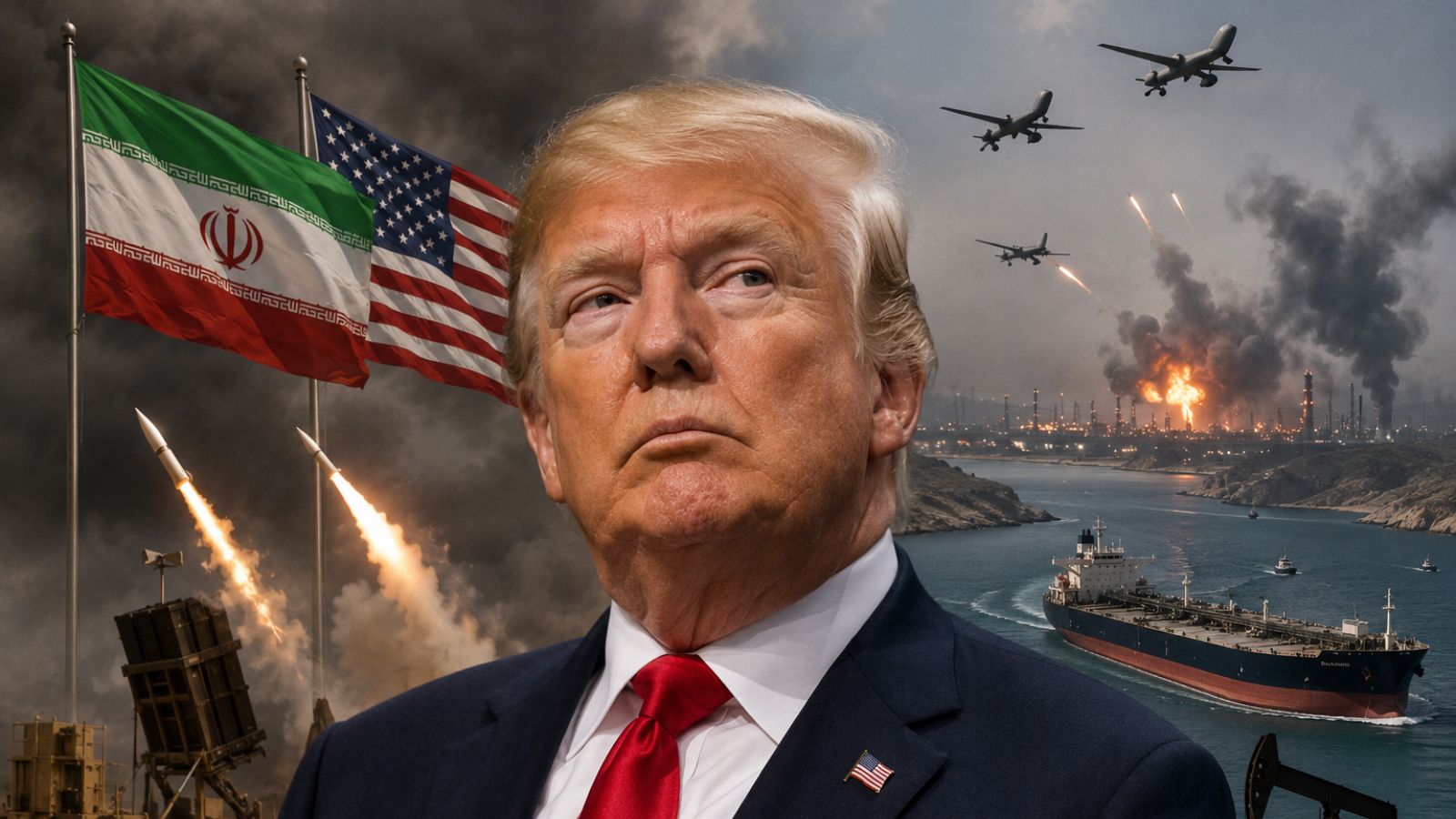
If their oil couldn't flow, they reasoned, nobody else’s should flow safely either. Mysterious limpet mines began attaching to oil tankers in the Strait of Hormuz. High-tech American drones were shot out of the sky. Advanced Saudi oil facilities were struck with precision drones, temporarily knocking out half of the kingdom's production.
Every time the economic vice tightened, Iran struck back asymmetric walls, raising the stakes for the entire global economy. They proved that while they might lack the conventional military might of the United States, they possessed the ability to make everyone else bleed alongside them.
The strategy of maximum pressure met its match in a strategy of maximum resistance.
The Human Ledger
Walk back into that bazaar in Esfahan or Tehran. The carpets are still there, but fewer people are buying them. The young people sitting in cafes look at their phones, watching the value of their futures fluctuate based on tweets and statements from foreign capitals.
There is a profound exhaustion. It is a exhaustion born from living in a permanent state of emergency. The tragedy of the "no choice" narrative is that it treats millions of people as collateral damage in a grand geopolitical experiment.
The Western policy makers forgot that a nation is not a monolith. It is a collection of individuals who have learned, over three thousand years of history, how to outlast empires. They know how to stretch a meal, how to mask their wealth, and how to keep their dignity intact while foreign powers try to squeeze them into submission.
The policy didn’t bring Iran to its knees. It just taught them how to walk through fire.
The sun sets over the Alborz mountains, casting long shadows across the concrete blocks of Tehran. The city hums with the sound of chaotic traffic, smog, and the resilient, stubborn noise of everyday life. The politicians will continue to predict the imminent collapse or the inevitable surrender of their rivals. They will draft reports, calculate losses, and issue warnings.
But down on the streets, the knots remain tight. The pattern holds. The people continue to endure, proving that in the theater of global conflict, the human spirit is the one variable you can never truly squeeze out of the equation.