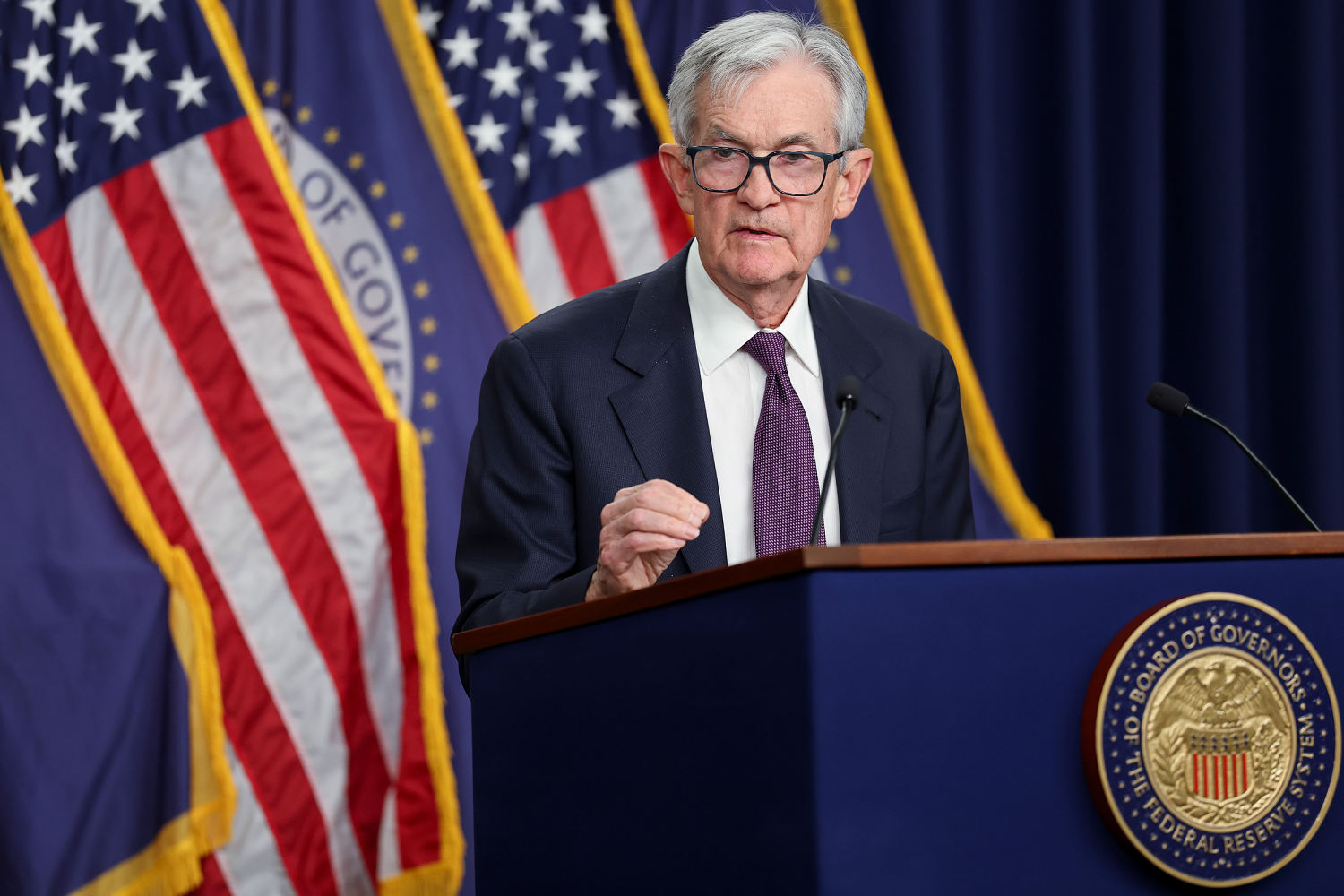
Wall Street is currently obsessed with a goodbye party that hasn't started and a "steady hand" that is actually asleep at the wheel. The prevailing narrative—the lazy consensus—is that Jerome Powell is playing a sophisticated game of chicken with inflation, holding rates steady to ensure a soft landing before he potentially exits the stage. This view treats the Federal Reserve like a delicate watchmaker. In reality, the Fed is a panicked driver trying to steer a semi-truck with a ten-second steering lag.
The obsession with Powell’s "last meeting" or his legacy as Chair is a distraction. Markets are pricing in stability based on a cult of personality, ignoring the structural rot beneath the surface of the Federal Open Market Committee (FOMC) decision-making process. Keeping rates "steady" isn't a sign of confidence. It’s a confession of paralysis.
The Soft Landing is a Statistical Ghost
The most dangerous phrase in modern finance is "soft landing." It implies that the Fed can move the federal funds rate with enough precision to cool the economy without cracking the foundation. If you look at the historical data, specifically the tightening cycles since the 1950s, true soft landings are about as rare as a politician keeping a campaign promise.
Most observers point to 1994-1995 as the gold standard. But today’s debt-to-GDP ratio makes the mid-90s look like a fiscal paradise. We are currently operating in an environment where interest payments on federal debt are eclipsing the defense budget. When the Fed "holds steady," they aren't waiting for data; they are waiting for permission from the bond market, which is already screaming that the current trajectory is unsustainable.
The "steady" approach ignores the lag effect. Rate hikes take 12 to 18 months to fully permeate the economy. By the time the Fed sees a "clear sign" that they’ve done enough, they have almost always done too much. Holding rates at these levels while the regional banking sector continues to bleed out from underwater commercial real estate loans isn't "prudent." It’s negligent.
The Myth of the Independent Chair
The competitor's piece suggests this is Powell’s "last stand." This assumes the Chair acts as a lone wolf or a supreme commander. The reality of the FOMC is far more bureaucratic and far more political than anyone wants to admit. Whether Powell stays or goes, the institutional inertia of the Fed is baked in.
- The Groupthink Trap: The Fed staff is a closed loop of Ph.D. economists who use the same models—models that failed to predict the "transitory" inflation surge of 2021.
- The Political Shadow: No Chair operates in a vacuum during an election cycle or a transition of power. Holding rates steady is the path of least resistance. It avoids the "hawkish" tag that kills growth and the "dovish" tag that reignites prices.
If Powell is indeed leaving, he isn't setting the stage for a successor; he’s leaving a ticking time bomb. The next Chair won't inherit a "stabilized" economy. They will inherit a distorted balance sheet and a market that has been conditioned to believe the "Fed Put" is still alive.
The Liquidity Delusion
Everyone focuses on the rate. Nobody talks about the runoff. While the headlines scream about whether the Fed will hold or cut by 25 basis points, Quantitative Tightening (QT) is the silent killer. The Fed has been shrinking its balance sheet, pulling liquidity out of a system that is addicted to cheap cash.
Imagine a scenario where the Fed keeps rates at 5.25% to 5.50% but continues to let $60 billion in Treasuries and $35 billion in mortgage-backed securities roll off every month. The "steady" rate is a mask. The actual monetary conditions are tightening even if the headline number doesn't move.
The "lazy consensus" says this is a controlled burn. I’ve seen institutional desks blow through billions because they mistook a "pause" for a "pivot." A pause in this macro environment is just a slow-motion tightening for the private sector. Small businesses aren't borrowing at the "steady" rate; they are borrowing at 10% or 12%, if they can get credit at all.
Dismantling the "Wait and See" Strategy
The Fed says they are "data-dependent." This is a fancy way of saying they are looking in the rearview mirror to drive the car.
- CPI is a Lagging Indicator: By the time consumer prices show a definitive trend, the underlying economic activity has already shifted.
- Employment is a Coincident Indicator: Companies don't fire people until they absolutely have to. Unemployment is the last thing to break.
If you wait for the "data" to tell you to cut, you’ve already missed the window to prevent a recession. The Fed's current stance is a bet that the US consumer is invincible. But the US consumer is currently floating on a sea of credit card debt with record-high interest rates. The "steady" policy is a direct tax on the middle class while the Fed waits for a "signal" that is already flashing red in the credit markets.
The Successor Trap
The media wants to speculate on who takes over from Powell. Will it be a hawk? A dove? It doesn't matter. The Fed has painted itself into a corner where the only two options are:
- Maintain high rates and trigger a systemic credit event in the banking or shadow banking sectors.
- Cut rates and admit that 2% inflation is a fantasy, effectively devaluing the dollar to save the Treasury's interest bill.
There is no third option. There is no "perfect" exit. Any successor will be forced to choose between the integrity of the currency and the solvency of the government. By holding steady now, Powell isn't being a statesman. He’s avoiding the choice so his successor has to make it under much worse conditions.
Stop Asking if They Will Hike or Cut
The question itself is flawed. You should be asking how long the private sector can survive a cost of capital that exceeds its return on investment.
In the ZIRP (Zero Interest Rate Policy) era, every zombie company could survive. Now, the "steady" rate is acting as a filter. That would be healthy if it were a natural market process. But this isn't a market. It's a centrally planned interest rate regime. When the "steady" rate causes a collapse, it won't be because the companies were bad—it will be because the liquidity dried up overnight.
Actionable Reality for the Skeptic:
- Ignore the "Last Meeting" Hype: Powell’s departure doesn't change the Fed's mandate or its flawed models.
- Watch the Spreads, Not the Fed: The gap between Treasury yields and high-yield corporate bonds tells the real story. When those blow out, the "steady" rate won't mean a thing.
- Hedge for Volatility, Not Stability: The market is pricing in a boring transition. That is the exact moment when a tail-risk event occurs.
The Federal Reserve isn't holding the line. They are standing on a fault line. Holding rates steady at the top of a cycle is historically the precursor to a vertical drop. If you’re waiting for Powell to give you a sign that the coast is clear, you’re already underwater.
Stop looking at the Chair. Start looking at the debt. The math doesn't care who is sitting at the head of the table.
The Fed is out of bullets, and "steady" is just another word for "stuck."