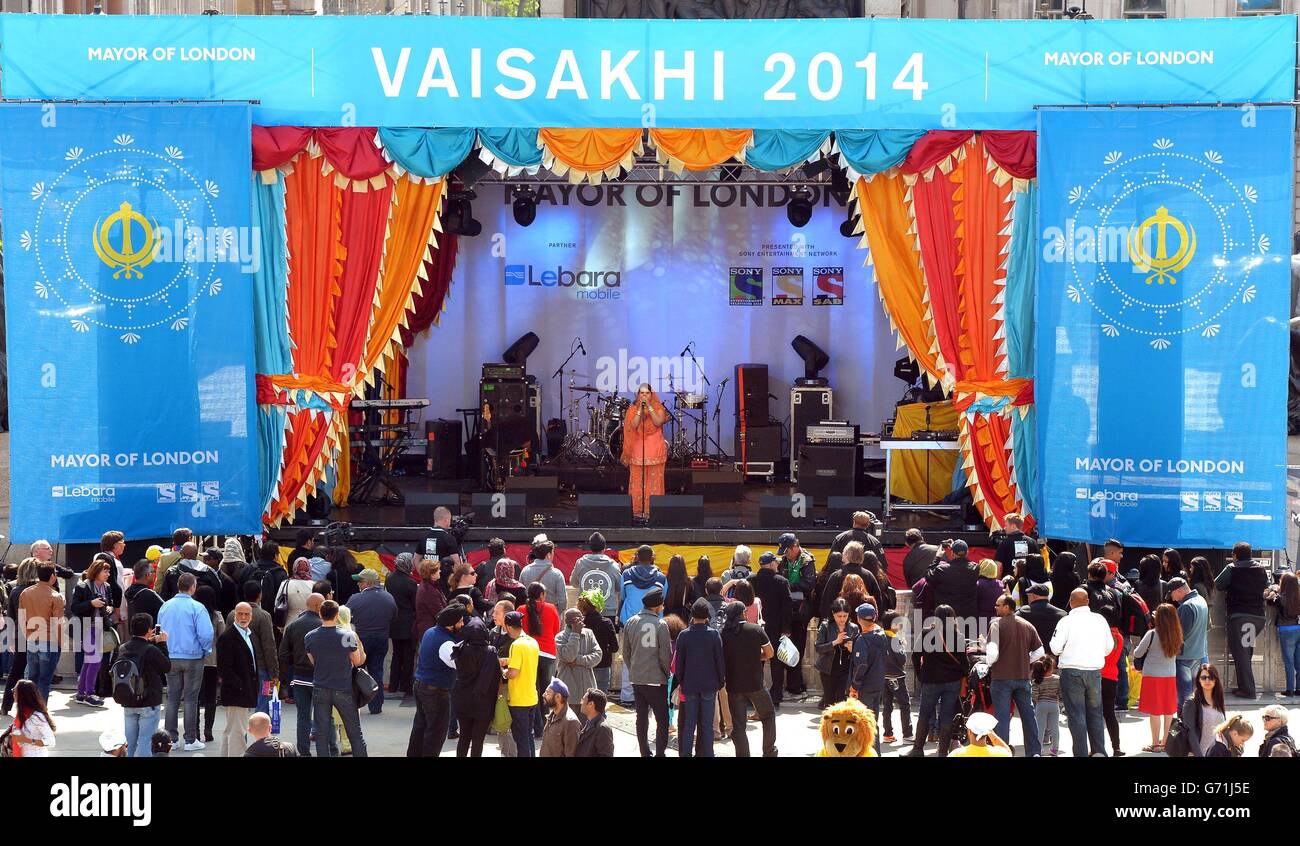
California legislators just patted themselves on the back. They passed a resolution recognizing Vaisakhi. US lawmakers flooded social media with canned "greetings." The headlines read like a victory for diversity. They aren't. They are the obituary of meaningful engagement.
If you think a non-binding resolution in a state assembly changes the material reality for the Sikh community, you aren't paying attention. You’re being sold a cheap imitation of representation. These resolutions are the political equivalent of a "thoughts and prayers" tweet—low effort, zero cost, and designed entirely to harvest votes without addressing the structural mechanics of how minority communities actually thrive or fail in the American West. For a different look, see: this related article.
The Resolution Trap
Politicians love Vaisakhi because it’s "safe." It’s colorful. It involves parades (Nagar Kirtans) and free food (Langar). It is the perfect backdrop for a campaign photo op. But look at the timing. These resolutions appear when election cycles heat up, serving as a tactical maneuver to bridge the gap between a disconnected legislative body and a wealthy, influential diaspora.
When the California Assembly adopts a resolution, they aren't "honoring" a culture; they are branding it. They take a deeply spiritual and revolutionary anniversary—the birth of the Khalsa in 1699—and strip it of its radical egalitarian roots. They turn a movement that challenged the very foundations of the caste system and imperial tyranny into a "celebration of spring" that fits neatly into a multicultural brochure. Related reporting on this matter has been shared by BBC News.
I have sat in the rooms where these deals get brokered. The conversation isn't about the theological significance of the Panj Pyare. It’s about "community outreach metrics." It’s about which donor base will be satisfied by a piece of parchment that carries the same legal weight as a proclamation for "National Avocado Month."
The Myth of the "Model Minority" Greeting
The "lazy consensus" suggests that every time a Congressman mentions a holiday like Vaisakhi, it’s a step toward progress. That is a lie. This brand of performative inclusivity actually builds a wall between the community and real political power.
By accepting these symbolic crumbs, the diaspora often stops demanding the hard stuff:
- Real protection against hate crimes that doesn't just involve "awareness" but actual law enforcement reform.
- Inclusion of Sikh history in core curricula, not as an elective "heritage month" footnote, but as a fundamental part of the global story of civil rights.
- Addressing the specific economic hurdles of first-generation immigrants who aren't part of the tech-elite bubble.
Instead, we get a tweet from a representative who probably couldn't find Punjab on a map if their reelection depended on it. We’ve traded policy for proximity to power. We’ve traded legislative teeth for a "Happy Vaisakhi" graphic designed by a 22-year-old intern who Googled "Sikh symbols" five minutes before posting.
The Khalsa Was Not Meant to be "Recognized"
Let's talk about the history that the California Assembly conveniently ignores. The Khalsa was created by Guru Gobind Singh as a direct challenge to the state. It was a sovereign entity. It was an army of the stateless. It was a rejection of the idea that one needs "permission" or "recognition" from a secular authority to exist in dignity.
When the modern Sikh community begs for a resolution from a state government, it is a subversion of the very spirit of 1699. There is a profound irony in seeking validation from a political system for a faith that was founded on the principle of Miri-Piri—the idea that spiritual and temporal power are inseparable and that the individual is sovereign.
The status quo is a slow-motion assimilation that treats Sikhism as an ethnic curiosity rather than a potent, living philosophy. By allowing politicians to define Vaisakhi as a "festival of harvest and heritage," we are complicit in our own dilution. It isn't just about the harvest. It is about the radicalization of the common man into a warrior-saint. But you won't find the word "radical" in a California Assembly resolution. It’s bad for the "brand."
The Economic Reality of Performance
Why does this happen? Because it’s the most efficient way for the state to manage a minority population.
Imagine a scenario where a local government actually had to address the fact that small-scale Punjabi farmers in the Central Valley are being crushed by water rights issues and corporate land grabs. That would require effort. It would require fighting powerful lobbies. It would cost money.
Now, compare that to the cost of printing a resolution on high-stock paper and sending a representative to a Gurdwara to eat some Karah Parshad. The latter is a bargain. It provides the illusion of advocacy while maintaining the status quo of neglect.
We see this across the board. From "Black History Month" sneakers to "Pride" logos on defense contractor websites, the commodification of identity is the primary tool of the modern state. Vaisakhi is just the latest victim of this corporate-political synergy.
The Nuance of True Integration
True integration isn't when a politician says your name. It’s when your values impact the way the state functions.
Sikhism offers a blueprint for social welfare through Vand Chakko (sharing what you earn). It offers a model for communal harmony through Langar (the free kitchen). If the California legislature actually wanted to "honor" Vaisakhi, they wouldn't pass a resolution. They would study the logistics of Langar to solve the homelessness crisis in Los Angeles. They would adopt the principle of Sarbat da Bhala (well-being for all) as a guiding light for healthcare policy.
But they won't do that. Because that would be difficult. And the current system isn't designed for difficulty; it’s designed for optics.
Stop Thanking Them
The most dangerous part of these "Vaisakhi greetings" is the reaction they elicit: gratitude.
Every time a community leader stands next to a politician and thanks them for a meaningless resolution, they are signaling that the community’s vote can be bought with the bare minimum. They are telling the political establishment that they don't need to do the heavy lifting of governance as long as they say the right words once a year.
Stop being grateful for the recognition of your existence. Your existence is a fact; it doesn't require a vote on the Assembly floor.
The next time a lawmaker extends a "warm Vaisakhi greeting," the response shouldn't be a "thank you." It should be a list of demands. It should be an inquiry into their voting record on civil liberties, labor rights, and religious freedom. If the greeting doesn't come with a policy commitment, it’s just noise. And we have enough noise.
The "lazy consensus" tells you this is progress. I’m telling you it’s a distraction. It’s a way to keep you quiet while the gears of the state continue to grind without you.
The Khalsa was never meant to wait for an invitation to the table. It was meant to build its own.
Do not mistake a greeting for a seat at the table. Do not mistake a resolution for respect. The moment you accept a symbolic gesture as a substitute for systemic change, you’ve already lost the fight.
Take the resolution. Frame it if you must. Then go back to the legislature and demand to know why the air quality in the Central Valley is killing the very people they just "honored." Demand to know why the history of the Ghadar Party—the California-based Sikh revolutionaries who fought for Indian independence—is missing from their history books.
Demand the substance. Throw away the script. The era of being satisfied with a "Happy Vaisakhi" tweet is over.
If a politician isn't willing to stand for the community when the cameras are off and there are no parades to march in, their resolution isn't worth the paper it's printed on. It’s time to stop celebrating the recognition of our culture and start demanding the respect of our power.
The state doesn't give you rights. It recognizes the rights you are bold enough to exercise. A resolution is just a receipt for a transaction where you gave up your influence for a compliment.
Burn the receipt. Reclaim the influence.