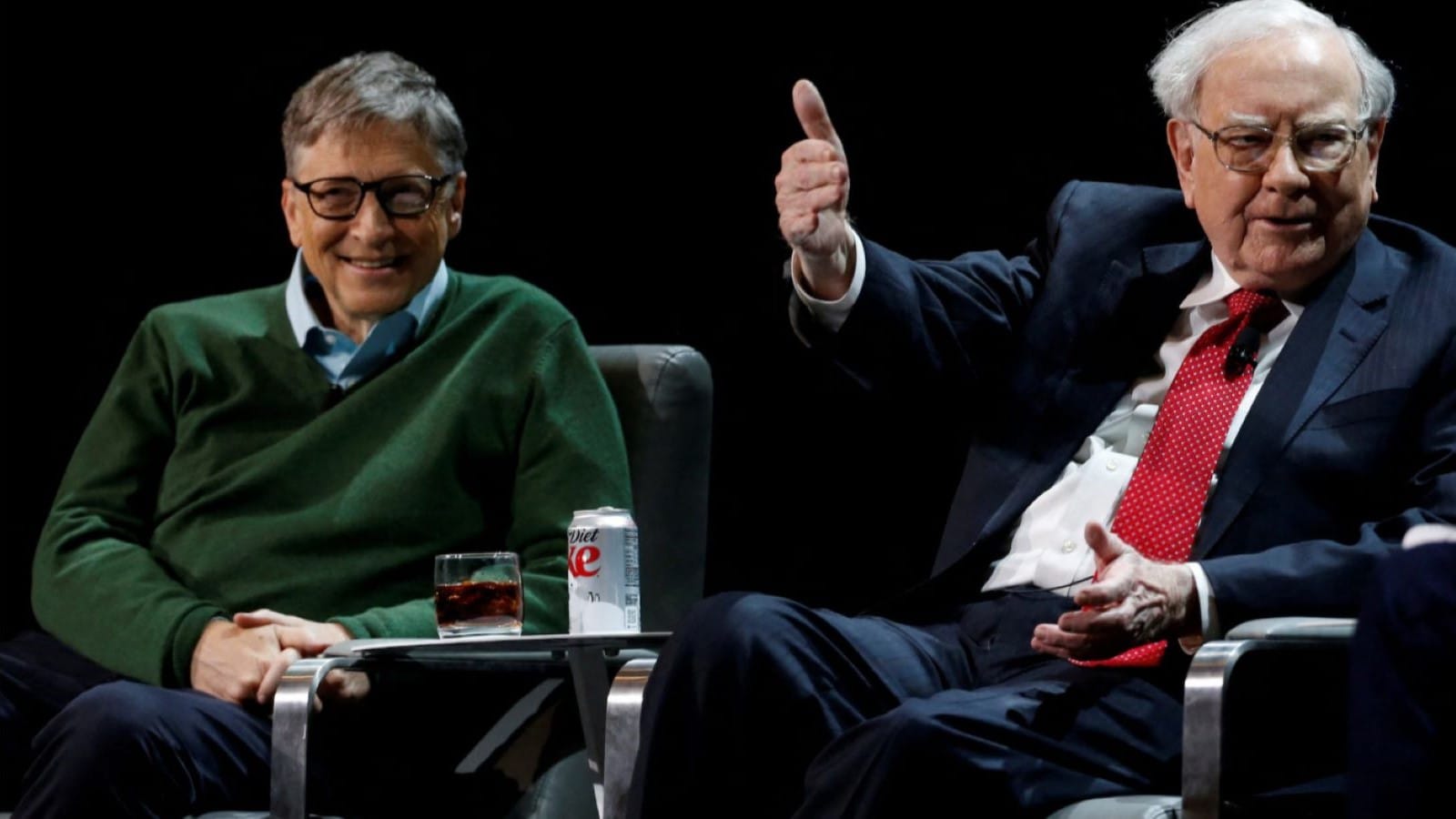
The media loves a clean, moralistic narrative. When headlines broke that Warren Buffett was pausing or reviewing his midyear donation to the Bill & Melinda Gates Foundation amid scrutiny surrounding Jeffrey Epstein, the commentariat fell into a predictable pattern. They painted it as a sudden crisis of conscience, a billionaire frantically distancing his legacy from a toxic association.
They got it completely wrong. Meanwhile, you can explore related events here: Why Europe Is About to Lose Its Entire Industrial Backbone.
To view Buffett’s transactional pivot through the lens of simple public relations is to completely misunderstand how ultra-high-net-worth capital operates. This isn't a story about optics. It is a cold, calculated lesson in institutional governance, fiduciary risk, and the inevitable decay of massive bureaucratic charities.
The Myth of the Pure Donation
Mainstream financial journalism operates on a flawed premise: that mega-donations are purely altruistic gifts driven by emotion. In reality, a multi-billion-dollar pledge to a foundation functions exactly like a corporate merger or a venture capital allocation. It requires underwriting. It requires risk management. To see the bigger picture, we recommend the detailed article by The Wall Street Journal.
When a corporate titan like Buffett funnels his wealth into an external vehicle, he is outsourcing the distribution of his capital. He expects that vehicle to operate with the same operational efficiency and lack of reputational liability as Berkshire Hathaway. The moment an external risk asset—in this case, the leadership friction and reputational baggage piling up at the Gates Foundation—threatens the integrity of the capital deployment, a rational capital allocator pauses.
I have watched boards spend months debating a $50 million acquisition over minor compliance discrepancies, yet observers expect a man who built a empire on risk mitigation to hand over billions while a structural storm is brewing. The pause isn't a moral denunciation; it is a standard risk-management freeze.
The Structural Flaw in Mega Foundations
The lazy consensus views the Gates Foundation as an untouchable, permanent engine of global good. But massive philanthropic institutions suffer from the same compounding inefficiencies as legacy conglomerates. They become bloated, risk-averse, and deeply entangled in the personal brands of their founders.
When the leadership of a foundation becomes the story, the efficacy of the capital drops.
- The Bureaucracy Tax: Large foundations often spend massive sums just to maintain their own infrastructure and bureaucratic footprint, long before money hits the ground.
- The Founder Distraction: When founders are tied up in personal crises or intense public scrutiny, strategic decision-making grinds to a halt.
- The Dilution of Focus: A foundation trying to solve every global issue simultaneously often ends up solving none efficiently.
Imagine a scenario where a major tech company faces a massive executive scandal. Activist investors do not just sit back and watch their capital burn; they halt buybacks, demand board restructuring, or reallocate their positions. Buffett’s pause is the philanthropic equivalent of an activist investor demanding a clean house before buying more shares.
Why the Market Misunderstands Buffett's Capital Strategy
People ask whether this move signals a permanent rift between Buffett and Gates. That is the wrong question. The real question is whether centralized, monolithic foundations are still the most efficient way to deploy generational wealth.
Buffett has spent decades proving that decentralization and autonomy yield the highest returns. Berkshire Hathaway operates with a tiny corporate headquarters, leaving operational decisions to the subsidiaries. The Gates Foundation operates on the exact opposite principle: a massive, centralized hierarchy attempting to micromanage global outcomes from Seattle.
The contrarian truth is that the traditional model of the mega-foundation is dying. The friction is too high. The reputational vulnerabilities are too great. By halting the flow of capital, Buffett is quietly acknowledging a harsh reality: putting all your philanthropic eggs in one highly centralized, highly visible basket is bad asset management.
The downside to moving away from these centralized institutions is obvious. Direct giving or smaller, decentralized trusts require immense personal oversight and lack the immediate, brute-force scale of an established machine. It takes longer to build the infrastructure from scratch. But for a man obsessed with long-term compounding, the trade-off is becoming increasingly justifiable.
Stop looking for a dramatic personal falling out between billionaires. Follow the mechanics of the capital. When the operational risk of the distribution channel outweighs the utility of the deployment, you stop funding the channel. It is business, not a soap opera. Move your money accordingly.