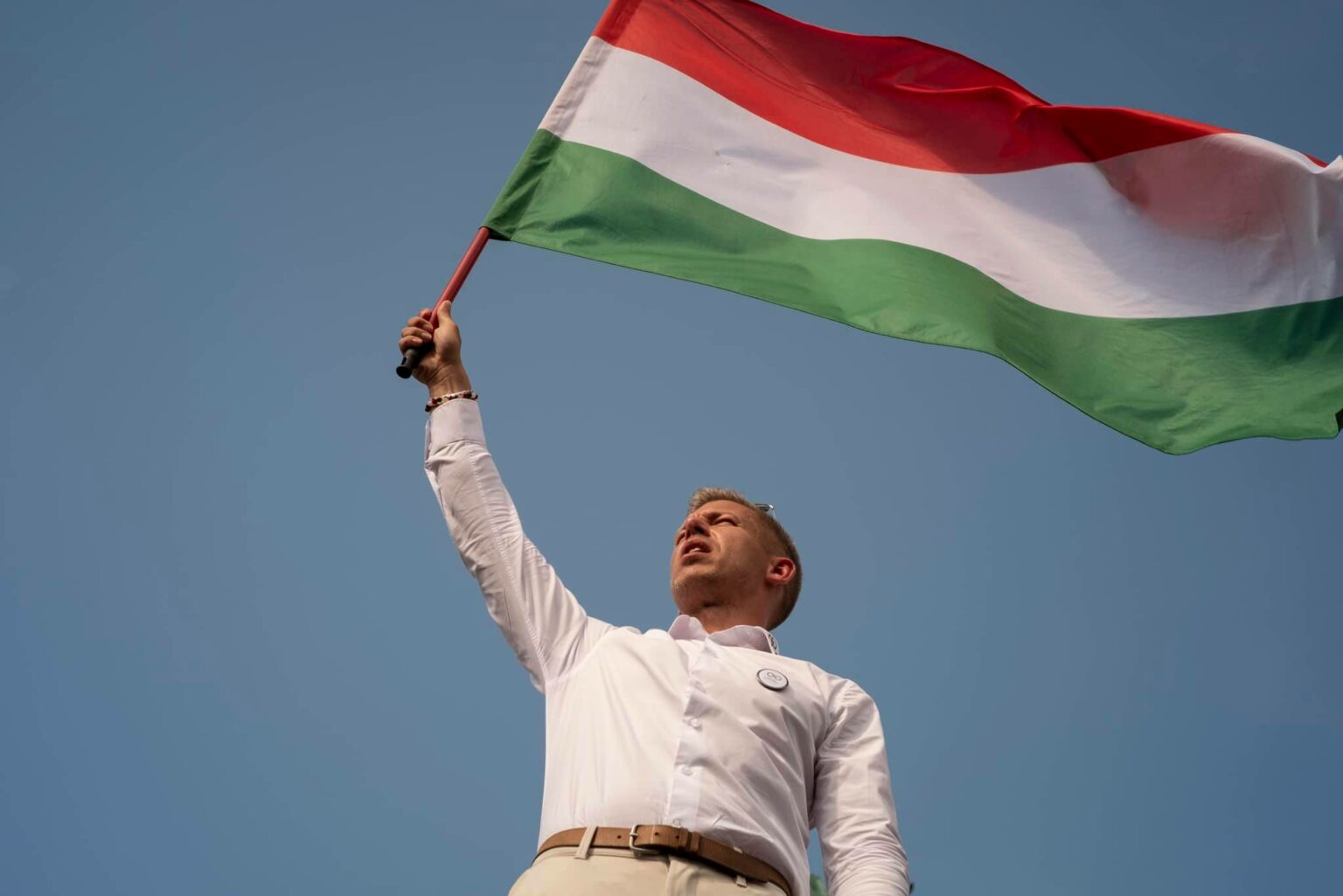
The international press is currently obsessed with a fairytale. They have spent months spinning a narrative about a "political earthquake" in Budapest, centered on Péter Magyar—the ultimate insider turned whistleblower. The consensus is simple: Viktor Orbán has finally met his match, a charismatic defector who knows where the bodies are buried and has the momentum to topple the illiberal state.
It is a comfortable story. It is also entirely wrong.
Watching the mainstream media analyze Hungary is like watching a doctor treat a broken leg with a cough drop. They focus on the surface-level drama—the protests, the leaked audio tapes, the Facebook metrics—while completely ignoring the structural reality of the Hungarian state. Magyar is not the end of the Orbán era; he is the latest stress test for a system specifically designed to absorb and neutralize threats exactly like him.
The Insider Fallacy
The biggest myth circulating right now is that Magyar’s "insider status" is a lethal weapon. The logic goes that because he was married to former Justice Minister Judit Varga and held board positions in state-owned companies, his accusations of corruption carry more weight.
In a healthy democracy, perhaps. In Hungary, this is a fundamental misunderstanding of the electorate.
Corruption is not a bug in the Orbán system; it is the operating system. The voters who support Fidesz—Orbán’s party—are not under the illusion that the government is composed of saints. They are fully aware of the "National System of Cooperation" (NER). The difference is that they view this wealth transfer as a way of creating a loyal, nationalistic merchant class that prevents foreign interests from dominating the economy.
When Magyar reveals that the government meddles in judicial proceedings or that certain oligarchs are favored, he isn't revealing a secret. He is confirming what everyone already knew. To the opposition, it’s a scandal. To the Fidesz base, it’s just how power works.
The Logistics of the Trap
Magyar’s party, Tisza, has surged in the polls, but polling numbers in Hungary are a vanity metric. What matters is the ground game and the law.
Orbán spent the last decade-plus gerrymandering the electoral map and rewriting the rules. For Magyar to actually win a general election, he doesn't just need a majority of the votes; he needs a landslide that overcomes a system designed to favor the incumbent.
Furthermore, Magyar is currently operating in a honeymoon phase. He is the "shiny new object." But the Hungarian media machine—the KESMA conglomerate—is the most effective character assassination engine in Europe. They haven't even started their final form. They will paint him as a disgruntled ex-husband, a puppet of Brussels, and a chaotic opportunist until the average swing voter is too exhausted to care.
The Brussels Blind Spot
The "People Also Ask" sections of major news sites often query whether the EU will finally step in to help a new challenger. This is the wrong question.
The European Union has unintentionally been Orbán’s greatest benefactor. By providing a common enemy, the EU allows Orbán to frame every internal criticism as an attack on Hungarian sovereignty. Every time a Brussels bureaucrat praises Péter Magyar, they effectively hand Orbán a campaign poster.
If Magyar wants to win, he has to be more "Orbán" than Orbán on the issues that actually drive Hungarian voters: sovereignty, migration, and family subsidies. If he pivots to a pro-EU, liberal-standardist platform, he will end up exactly like the united opposition of 2022—crushed under the weight of his own perceived lack of patriotism.
The Economic Illusion
Western analysts point to Hungary's inflation and economic struggles as the catalyst for change. They argue that the "bread and butter" issues will drive people to Magyar.
This ignores the $120 billion-plus in state-directed capital that Orbán can deploy at a moment's notice. Before every election, the government "finds" money for tax rebates, pension hikes, and sector-specific bonuses. It is a cynical, effective, and perfectly timed wealth distribution that buys loyalty right when the ballot is being cast. Magyar has no such war chest. He is fighting a tank with a megaphone.
The Hidden Risk of Success
Let’s engage in a thought experiment: Imagine a scenario where Magyar actually wins enough seats to form a coalition.
He would inherit a state where every key institution—the Constitutional Court, the Media Authority, the Audit Office, and the Prosecutor General’s office—is staffed by Orbán loyalists with nine-year mandates. He would be a prime minister in name only, presiding over a bureaucracy that is legally obligated to obstruct him.
The "deep state" is a conspiracy theory in the U.S.; in Hungary, it is a documented legislative reality. Without a two-thirds majority to rewrite the constitution, any challenger is walking into a legislative minefield.
Stop Asking if He Can Win
The question isn't whether Magyar can win. The question is whether he can survive the inevitable cooling of the hype cycle.
Current sentiment is driven by anger, but anger is a volatile fuel. It burns bright and fast. Orbán’s power is built on apathy and the "safety" of the status quo. To win, Magyar has to convince the Hungarian public that the chaos of a transition is safer than the stagnation of the current regime.
He hasn't done that yet. He has only proven that he can draw a crowd in Budapest. Budapest is not Hungary. The country is won in the small towns of the Great Plain and the industrial hubs of the north, where the state-controlled radio is the only voice people hear.
The Hard Truth
Magyar is a symptom of a fracturing elite, not the cure for the system. His rise shows that the inner circle of Fidesz is no longer a monolith, which is significant. But a fracture is not a collapse.
If you think a few rallies and a viral video will dismantle a system that has been hardened over fourteen years of absolute rule, you aren't paying attention. You are just bored with the current narrative and looking for a hero.
Péter Magyar isn't a hero; he’s a warning. He is proof that even when the system produces its own challenger, the house still holds all the cards.
Unless Magyar stops playing the media’s game and starts building a shadow state that can rival the NER, he will be just another footnote in the history of failed Hungarian uprisings. The battle isn't ahead for the new prime minister—because as it stands, there won't be one.
The king isn't even checking his crown for cracks. He's just waiting for the audience to get tired and go home.
Go ahead, buy the "Change is Coming" t-shirt. Just don't be surprised when the 2026 results look exactly like 2022.