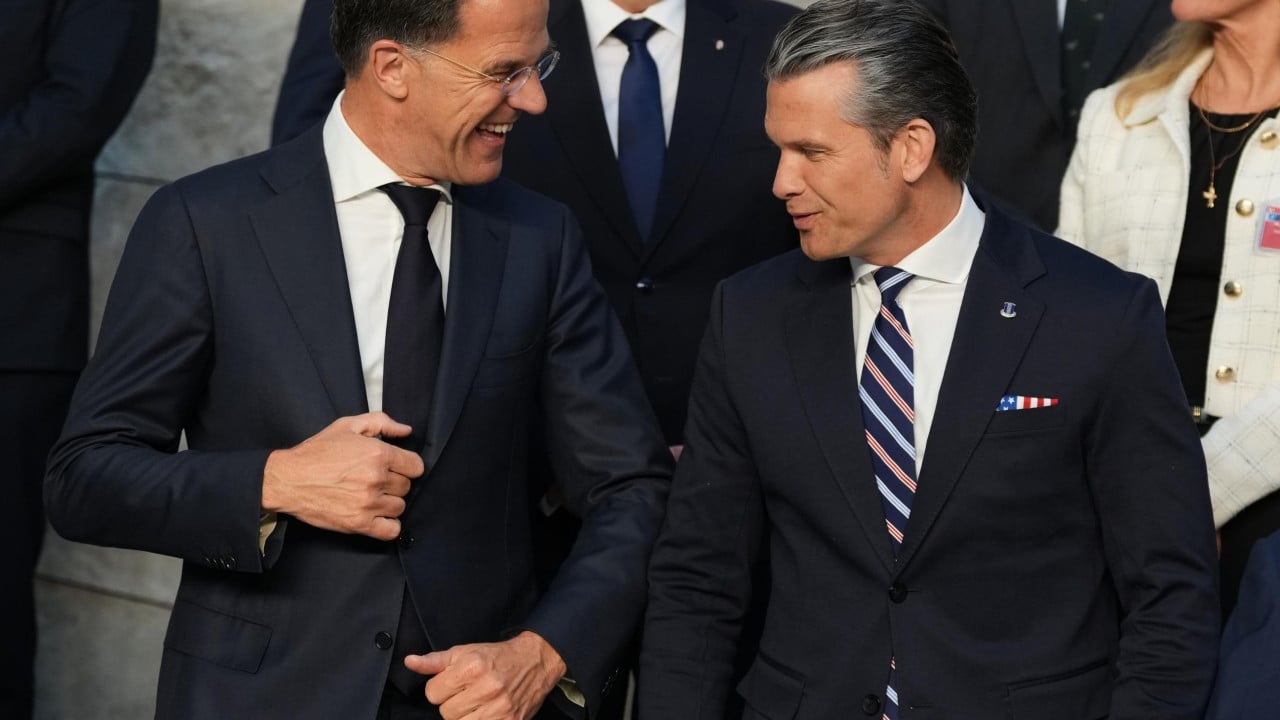
The traditional transatlantic alliance just hit a brick wall in Brussels. US Defense Secretary Pete Hegseth did not pull any punches at the latest NATO defense ministers meeting, launching into a blistering critique of European allies who closed their airspace and denied base access during the recent US military campaign against Iran.
Calling the restrictions shameful, Hegseth made it clear that Washington is tired of holding the umbrella for allies who won't share the rain. The Trump administration is no longer hiding its anger over what it sees as a one-way street in military cooperation. By denying predictable access and overflight rights during Operation Epic Fury, Hegseth argued that European partners actively put American service members at risk.
This isn't just a rhetorical spat. It has triggered an immediate, aggressive response from the Pentagon: a comprehensive six-month review of the entire US force posture in Europe.
The Core of the Fallout
For decades, Washington treated military infrastructure in Europe as a permanent forward staging ground. The conflict with Iran exposed how fragile those assumptions actually are. When the US pressed forward with its campaign, several European capitals balked. They buried requests in legal debates, worried about local blowback, and flatly refused to let their soil be used as a launching pad for strikes that they didn't explicitly endorse.
You can understand the strategic shock in Washington. American planners expected smooth coordination. Instead, they faced a wall of diplomatic hesitation.
"Too many allies said no, or tried to drown us in arcane legal debates, or criticized us publicly for doing what they aren't prepared or able to do themselves," Hegseth told the ministers.
The defense secretary tied this military hesitation directly to broader cultural and political shifts across the Atlantic. In a speech that echoed the sharp populist tones of Vice President JD Vance, Hegseth claimed that European leadership has spent years prioritizing social engineering, climate goals, and welfare expansion over hard military readiness. He noted that instead of stocking up on tanks, fighter jets, and robust air defenses, the continent embraced defense austerity while keeping its borders wide open.
Moving Toward NATO 3.0
The Pentagon's solution to this friction is an uncompromising structural overhaul dubbed NATO 3.0. The goal is to fundamentally change how the alliance distributes its burdens. Washington wants partners, not protectorates.
The newly announced force posture review will evaluate exactly where the 80,000 US troops currently stationed across Europe are located, and how they operate. Crucially, future deployments and base funding will directly hinge on whether individual host nations grant unhindered, guaranteed access when the US needs it.
The strategy is simple. If a nation clutches its pearls during an American military operation, it shouldn't expect American troops to act as a permanent tripwire for its local defense.
The review is explicitly set up as a high-stakes test. Some countries are expected to pass with flying colors due to their reliable strategic alignment, while others will fail. We are already seeing the initial tremors of this shift. The Pentagon recently pulled 5,000 troops from Europe, a move that canceled a planned armored brigade deployment to Poland. Furthermore, the US signaled it will heavily scale back the aircraft carriers, support ships, and refueling planes it supplies to NATO during localized European crises.
The European Dilemma
Naturally, European officials view the situation through a totally different lens. From their perspective, NATO is a defensive alliance designed to protect member states from aggression on the European continent, not an open-ended blank check for unilateral global operations.
European leaders are dealing with their own domestic realities. Leaders like German Chancellor Friedrich Merz have warned about the severe regional blowback of getting dragged into massive Middle Eastern quagmires. There is an understandable fear that unconditional base access turns European cities into targets for retaliatory strikes.
There is also a massive disconnect between Hegseth's rhetoric and actual spending numbers. The narrative that Europe completely refuses to fund its own defense ignores recent, massive changes on the ground. According to NATO Secretary-General Mark Rutte, European allies and Canada injected an extra $90 billion into defense budgets over the last year alone, representing an unprecedented 20% spike. Most member states have also drastically tightened their borders over the past decade, contrary to the claim that frontiers remain completely open.
Yet for Washington, cash alone doesn't cut it anymore. The Trump administration is looking ahead to a potential conflict with China in the Indo-Pacific. It needs to plan for two simultaneous global flashpoints, meaning it can no longer afford to tie up massive air and naval assets defending a wealthy continent that hesitates to return the favor.
Real Strategic Next Steps
The diplomatic window is closing fast. The upcoming NATO summit in Turkey on July 7-8 is shaping up to be an explosive showdown rather than a routine photo-op. For European defense ministries, the next moves are practical, urgent, and highly concrete.
First, allied nations must immediately audit their existing bilateral defense guidelines with the US to clarify exactly what constitutes guaranteed overflight and basing rights. Waiting for the next crisis to negotiate access guarantees a catastrophic policy failure.
Second, Europe must rapidly accelerate its independent operational capabilities. With Washington drawing down its carrier strike groups and aerial refueling fleets on the continent to redirect them to the Pacific, European forces must figure out how to fill those massive logistical gaps on their own. Relying on the Article 5 collective security guarantee is no longer a substitute for actual standalone combat power. The era of the American defense subsidy is officially over.
The ongoing shift in the transatlantic relationship is laid bare in this Mirror Now original report detailing Hegseth's blunt message to NATO counterparts, which highlights why the US is demanding its wealthy allies put real skin in the game.


