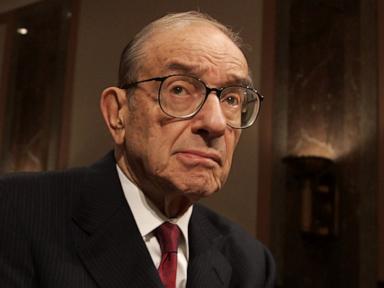
Central bankers usually live in the boring shadows of technocracy. They look at spreadsheets. They adjust obscure overnight lending rates by fractions of a percent. They try not to spook anyone.
Alan Greenspan did the exact opposite. For nearly two decades, he ran the Federal Reserve like a high priest of capitalism, moving global markets with a single cryptic phrase or a sideways glance. He became a genuine pop culture icon, a central banker with a rock star reputation.
When news broke that Greenspan died at 100 from complications of Parkinson's disease, the immediate reaction from the financial world split down a predictable fault line. One side mourned the passing of the "Maestro," the economic genius who orchestrated the longest peacetime expansion in American history during the 1990s. The other side practically blamed him for the entire 2008 global financial crisis, pointing to his long record of aggressive deregulation and cheap credit.
Both sides miss the real point.
The obsession with building up or tearing down Greenspan hides a much bigger truth. We still live inside the economic machinery he built. His choices didn't just define the 1990s or the early 2000s. They set the rules for how modern governments handle money, how markets react to central bank guidance, and how political leaders try to manipulate the economy for their own gain.
If you want to understand why our current financial world looks so volatile, you have to look at what Greenspan actually did, what he got wrong, and what he changed forever.
The Invention of Fedspeak and the Cult of the Chairman
Before Greenspan took the helm in 1987, the Federal Reserve didn't explain itself. It didn't issue press releases after meetings. Investors literally had to watch the market tape to figure out if the Fed had changed interest rates. Greenspan changed that, but he did it in a weirdly deliberate way.
He realized his words had immense power. So, he chose to make them completely unintelligible.
This became known as "Fedspeak" or "Greenspeak." It was a deliberate strategy of obfuscation. He once famously told a congressional committee that if he seemed exceptionally clear, they must have misunderstood what he said. He used syntax like a shield, burying policy changes under mountains of clauses and qualifiers.
It worked brilliantly for his mystique. The media started tracking his briefcase. If it looked stuffed to the brim on a meeting morning, Wall Street assumed a major rate change was coming because he had packed extra research to convince his colleagues.
This created a dangerous cultural shift. It created the cult of the central bank chairman.
We started believing that a single guy sitting in a room could perfectly calibrate the global economy. Presidents fell into this trap too. Ronald Reagan appointed him. George H.W. Bush kept him. Bill Clinton practically worshipped him. George W. Bush reappointed him again. They all wanted the magic touch of the oracle to keep the party going.
But hiding behind that fog of words was a deeply ideological worldview. Greenspan was an avowed follower of Ayn Rand in his youth. He believed deeply in the inherent self-correcting nature of free markets. He thought that Wall Street institutions, driven by self-interest, would naturally police themselves to protect their shareholders. That ideological bet worked fine when productivity was booming because of early tech adoption in the 1990s. It failed spectacularly when the system ran into modern financial engineering.
The Real Story Behind Irrational Exuberance
Everyone loves to quote his December 1996 speech. He dropped the phrase "irrational exuberance" to question whether stock prices were getting dangerously high during the early days of the dot-com bubble. The markets immediately panicked, tumbling globally within hours.
But what people forget is what happened next. He didn't follow through.
Instead of aggressively raising interest rates to pop the brewing bubble, Greenspan backed off. He chose to let the market run. He developed a theory that technological advancements had permanently shifted American productivity higher. In his view, the old rules of inflation didn't apply anymore. The economy could run faster and hotter without sparking price increases.
He was partly right about the productivity boom. The rise of computers and the internet did change the speed limits of the economy. But he was totally wrong about market behavior. By refusing to step in, he created what traders called the "Greenspan Put."
A put option is a financial contract that protects an investor against a drop in prices. The Greenspan Put became an unwritten rule on Wall Street. It meant that whenever the stock market took a serious hit, the Fed would swoop in and cut interest rates to rescue investors.
He did it after the 1987 Black Monday crash, which happened just two months into his tenure. He did it after the Asian financial crisis in 1997. He did it after the hedge fund Long-Term Capital Management collapsed in 1998. And he did it aggressively after the dot-com bubble finally burst in 2000, followed by the shock of September 11.
By constantly slashing rates to cushion every single market drop, he conditioned an entire generation of investors to take massive risks. They knew the Fed wouldn't let them fail.
The Easy Money Mistake That Sparked the Housing Collapse
By the early 2000s, the Fed had pushed its benchmark interest rate down to 1%. That was a historic low at the time. Greenspan kept it there for an extended period, desperate to keep the economy moving after the tech crash.
Money became incredibly cheap. When money is that cheap, capital starts hunting wildly for yield. It found that yield in the American housing market.
This is where his belief in self-regulation turned toxic. Wall Street began bundling subprime mortgages into complex securities, slicing them up, and selling them around the world. Greenspan didn't stop them. He actively encouraged the development of these new financial derivatives. He argued that derivatives spread risk across the entire system, making it more resilient.
He completely missed the reality that these instruments were actually concentrating systemic fragility in a few massive, interconnected banks.
When the housing market started showing cracks, his response was slow. He eventually started raising rates, but he did it in predictable, tiny increments of 0.25%. It was too slow to stop the momentum of the subprime machine.
He retired in early 2006, leaving just before the entire house of cards collapsed into the Great Recession. His timing was perfect for his personal exit, but disastrous for his legacy. The Financial Crisis Inquiry Commission later laid a massive share of the blame directly at his feet, citing decades of deregulation and a naive reliance on financial institutions to police themselves.
To his credit, he didn't hide from it forever. In a famous 2008 congressional testimony, he admitted he was in a state of "shocked disbelief." He acknowledged that his ideological framework had a massive flaw. He had genuinely believed that banks would protect their own equity, and he was wrong.
Why His Legacy Directs Our Modern Politics
You can see his ghost in every major financial battle happening today.
Just look at the political chaos surrounding modern central banking. We see regular political fights over who controls interest rates. Recent developments, like the confirmation of new Fed leadership amid heavy political pressure, show that the era of non-political, technocratic central banking is largely an illusion. Presidents want a chair who will keep rates low to boost their re-election chances, a dynamic Greenspan navigated like a master politician for four different administrations.
We also see the direct evolution of his communication style. Modern central bank chairs try to be more transparent than Greenspan ever was. They hold regular press conferences. They issue detailed forward guidance. But they are still trapped in the world he created, where a single word choice during a live broadcast can wipe out billions of dollars in equity value in seconds.
The biggest lesson from his 100-year life is that you cannot manage a complex global economy through pure ideology. Markets aren't perfectly rational, self-policing entities. They are collections of human beings driven by fear and greed. If you promise them a safety net every time they take a bad bet, they will keep taking bigger and uglier bets until the whole system breaks.
If you want to protect your own money in this environment, stop looking for an economic maestro to save you. Pay attention to the underlying data, don't fall for speculative market bubbles, and remember that when money looks too cheap to be true, someone eventually has to pay the bill.


