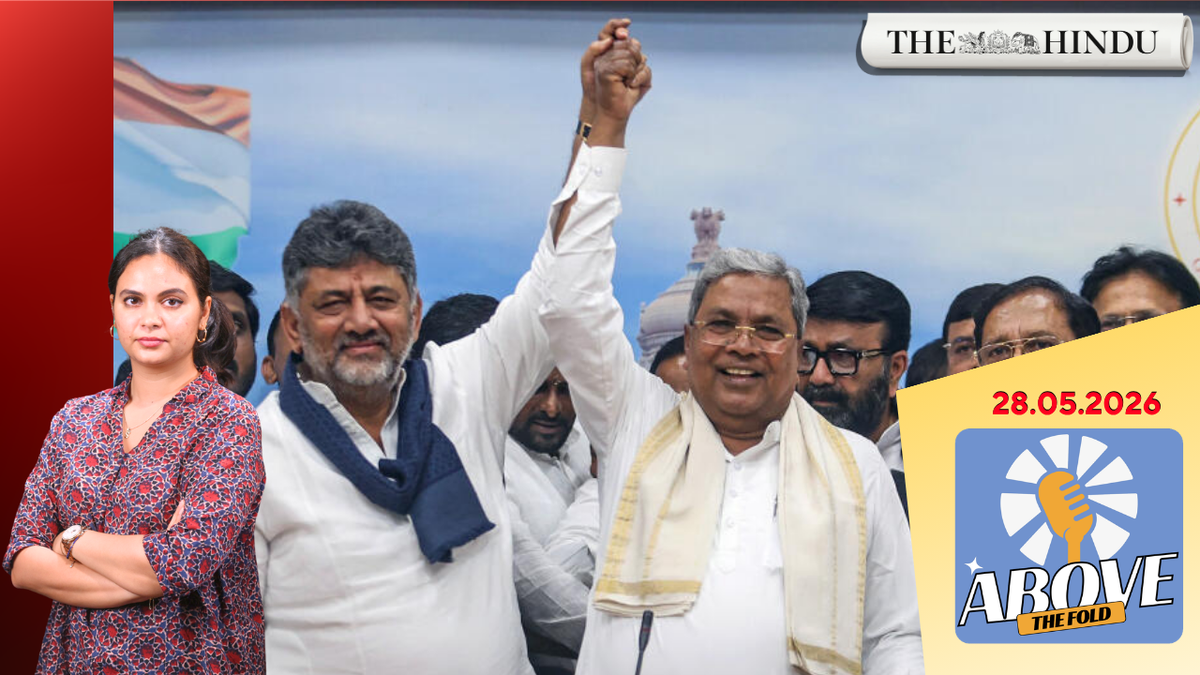
Siddaramaiah finally blinked. His resignation on May 28, 2026, isn't just a routine hand-off of power. It's a calculated gamble by the Congress high command that could reshape South Indian politics for the next decade.
If you think this is just about honoring a secret 2023 pact for a two-and-a-half-year term split, you're missing the real story. This is about survival, generational shifts, and an intense game of caste chess that D.K. Shivakumar has spent years trying to win. The local political theatre was on full display at the breakfast meeting where the exit was announced. Tears flowed from cabinet ministers, hugs were exchanged for the cameras, and Shivakumar bent down to touch the veteran leader's feet. But don't let the public display of affection fool you. A massive power vacuum has just opened up in Bengaluru, and filling it will be anything but clean. For another perspective, see: this related article.
The Real Reason Siddaramaiah Stepped Down Now
National commentators love to talk about party discipline. They'll tell you Rahul Gandhi and Mallikarjun Kharge called Siddaramaiah to Delhi, laid down the law, and he simply complied.
That's a sanitized version of reality. Similar coverage on the subject has been published by NBC News.
Siddaramaiah didn't want to leave. At 78 years old, he knows this is his final act at the peak of state politics. He built a massive, fiercely loyal base through the AHINDA coalition, a powerful alliance of minorities, backward classes, and Dalits. He had the backing of a majority of Congress MLAs. Why give that up?
The answer lies in the looming 2028 Assembly elections. By then, Siddaramaiah will be 80. The Congress central leadership realized that heading into an election with an octogenarian leader against a hyper-aggressive BJP was risky. Plus, local civic polls for the Greater Bengaluru Authority are right around the corner. Shivakumar, the party's ultimate troubleshooter and a powerhouse within the wealthy, influential Vokkaliga community, made it clear that his patience had run out.
The high command offered Siddaramaiah a golden parachute in the form of a Rajya Sabha seat. He turned it down. He knows his strength lies in the red soil of Karnataka, not the debating chambers of New Delhi. He openly stated he'll stay in state politics, meaning he isn't going quietly into the night.
The Looming Nightmare for D.K. Shivakumar
Shivakumar got what he wanted, but he might soon realize the chief minister's chair is a bed of nails. Winning the crown is one thing; keeping it in Karnataka is entirely different.
The state has a notorious track record with mid-term leadership changes. Look at the historical precedents:
- 2007: The unstable JD(S)-BJP coalition collapsed over a failed rotational power-sharing agreement.
- 2011-2012: B.S. Yediyurappa was forced out by the BJP central leadership due to corruption allegations. His successors, Sadananda Gowda and Jagadish Shettar, presided over a fractured, warring party that got decimated in the 2013 elections.
- 2021: The BJP pushed Yediyurappa out again to install Basavaraj Bommai, a move that alienated voters and handed Congress a landslide victory in 2023.
History shows that whenever a ruling party in Karnataka swaps its captain mid-way through a term, internal civil war breaks out, and the voters punish them for it in the next election.
Shivakumar's immediate headache isn't the opposition BJP; it's the ticking time bomb within his own cabinet. Siddaramaiah’s loyalists are already grieving. In villages like Siddaramanahundi, the outgoing CM's birthplace, a heavy gloom has settled. Residents are openly asking why a leader who brought stability was forced out. If Shivakumar sidelines these loyalists, he risks an immediate mutiny.
Then there's the caste equation. The Jagatika Lingayat Mahasabha has already held a press conference demanding that senior minister M.B. Patil be considered for the top job, reminding everyone that the powerful Lingayat community expects its share of the pie. To keep the peace, the high command is floating the idea of appointing multiple deputy chief ministers. It's a clumsy band-aid solution that usually creates more friction than it fixes.
What Happens Next on the Ground
Forget the high-flown rhetoric about value-based politics. The next 72 hours will be a frantic scramble for survival and leverage.
The Congress Legislative Party is scheduled to meet on Friday, May 29, 2026, to formally elect Shivakumar as the leader. Expect a lot of behind-the-scenes horse-trading before that meeting even begins.
If you want to track how this transition will actually impact the state, keep your eyes on three specific indicators over the coming weeks:
- The Portfolio Allocation: Watch who gets Home, Finance, and Bengaluru Development. If Siddaramaiah's core team gets stripped of these heavyweight ministries, expect silent sabotage from within.
- The Welfare Schemes: Siddaramaiah’s political identity is tied to massive welfare guarantees. Shivakumar is viewed as a more business-friendly, infrastructure-focused leader. If there's any perceived scaling back of the current welfare model to fund urban infrastructure, the AHINDA vote bank could fracture instantly.
- The Governor's Move: Governor Thaawarchand Gehlot was out of town in Madhya Pradesh when the resignation letter was delivered to his secretary. His return and formal acceptance of the resignation will kick off the official swearing-in timeline. Any delay gives the BJP room to exploit the cracks.
The Congress managed a smooth photo-op for the resignation, but managing the egos, caste demands, and regional factions of Karnataka is a completely different beast. Shivakumar finally has the job he has chased for decades. Now he has to prove he can survive it.
Siddaramaiah Resignation and Political Update
This video provides an expert breakdown of the immediate fallout from Siddaramaiah's resignation and details his explicit plans to remain active in state politics rather than moving to New Delhi.