The fragile peace in the Middle East just took a massive hit. If you thought the June 17 ceasefire agreement between Washington and Tehran was going to permanently cool down the region, Friday's exchange of fire shattered that hope. The reality on the water is messy, dangerous, and spinning out of control much faster than diplomats want to admit.
We are looking at the Iran-US war latest developments, and they aren't good. What started as a dispute over shipping lanes has rapidly devolved into a direct military confrontation. President Donald Trump ordered overnight airstrikes inside Iran, calling Tehran's actions a foolish violation of their recent truce. Hours later, Iran targeted regional positions, proving that neither side is willing to back down.
Understanding this crisis requires looking past the official press releases. This isn't just a random flare-up. It's a fundamental disagreement over who rules the most important energy chokepoint on the planet.
The dangerous breakdown of the Strait of Hormuz truce
The current crisis traces back to a major confrontation earlier this year. Following a massive joint assault by US and Israeli forces in February, Tehran took the drastic step of closing the Strait of Hormuz. Global energy prices immediately skyrocketed. Fertiliser shipments dried up. The global economy choked.
To stop the bleeding, Washington and Tehran signed a 14-point memorandum of understanding on June 17. The core deal was simple on paper. It required Iran to use its best efforts to ensure the safe passage of commercial vessels without charging fees for 60 days. In exchange, Iran expected sanctions relief and access to its frozen financial assets abroad.
The truce lasted less than ten days.
The breakdown happened because both sides signed a document while maintaining completely opposite interpretations of its terms. Washington believed the deal guaranteed total freedom of navigation through the international shipping corridor. Tehran believed it gained the right to regulate and police every single hull entering the Persian Gulf. This structural flaw guaranteed another explosion.
Why the cargo ship attack sparked US airstrikes
The match was lit on Thursday when a Singapore-flagged cargo ship, the M/V Ever Lovely, attempted to transit the Strait of Hormuz. According to US officials, Iranian forces launched at least four one-way attack drones at the vessel. Three were intercepted by Western naval assets patrolling the area. One drone got through.
The projectile slammed into the starboard side of the Ever Lovely, causing visible damage to the ship's bridge structure. Fortunately, the master of the vessel reported no casualties and no environmental impact, allowing the ship to proceed on its journey.
Trump didn't hide his anger. Speaking from the Oval Office shortly before ordering the retaliation, he made his stance clear to reporters. He expressed extreme displeasure that Iran took shots at an expensive cargo ship, adding a blunt warning that the world would soon find out how the US would respond.
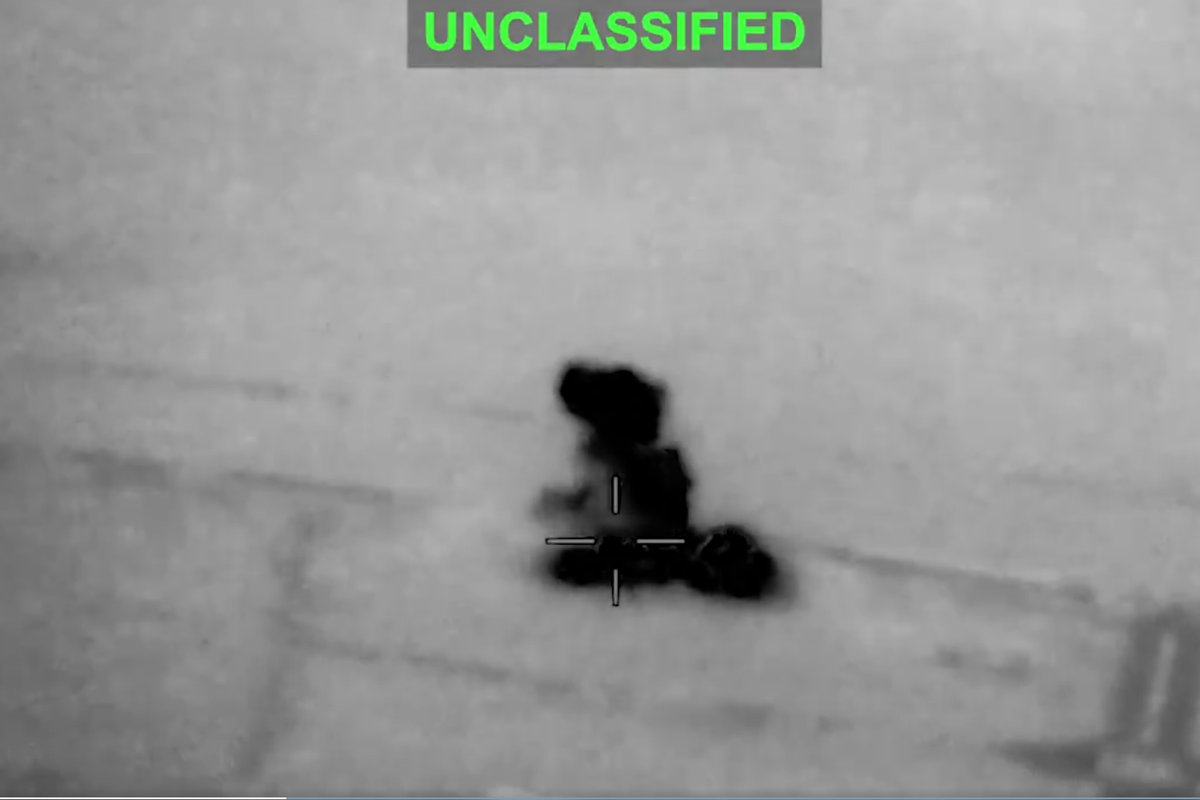
Hours later, US Central Command launched a targeted aerial campaign. Six land-based US aircraft, including F-35 and F-16 fighter jets, conducted a 90-minute bombing run against four specific targets inside Iranian territory.
The strikes focused on the southern coast of Iran and Qeshm Island. US forces hit:
- Coastal radar installations used to track commercial shipping.
- Anti-ship missile storage facilities.
- Drone assembly and launching sites near the port city of Sirik.
CENTCOM described the operations as a powerful response to unwarranted aggression against commercial shipping. They insisted the moves were designed to preserve international law and protect freedom of navigation. Iranian state media confirmed explosions near Sirik and Kish Island, marking the first direct American strikes on Iranian soil since the implementation of the short-lived truce.
Iran hits back at regional bases
Tehran didn't wait long to execute its counter-strategy. The Islamic Revolutionary Guard Corps issued an immediate statement claiming it had targeted locations where the US military is stationed in the region.
By Saturday morning, the scale of Iran's response became clear. Drone swarms struck targets in Bahrain, a key island nation that hosts the US Navy's Fifth Fleet. The Iranian Revolutionary Guard Corps explicitly stated that these attacks targeted a hostile military deployment.
The response from regional players was swift and filled with anxiety. Gulf allies immediately lined up behind Bahrain. The United Arab Emirates condemned the hostile drone attacks in the strongest terms. Kuwait warned that continuing these strikes undermines international efforts to reduce regional tensions. Egypt declared full solidarity with Bahrain's territorial integrity.
While the physical damage in Bahrain remains under assessment, the political damage to the ceasefire is absolute. Vice President JD Vance took to social media to signal a hardening American position, stating that violence will be met with violence. Vance insisted that the United States had fully honored its commitments under the memorandum of understanding and suggested that if Tehran had issues with how the agreement was being enforced, they should have used diplomatic channels instead of launching drones.
The real fight is about transit fees and control
To understand why this conflict is so stubborn, you have to look at what Iran is actually demanding on the water. This isn't just about military posturing. It's an economic dispute.
Shortly before the drone strikes on the Ever Lovely, Iran's Persian Gulf Strait Authority issued a sharp directive. They warned that any vessel passing through routes outside the framework designated by Tehran would not receive safe passage guarantees. Iran's deputy foreign minister publicly argued that the June agreement requires all ships passing through the strait, even those utilizing shipping lanes closer to Oman, to coordinate directly with Iranian coastal authorities.
More importantly, Iran wants to charge transit fees. The regime is dealing with severe economic domestic strain, with internal reports suggesting that up to 60 percent of the Iranian population can no longer bear additional economic hardships. The country has lost hope that local conditions will improve without a massive influx of capital.
By demanding coordination and attempting to collect tolls from international shipping, Tehran is trying to turn the Strait of Hormuz into a sovereign toll road. The US and its maritime allies view this as an illegal extortion scheme that threatens 20 percent of the world's daily oil and gas supply.
Ebrahim Azizi, the head of the Iranian Parliament's National Security and Foreign Policy Commission, pushed back heavily against the American narrative. He claimed that Iran's actions were not a violation of the ceasefire but rather an exercise in ceasefire management. Azizi accused the Trump administration of showing zero commitment to the principles of negotiation, warning that the US strikes would ultimately lead to retreat and regret.
What happens next on the water
The immediate fallout of this military escalation is already hurting global commerce. The United Nations' International Maritime Organization has officially paused its ongoing efforts to evacuate hundreds of commercial ships that have been stranded in the Persian Gulf since the initial outbreak of the war earlier this year. Shipping companies are refusing to send hulls through the area without explicit military escorts, causing maritime insurance premiums to spiral out of control once again.
If you are tracking this situation, don't look for a grand diplomatic breakthrough anytime soon. The UN-backed talks are effectively frozen.
Instead, keep your eyes on how the US Navy expands its operations. The maritime body overseen by the US military announced it is actively expanding alternative sea routes near Oman to bypass the narrowest, Iranian-controlled sections of the Strait of Hormuz.
For commercial operators and international observers, the practical reality is clear. Expect more tit-for-tat strikes in the coming days. The US has made it clear that any interference with commercial hulls will trigger immediate air raids on Iranian coastal assets. Iran has proven it has the drone capability to hit back at US naval installations and regional allies in Bahrain and beyond.
The ceasefire isn't completely dead on paper, but functionally, it's useless. Security in the region now depends entirely on raw military deterrence, not signed pieces of paper.