For nearly a decade, New Delhi operated on a remarkably straightforward geopolitical assumption. The strategy was clear: by applying relentless diplomatic pressure, highlighting cross-border security threats, and exploiting Islamabad’s internal economic chaos, India could gradually force Pakistan into international isolation.
It looked like it was working for a while. Pakistan spent years on international financial watchlists, faced biting scrutiny from Western capitals, and struggled through acute balance-of-payments crises.
But the reality of global politics in 2026 reveals something entirely different. The grand strategy to turn Pakistan into an untouchable state has hit a hard wall. Islamabad isn't isolated. It's actually actively engaged by the world’s most powerful capitals. The calculation that you can completely shut out a nuclear-armed state of 260 million people sitting at the crossroads of the Middle East, Central Asia, and China was always a flaw in regional management.
The Tricky Geometry of Middle Power Diplomacy
Geopolitics doesn't reward moral absolutes. It rewards utility.
Take the recent diplomatic theater involving Washington. Following the intense four-day military conflict between India and Pakistan in May 2025—which triggered massive airspace closures and disrupted everything from local schools to regional sports leagues—the international community didn't distance itself from Islamabad. Instead, it leaned in.
While New Delhi insisted the subsequent ceasefire was purely a bilateral affair handled through military hotlines, U.S. President Donald Trump publicly claimed credit for personally brokering the truce to avoid a wider nuclear escalation. Pakistan was quick to praise this international mediation, a move that significantly boosted its standing with Washington.
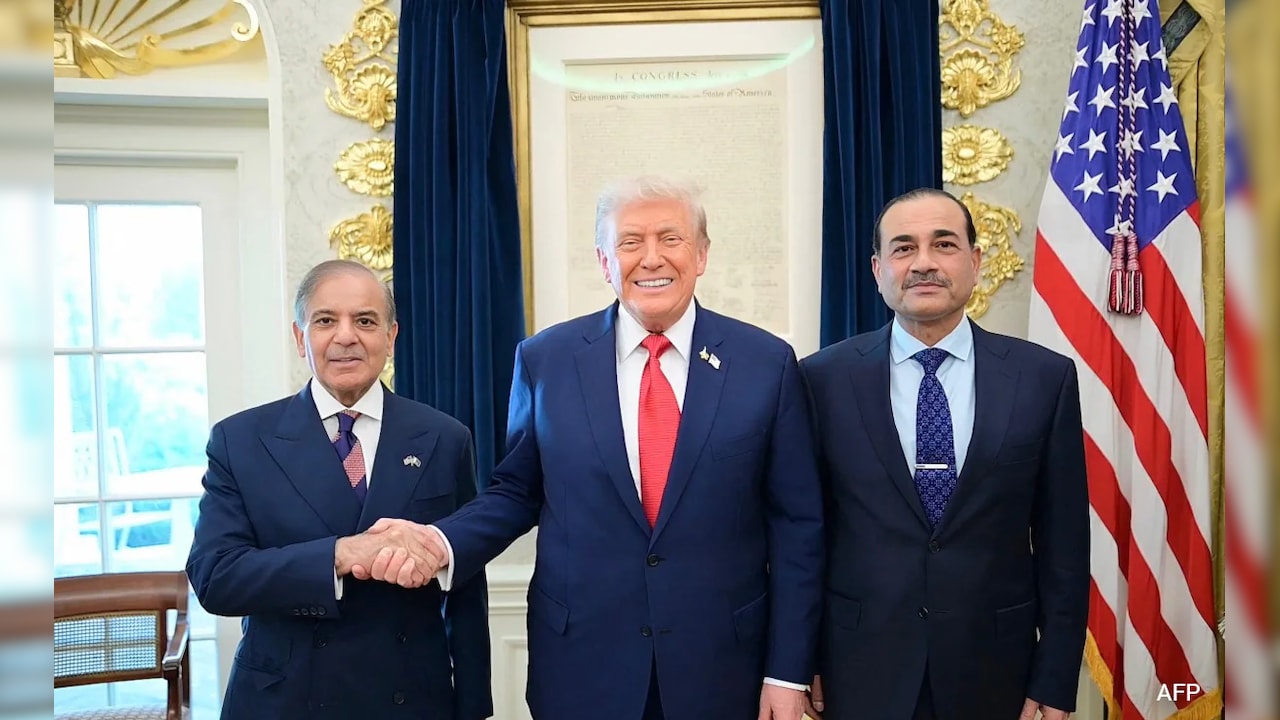
By playing the role of a cooperative partner open to stabilization efforts, Islamabad effectively neutralized the push to brand it as a rogue actor. Over the past year, Pakistani Prime Minister Shehbaz Sharif and Chief of Defense Forces Field Marshal Syed Asim Munir both secured high-level engagements in Washington.
The relationship isn't just about managing crises either. Washington is actively talking to Islamabad about regional security and critical mineral supply chains. The White House recognizes that regardless of how much it values its deep strategic partnership with India, it still needs functional, direct channels into Pakistan.
Actively Balancing Washington and Beijing
If Washington provides a diplomatic counterweight, Beijing provides the structural floor. The China-Pakistan Economic Corridor (CPEC) remains a foundational piece of regional infrastructure that cannot be wished away.
China isn't letting go of its footprint in South Asia. For Beijing, a secure, integrated Pakistan is a non-negotiable gateway to the Arabian Sea. The defense and economic cooperation between the two neighbors has actually intensified over the last twelve months, particularly as domestic Chinese industrial tech finds a permanent market in the Pakistani defense framework.
But look at how Islamabad is playing this. Instead of becoming a total vassal of Beijing—which many analysts predicted—Pakistani diplomats are pulling off a tricky balancing act. They are positioning the country as a bridge.
Consider the Middle East. Pakistan has quietly turned its geographic proximity to Iran into a diplomatic asset, occasionally facilitating backchannel communications between Washington and Tehran. At the exact same time, Islamabad is expanding its defense and security partnerships with the Gulf states.
Riyadh and Abu Dhabi are aggressively investing in regional stability to protect their own massive economic transformations. They don't want a collapsed, isolated state on their periphery. They want a predictable security partner, and they are willing to put money behind that preference.
The Real Cost of Regional Fragmentation
The biggest casualty of this decade-long push for isolation isn't actually Pakistan's economy or India's reputation. It's South Asia itself.
While Southeast Asia used the ASEAN framework to transform its neighborhood into an integrated economic powerhouse, South Asia remains the least integrated region on earth. Trade between neighbors is basically non-existent. Infrastructure like roads, shared power grids, and relaxed visa regimes are frozen.
New Delhi frequently speaks of leading the Global South, but genuine leadership requires regional integration. By choosing to penalize its neighbor over building a connected subcontinent, India has locked 1.9 billion people into a fragmented neighborhood.
Even the basic shared legal frameworks are under threat. Following the Pahalgam security incident in early 2025, India moved to suspend the decades-old Indus Waters Treaty. Water has now become the latest front in this diplomatic standoff, with toxic rhetoric flaring up over river access.
Yet, this zero-sum approach is showing major diminishing returns. Even within India, prominent voices from the security establishment and regional organizations have recently started questioning the absolute "no-talks" posture, realizing that a complete communication vacuum is dangerous when both sides possess nuclear options.
What Pakistan Must Confront Next
Let's be completely transparent here: Pakistan's lack of diplomatic isolation isn't a sign that everything is fine at home. Far from it.
Islamabad's external relevance is currently propped up by raw geography and its military weight. But the internal foundations are incredibly brittle.
According to data from the latest Pakistan Economic Survey, the country's overall literacy rate actually took a hit, dropping to 60% in 2025 down from 63% the previous year. The country currently has the world's second-largest out-of-school population. You can't run a modern, influential state when millions of your youngest citizens are locked out of the basic economy.
If Pakistan wants to sustain its current diplomatic breathing room, it has to move past short-term geopolitical maneuvers and execute three practical domestic corrections immediately:
- Shift from Geopolitics to Geo-economics: Stop relying solely on military utility to get foreign leaders to answer the phone. The state must aggressively open up its special economic zones to non-Chinese investment, specifically targeting Gulf capital for mechanized agriculture and green energy infrastructure.
- Fix the Literacy Drain: The provincial disparities in education—where Balochistan's literacy hovers at a disastrous 42%—are an existential threat. Federal funding must be legally tied to primary school enrollment metrics, explicitly targeting the urban-rural education divide.
- Formalize Backchannel Crisis Management: Relying on public, last-minute interventions from Washington during a military crisis is a dangerous gamble. Islamabad needs to quietly establish a permanent, non-political backchannel with New Delhi dedicated strictly to resource management like the Indus Waters Treaty and airspace safety, independent of shifting political winds.
The lesson of the last ten years is obvious. You can't easily isolate a country that the rest of the world needs to keep talking to. But managing to stay relevant on the world stage isn't the same thing as building a prosperous nation. Geography bought Pakistan time; now the internal work has to happen.


