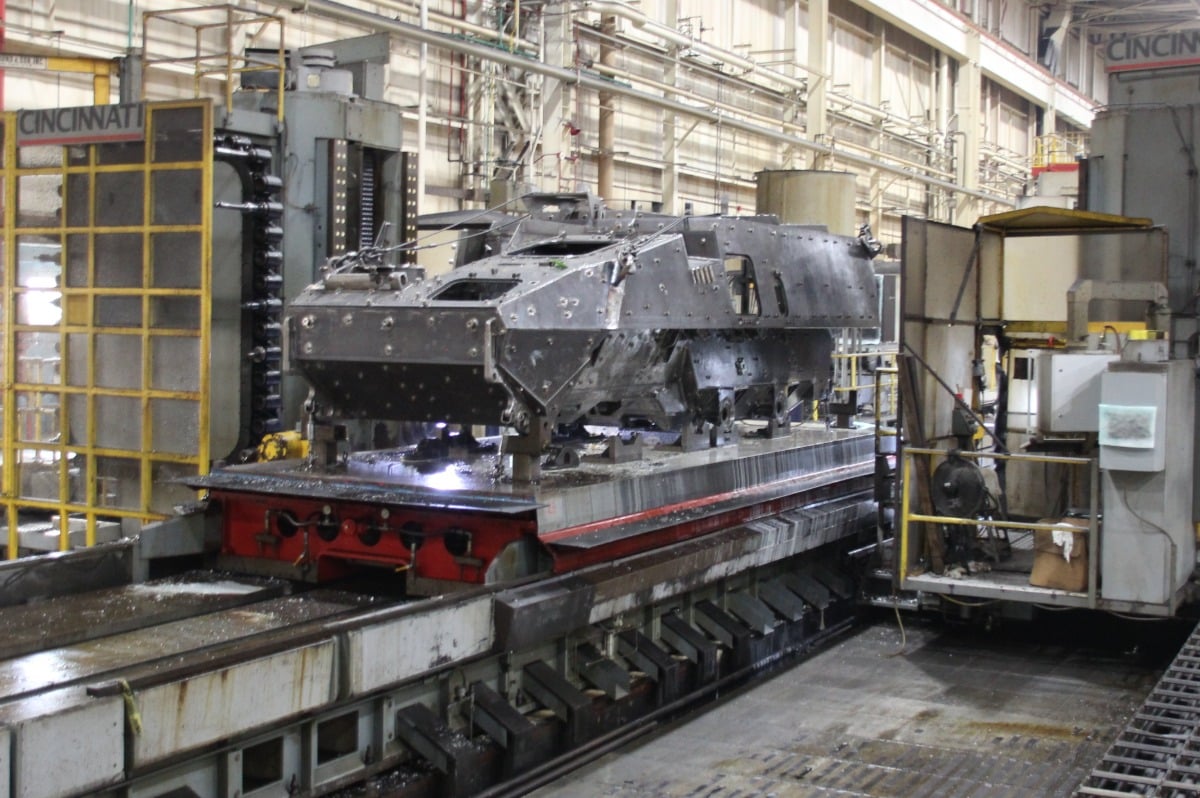
America has a heavy metal problem, and the Pentagon is scrambled trying to fix it. If you look at a Virginia-class submarine, an M1A2 Abrams tank, or a Patriot missile interceptor, you're looking at thousands of pounds of specialized steel. But behind that imposing hardware is a domestic supply chain that has been hollowed out by decades of factory closures, lost skills, and flat-footed procurement.
The defense industrial base isn't just lagging on software or microchips. It's struggling with the basic physics of melting, casting, and forging giant pieces of metal. Between 1984 and 2018, the United States lost 1,600 foundries and more than 4,400 metal casting facilities. That’s a staggering hit to our national capability. When a critical foundry goes under, you don't just lose the building; you lose the specialized metallurgical knowledge required to pour flawless steel for a missile hull or a submarine bow.
To reverse this atrophy, the Department of Defense is pouring hundreds of millions of dollars into a massive structural overhaul. They aren't just buying more steel; they’re trying to change the literal chemistry, technology, and workforce training behind American metal.
The Massive Deficit in American Castings and Forgings
We like to think of American military might as an automated juggernaut. The reality is much crunchier, hotter, and scarcer. If a defense contractor needs a massive forged component for a nuclear-powered submarine, they can't just click a button. They have to wait in a long, vulnerable line.
The industry is facing a massive workforce deficit. Data from the Metallurgical Engineering Trades Apprenticeships and Learning program, known as METAL, shows that the domestic metal casting sector needs an additional 122,000 skilled workers and engineers by 2028 just to keep pace with basic demand. Without these people, the heavy machinery sits idle.
This scarcity forces ugly trade-offs. When the Pentagon needs to accelerate the production of Patriot Advanced Capability-3 missile interceptors, it triggers a chain reaction across the entire ecosystem. Lockheed Martin recently signed a framework agreement to ramp up PAC-3 production from 600 to 2,000 units annually. To do that, they are planning a $200 million expansion at their plant in East Camden, Arkansas. But every single one of those extra missiles requires precision-cast metallic components. If the foundational foundries can't deliver the base metal, the high-tech assembly lines grind to a halt.
Upgrading the Foundry for Great Power Competition
The traditional American steel sector was built for a different era, focused on mass-producing structural beams for skyscrapers or sheets for minivans. Military steel is an entirely different beast. It requires specific alloys, extreme heat treatment, and specialized testing to survive explosions, deep-sea pressure, or hypersonic friction.
Because traditional methods are failing to scale quickly enough, the Pentagon is shifting its strategy toward advanced manufacturing. This means moving away from ancient sand-casting techniques and embracing a digital thread of production.
The Army's Joint Manufacturing and Technology Center at Rock Island Arsenal is the epicenter of this pivot. They're now running the second-largest 3D printer in the world, experimenting with printing components directly from metal powders. Instead of waiting months for a custom wooden pattern to be built for a traditional foundry mold, engineers can print temporary replacement parts via the Battle-Damaged Repair and Fabrication initiative.
But printing metal isn't a magic wand. The Pentagon's own Additive Manufacturing Strategy admits a harsh truth: parts made by layering metal powder require grueling qualification and certification processes. If a 3D-printed steel bracket has a single microscopic pocket of trapped gas, it can fail catastrophically under stress. The military is investing heavily in modeling and simulation to predict these flaws before the printer even starts, but transitioning these techniques from laboratory experiments to standard production lines is taking years.
Rebuilding the Human Pipeline
You can buy all the advanced machinery you want, but you still need humans who understand metallurgy. The Department of Defense is funding massive workforce initiatives through institutes like the Institute for Advanced Composites Manufacturing Innovation to scale up training programs nationwide.
The goal is to establish specialized programs at 53 universities and trade schools by 2030 to train the next generation of blacksmiths, foundry technicians, and quality inspectors. They are running metallurgy forging bootcamps and expanding apprenticeships because the average age of an American foundry worker has skewed older for decades. If those skills aren't transferred right now, the capability vanishes forever.
This isn't about nostalgia for the rust belt. It's a cold, hard calculation about logistics. The conflict in Ukraine proved that the concept of just-in-time logistics is completely useless in a prolonged, large-scale fight. When consumption of munitions outpaces production by a factor of ten, you can't rely on global shipping lanes or fragile, single-source suppliers.
Moving Past the Material Trap
A common mistake policymakers make is focusing entirely on where raw materials are mined. They worry about critical mineral mines in Africa or processing facilities in Asia. While access to raw elements matters, the real chokepoint is the industrial capacity to turn those minerals into military-grade steel components.
The Pentagon is finally realizing that having a pile of raw iron ore or nickel doesn't mean you have a submarine hull. The capability lies in the mid-tier supply chain—the small, unflashy machine shops and family-owned foundries that make up the lower tiers of defense contracting.
To secure this base, the Department of Defense is utilizing the Defense Production Act to inject capital directly into these lower-tier suppliers. The money is used to buy advanced CNC machines, upgrade automated welding systems, and implement digital quality control tools. For instance, recent investments in automated heavy welding tools for ground vehicles managed to reduce manual welding operations and cut vehicle heavy weld times by up to 80 percent while drastically reducing defects.
If you are an engineer, a manufacturer, or an investor in the industrial space, the direction of travel is clear. The era of outsourcing critical manufacturing is officially dead at the Pentagon. The focus has shifted toward building a regionalized, technologically advanced, and highly automated domestic metal ecosystem. The opportunities aren't in the flashy software applications; they are in the gritty, high-tech modernization of America's industrial backbone.
To participate in this buildout, manufacturers need to align with the Department of Defense's digital engineering standards, invest in workforce training through programs like METAL, and prepare for a tighter, more regulated domestic marketplace where supply chain resilience trumps lowest-cost bidding every single time.


