The recent panic over the U.S. delaying weapons shipments to European allies to prioritize a potential escalation with Iran is a masterclass in missing the point. The headlines read like a tragedy of limited resources. They suggest a zero-sum game where Washington must choose between the "good guys" in the Baltics and the "bad guys" in the Middle East.
This isn't a supply chain hiccup. It is a structural failure of the American defense industrial complex that has been decades in the making. If you think the delay is about a sudden surge in Iranian aggression, you’re buying into the surface-level narrative designed to mask a much uglier reality: the U.S. can no longer fight a two-front war, and it might not even be able to win a one-front war against a peer adversary.
Europe isn’t being "de-prioritized." Europe is being exposed.
The Myth of the Infinite Arsenal
For thirty years, the West lived under the delusion that war was something you did to people in pickup trucks using multi-million dollar missiles. We optimized for low-volume, high-margin boutique weaponry. We built the "Ferrari" of missiles—the AIM-120D AMRAAM—and forgot how to build the "Ford F-150s" that actually hold a line.
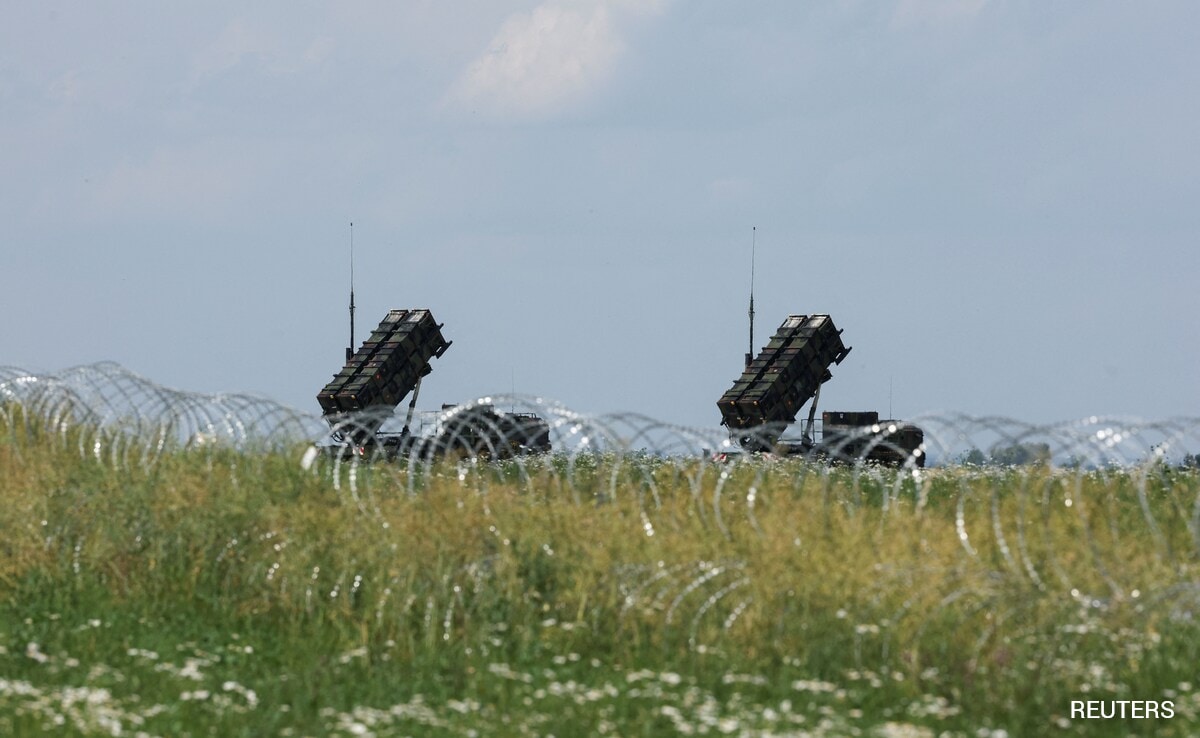
When reports surface that shipments of Patriot interceptors or Long Range Anti-Ship Missiles (LRASMs) are being diverted, the immediate reaction is to blame the current administration or the latest geopolitical flare-up. That is lazy.
The real issue is burn rate versus replacement rate.
During the height of the Cold War, the U.S. maintained a surge capacity that could triple production of basic munitions within months. Today? Lead times for critical components—semiconductors, specialized castings, and solid rocket motors—are measured in years. When the Pentagon looks at its "war stocks" for a potential conflict with Iran, it isn’t looking at a warehouse full of crates. It’s looking at a spreadsheet of IOUs.
I have spent years watching defense contractors promise "agile manufacturing" while their assembly lines look like something out of the 1970s. We have outsourced the bowels of our supply chain to the very countries we are supposed to be deterring.
Europe Is Failing the Stress Test
The "outrage" from European capitals over delayed shipments is the height of geopolitical entitlement. For decades, the European Union—specifically Germany and France—treated defense spending as a nuisance to be minimized in favor of the social safety net. They outsourced their sovereignty to the American taxpayer.
Now, with Russia at the doorstep and Iran rattling the cage in the Strait of Hormuz, the bill has come due.
- The dependency trap: European allies are so reliant on the U.S. for "enablers"—intelligence, surveillance, and heavy airlift—that they cannot move a battalion across their own continent without a green light from D.C.
- The calibration error: We are sending high-end interceptors to protect European cities when the real threat is a war of attrition. You don't win a war of attrition with $4 million missiles against $20,000 suicide drones.
- The industrial vacuum: Even if the U.S. wanted to fulfill every order tomorrow, the raw materials don't exist. We are competing for the same high-grade steel and rare earth elements used in the consumer tech sector.
The "delay" isn't a policy choice. It’s a physical impossibility. We are trying to run a marathon on a treadmill that’s unplugged.
The Iran Distraction
Let’s be brutally honest about Iran. The threat isn't that they will defeat the U.S. Navy in a traditional engagement. The threat is that they will force us to use up our limited, expensive "silver bullets" on cheap, mass-produced garbage.
This is the Asymmetric Cost Curve.
When the U.S. Navy fires an SM-2 interceptor to take down a Houthi-launched drone, we are "winning" the engagement but losing the war. We are trading a $2 million asset for a $5,000 lawnmower with wings. Iran knows this. They don't need to sink a carrier; they just need to empty our magazines.
By diverting shipments from Europe to the Middle East, the U.S. isn't preparing for victory. It is falling for a trap. We are burning through the stockpile intended for a high-end conflict with China or a long-term defense of NATO just to keep the sea lanes open in a region that should be managing its own security.
Why "Fixing" the Supply Chain Won't Work
The standard "expert" advice is to "leverage" more funding and "foster" better cooperation with the private sector. This is nonsense.
Money is no longer the bottleneck. Time and specialized labor are.
You cannot "disrupt" the laws of physics or the timeline of chemical curing for solid rocket fuel. We have spent twenty years consolidating the defense industry into five "primes." We killed competition in the name of efficiency, and now we have a brittle system that breaks the moment it's asked to do two things at once.
If you want to understand the delay, look at the Ballistic Missile Defense System (BMDS). It is a marvel of engineering, but it is fundamentally unscalable. We are trying to solve a quantity problem with a quality solution. It’s like trying to put out a forest fire by sending one world-class firefighter with a very expensive thimble.
The Actionable Truth for the Allies
If you are a European policymaker reading this, stop complaining to Washington. They can’t help you. The "arsenal of democracy" is currently out of stock.
- Ditch the Boutique Mentality: Stop ordering the F-35 if you can't afford the missiles to put on it. Shift focus to "good enough" mass. We need thousands of cheap, attritable systems, not five exquisite ones that we're too afraid to lose.
- Nationalize the Supply Chain: If the private sector can't provide the surge capacity, the state must. This isn't about socialism; it's about survival. You need "warm" factories that run at 20% capacity during peacetime so they can hit 100% in a week.
- Accept the Pivot: The U.S. is moving to the Pacific. Everything else is a side-show. If Europe can't defend itself against a degraded Russian military without American interceptors, then Europe isn't an ally; it's a protectorate.
The delay in weapons supply isn't a "report." It’s a eulogy for the era of American overextension. Washington is finally realizing that it has a finite number of arrows in its quiver. Choosing Iran over Europe isn't a strategic masterstroke or a betrayal. It’s a desperate attempt to plug a leak in a dam that is already crumbling.
The era of the U.S. as the world’s 24/7 arms dealer is over. The sooner the "allies" realize they are on their own, the sooner they might actually start building something that can fight.
Stop asking when the ships are arriving. They aren't coming. Build your own.