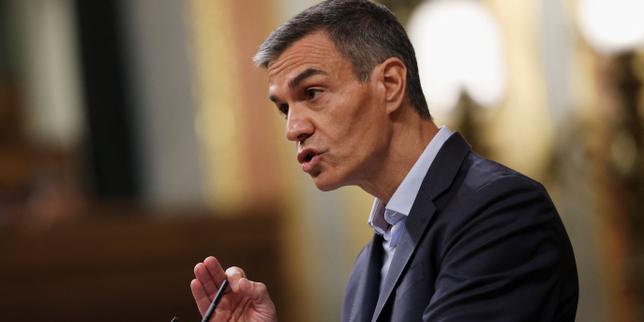
The Spanish parliament witnessed a scene that felt like pure political theater. Prime Minister Pedro Sánchez stood before lawmakers, visibly defensive, trying to convince the country that his house isn't burning down. He looked the opposition in the eye and flatly denied that there's any widespread corruption within his left-wing government or his party, the PSOE.
It was a bold performance. But honestly, it's getting harder to buy the spin.
Just 48 hours earlier, Spain's Supreme Court handed down a massive 24-year prison sentence to José Luis Ábalos. If you don't follow Spanish politics closely, you need to understand that Ábalos wasn't some low-level bureaucrat. He was Sánchez's former Transport Minister, his chief party organizer, and the literal right-hand man who engineered Sánchez's rise to power. Watching the man who spearheaded your political career get locked up for a quarter of a century for taking pandemic-era bribes hurts. It hurts badly.
Yet, Sánchez insists everything is fine. He says these are isolated cases of bad actors taking advantage of their influence to make a quick buck. He claims there's no systemic corruption. But when your ex-minister is going to prison, your wife has to hand over her passport to a judge, your brother is facing trial, and your political mentor is under active indictment, the "isolated incident" excuse starts to wear incredibly thin.
The Stunning Fall of the Kingmaker
To see why this moment is so devastating for the Spanish left, we have to look back to 2018. Pedro Sánchez actually became prime minister by weaponizing a corruption scandal. He launched a historic motion of censure that toppled the conservative government of Mariano Rajoy, which was drowning in the infamous Gürtel corruption case.
The man who stood up in parliament back then to defend that motion and preach about political morality? José Luis Ábalos.
The irony is thick enough to choke on. The supreme court found that Ábalos and his close aide, Koldo García, ran a criminal organization inside the Transport Ministry. They took massive kickbacks on public contracts for face masks when people were dying during the pandemic. The court details are sordid. They include millions of euros in hidden commissions, cash deliveries, and even allegations that Ábalos used his position to secure state-funded roles for sex workers he hired.
Sánchez says he didn't know. He says he would never have tolerated it. The party acted quickly to expel Ábalos when the initial suspicions leaked out, which Sánchez points to as proof of his integrity. But voters are asking a simpler question. How do you live and work in the pocket of someone for years and notice absolutely nothing?
A Family Affair Under Judicial Scrutiny
The political bleeding doesn't stop with Ábalos. The conservative opposition, led by Alberto Núñez Feijóo of the Partido Popular and Santiago Abascal of the far-right Vox, are smelling blood in the water. They aren't just focusing on the ministries. They're targeting Sánchez's inner family circle.
The Case Against Begoña Gómez
Sánchez's wife, Begoña Gómez, is facing intense legal pressure over allegations of influence peddling and corruption. A court recently ruled that she's a flight risk, forcing her to surrender her passport and report to authorities twice a month. The investigation centers on whether she used her position as the prime minister's spouse to secure corporate sponsorships for a university master's degree program she directed. She's also accused of using state funds to pay a personal assistant.
Sánchez has lashed out at these measures, calling them unreasonable and a clear overreach by right-wing judicial forces. He claims his wife is the victim of a coordinated harassment campaign driven by right-wing pressure groups like Manos Limpias. The national police even took the unusual step of releasing a statement defending their political neutrality amidst the chaos. Still, the visual of the prime minister's wife being grounded by the courts is a public relations nightmare that no amount of spin can fix.
The Brother in Badajoz
Then there's David Sánchez, the prime minister's brother. He's currently on trial over allegations surrounding a bespoke job he received from a Socialist-led council in Badajoz back in 2017. The accusation claims the job was handed to him purely because of his brother's rising status in the national party. Like Gómez, David Sánchez denies any wrongdoing. While Pedro Sánchez hasn't been named in any of these cases personally, the sheer volume of family members entering courtrooms makes it easy for his rivals to paint a picture of nepotism.
The Zapatero Complication
If family drama and a jailed minister weren't enough, former Prime Minister José Luis Rodríguez Zapatero has also been dragged into the legal mud. Zapatero, who has acted as a longtime political mentor to Sánchez, is under indictment for influence peddling and money laundering.
This specific case looks at the 2021 public bailout of Plus Ultra, a tiny airline that received millions in emergency pandemic aid. Critics have long argued the bailout made zero economic sense and smelled of political favoritism. Sánchez defended Zapatero in parliament, pointing out that the former leader hasn't held public office for 15 years and that European authorities originally cleared the aid package. He says we can't draw conclusions yet. He's technically right, but in politics, perception matters more than technicalities.
The opposition is capitalizing on this perfectly. During the parliamentary session, Feijóo shouted across the aisle that the government can't support any more scandals. Abascal demanded that Sánchez call immediate elections. The temperature in Madrid is boiling.
What Happens to Spain Now
Sánchez is a political survivor. He has earned a reputation for navigating seemingly impossible political tightropes, but this crisis feels different. The National Criminal Court is currently chasing down two more related investigations. One involves Santos Cerdán, the man who replaced Ábalos as the PSOE organization secretary, regarding public works contract-rigging. Another is looking into allegations that illegal cash payments were dropped off directly at the PSOE headquarters.
The erosion of public trust is real. When a government that came to power on an anti-corruption platform ends up defending itself against multi-front judicial probes, the cynicism spreads fast. Sánchez says his government is serene and will keep ruling. He's betting that his fractured coalition of left-wing and regional parties will hold together simply out of fear of a right-wing takeover.
If you want to understand where Spain goes next, don't watch the fiery speeches in parliament. Watch the court dockets in Madrid. Watch whether the minor regional parties that keep Sánchez in power decide that the reputational cost of supporting him has finally become too high to bear. The prime minister claims there is no widespread corruption, but the judges seem determined to find out for themselves. Keep your eyes on the upcoming regional polling data and the next set of witness testimonies from the Transport Ministry. That's where the real future of Spanish governance will be decided.