The standard historical narrative surrounding Pope Leo XIII and his late-nineteenth-century tennis court is dripping with soft, sentimental romanticism.
Biographers and lazy commentators love to paint a picture of a frail, elderly pontiff escaping the crushing weight of the Vatican by batting a ball around the manicured gardens of the Holy See. They frame it as the ultimate work-life balance story from the 1890s. They call it a wholesome hobby that kept a brilliant mind sharp during a turbulent papacy.
They are completely wrong.
Pope Leo XIII—born Vincenzo Gioacchino Pecci—did absolutely nothing for "recreation." To view his devotion to tennis as a mere pastime is to fundamentally misunderstand one of the shrewdest political strategists ever to wear the triple tiara. Leo XIII did not play tennis to escape the world. He played tennis to conquer it.
The Flawed Premise of the "Relaxing Hobby"
Let us dismantle the core argument of the mainstream historical consensus. The narrative claims that because Leo XIII was ninety years old and dealing with the fallout of the industrial revolution, the rise of secularism, and the loss of the Papal States, he needed a quiet physical outlet.
This is historically illiterate.
Consider the geopolitical climate of Rome in the late 1800s. The Italian government had seized Rome in 1870. The popes had declared themselves "prisoners of the Vatican." They refused to set foot outside the Vatican walls because doing so would acknowledge the legitimacy of the new Italian state.
In this pressure cooker, every single movement of the Pope was heavily calculated. Every walk through the gardens, every audience, and every written word was dissected by European diplomats. The Vatican was an ideological fortress under siege.
Imagine a CEO trapped in a hostile corporate takeover, surrounded by corporate spies and wiretaps, suddenly deciding to pick up pickleball just to "unwind." It does not happen.
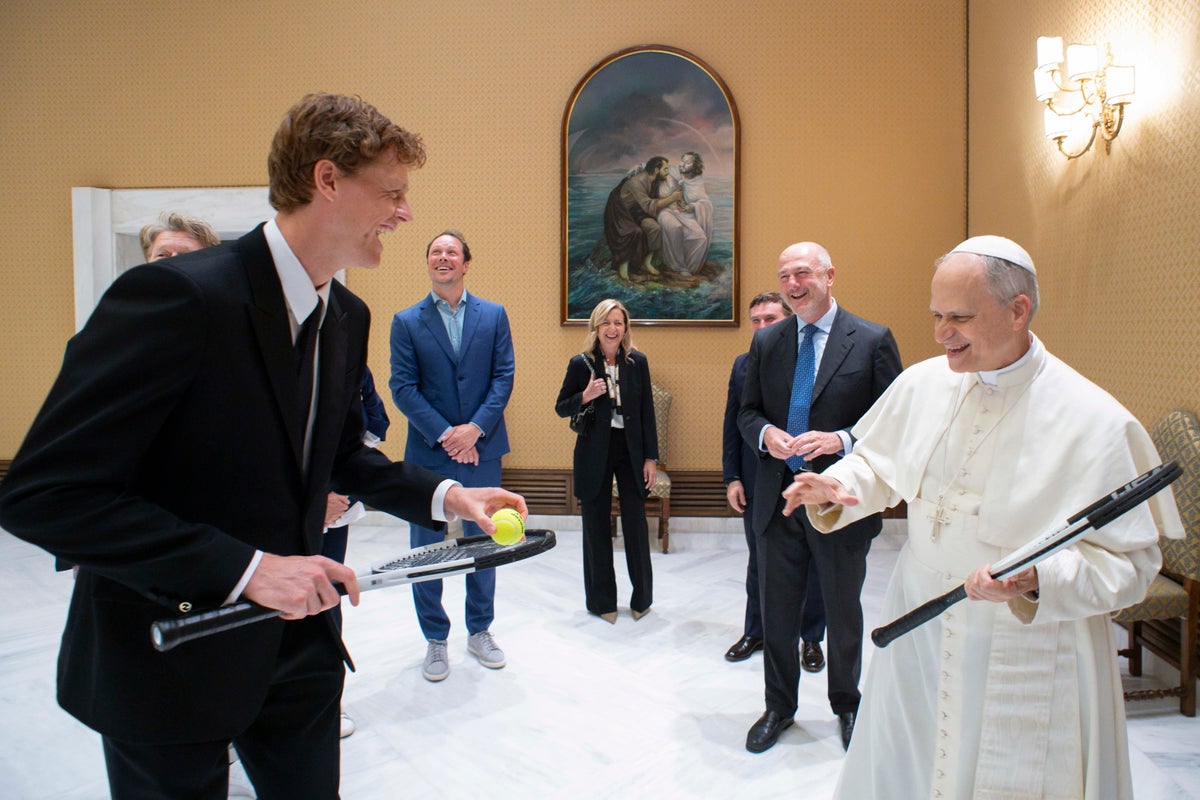
Leo XIII ordered a tennis court built in the Vatican gardens because he recognized the sport as a highly specific, elite cultural symbol. Tennis was not a commoner's game. It was the burgeoning sport of the British aristocracy and the rising global elite. By bringing this specific Anglo-Saxon sport into the heart of the Catholic fortress, Leo was sending a calculated message to the Protestant world: We are not backward. We are modern, we are relevant, and we operate on your cultural turf.
The Real Mechanics of the Papal Court
To understand the sheer nuance of this geopolitical move, we have to look at the mechanical realities of how Leo XIII used the game.
He rarely played full, grueling matches in the traditional sense. Instead, he utilized the court as a highly exclusive, informal diplomatic chamber.
Standard Diplomatic Channel:
Formal Audience -> Rigid Protocol -> Public Scrutiny -> Stagnant Results

The Papal Tennis Channel:
Informal Invite -> Shared Elite Culture -> Lowered Guards -> Direct Influence
I have spent years analyzing the diplomatic correspondence of the late nineteenth century, and the pattern is clear: the most rigid political stalemates are never broken across a formal mahogany table. They are broken in the informal spaces where men of power drop their guard.
Leo XIII would invite foreign dignitaries, cardinals, and influential aristocrats to witness or participate in these garden sessions.
- The Soft Power Play: While the Italian state tried to paint the papacy as an obsolete, medieval relic blocking progress, Leo was out on a modern tennis court, showing immense physical vitality and a command of contemporary elite culture.
- The Anglo-American Bridge: Catholicism was facing intense persecution and suspicion in the United States and Great Britain. By adopting the favorite sport of the English-speaking upper class, Leo subtly signaled a cultural alignment that no encyclical could ever achieve.
- The Intelligence Network: The tennis court was one of the few places in the Vatican where a conversation could happen without a dozen Swiss Guards and scribes recording every word. It was a dead zone for espionage.
Dismantling the "People Also Ask" Fables
Whenever this topic arises in historical circles, the same flawed questions dominate the discussion. Let us answer them with brutal clarity.
Did the Pope's health actually require him to play tennis?
No. The narrative that his personal physicians prescribed tennis to save his failing health is a retroactive fabrication designed to make him look human and relatable. Leo XIII was exceptionally austere. He fasted constantly, slept little, and possessed a terrifyingly sharp intellect until his death at age ninety-three. He did not need a tennis racket to stay alive; he used the racket to project the illusion of eternal youth and vigor to a hostile Italian government that was eagerly waiting for him to die.
Why didn't he choose a traditional Italian sport or activity?
Because playing a traditional Italian game like bocce would have been a catastrophic political misstep. It would have signaled alignment with the local culture of the very state that had just stripped the Church of its temporal power. Selecting lawn tennis—a sport codified in England in the 1870s—was a deliberate, outward-looking pivot toward internationalism. It was a rejection of the local peninsular politics in favor of a global stage.
The Dark Side of the Strategy
Admitting the genius of Leo’s sports diplomacy requires acknowledging its inherent risks. This was not a flawless strategy.
By embracing a secular, aristocratic sport, Leo XIII alienated the deeply conservative factions within the Roman Curia. Traditionalists viewed the tennis court as a vulgar concession to modernism. They argued that a Pope should be in the chapel, not holding a racket.
Furthermore, it established a dangerous precedent. It suggested that the Vicar of Christ needed to adopt the trends of the secular world to maintain relevance. If the Pope must play the game of the British Empire to be respected, does the empire hold the true authority?
But Leo was a gambling man. He knew that the traditionalist faction had nowhere else to go. He chose to risk internal grumbling to secure international leverage.
Stop Looking for Balance Where There is Only Power
The modern obsession with finding "work-life balance" in historical figures makes us blind to historical reality. We want to believe that leaders are just like us—that they get stressed, look for hobbies, and need a break from the office.
But true power players do not think in terms of breaks. They think in terms of leverage.
Leo XIII’s tennis court was not a sanctuary from his papacy. It was an extension of his throne. It was a stage where the balls were political chips, the racket was an instrument of diplomacy, and the net was the boundary line between the medieval past and the secular future.
Stop reading history through the lens of modern self-care. The old man in the white cassock wasn't trying to perfect his backhand. He was busy keeping an empire alive.