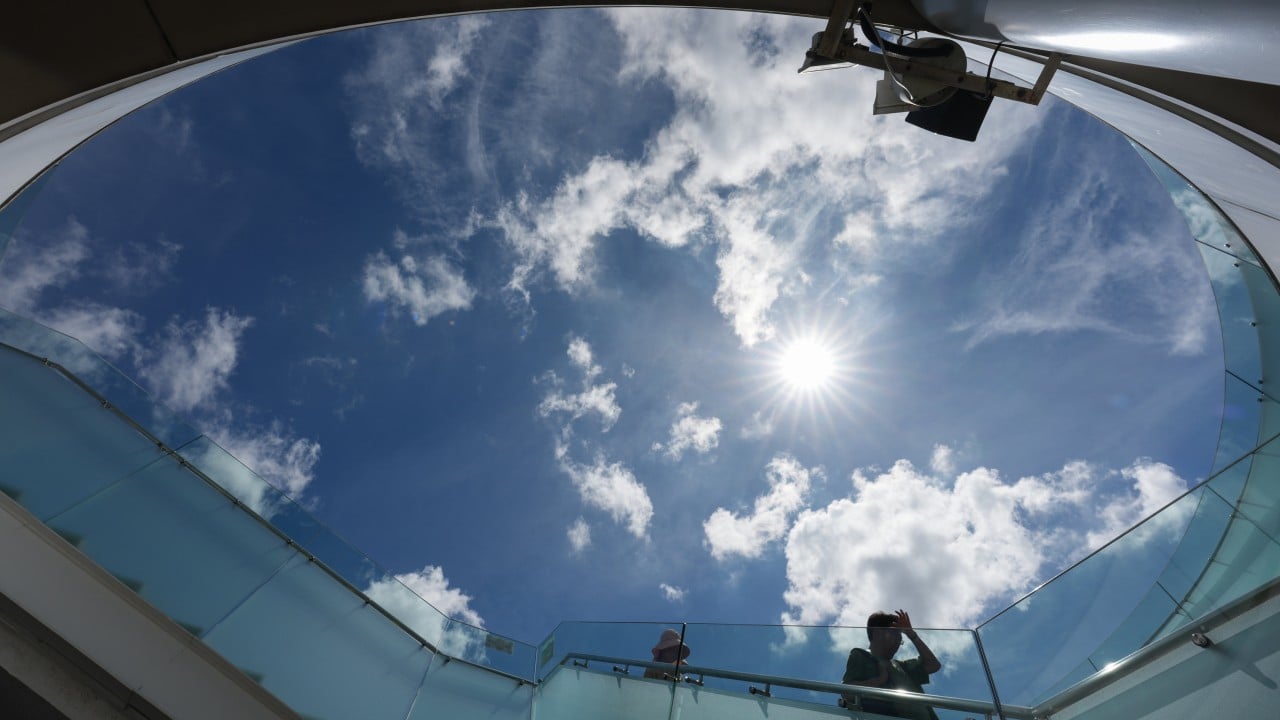
Meteorological headlines love a good villain, and the "Super El Niño" is the current media darling. Whenever the Hong Kong Observatory drops its annual outlook warning of record-shattering heat, the predictable cycle begins. Journalists rush to print apocalyptic predictions, academics demand grand policy overhauls, and the public buys into the comforting lie that our climate anxieties can be neatly blamed on a single tropical Pacific phenomenon.
It is a lazy consensus.
By hyper-focusing on the specter of a macro-climate event like El Niño, public discourse completely misses the micro-mechanics driving urban suffering. Having analyzed municipal climate data and regional infrastructure investments for over a decade, I can tell you that the obsession with regional weather cycles is a dangerous distraction. The real crisis in Hong Kong is not an overheating planet; it is an unventilated concrete jungle designed to trap that heat.
The Flawed Logic of the El Nino Scapegoat
The premise of the standard climate warning is simple: warmer sea surface temperatures in the central and eastern Pacific disrupt global wind patterns, leading to suppressed rainfall and soaring summer temperatures across Southern China.
It sounds scientific. It makes for great charts. But it ignores a fundamental reality of urban physics.
El Niño is a macro-regional driver, but cities do not experience macro-climates. They experience micro-climates. The Hong Kong Observatory frequently notes that urban stations like Tsim Sha Tsui record nighttime minimum temperatures significantly higher than rural outposts like Lau Fau Shan or Sheung Shui.
This gap is not caused by El Niño. It is caused by the Urban Heat Island (UHI) effect, driven by building density, anthropogenic heat from air conditioning units, and a severe lack of urban wind corridors.
[Macro Climate Signal: El Niño]
          │
          ▼
[Urban Baselines: Concrete Thermal Mass + AC Exhaust]
          │
          ▼
[Real-World Exposure: Severe Local Heat Stress]
When you blame a "Super El Niño" for record summer temperatures, you clear local planners, property developers, and architects of accountability. You frame a structural, manageable infrastructure failure as an unavoidable act of God.
Deconstructing the "Record Heat" Metric
Let's dissect what a "record-breaking year" actually means. Media outlets sound the alarm when the number of Very Hot Days (days with a maximum temperature of 33°C or above) or Hot Nights (nights with a minimum temperature of 28°C or above) hits a new high.
But look at the data trends over the last thirty years. The trajectory of rising urban temperatures in Hong Kong does not move in a jagged sawtooth pattern mapping perfectly to ENSO (El Niño-Southern Oscillation) cycles. Instead, it shows a steady, relentless upward slope.
The baseline is shifting independent of El Niño. Even during La Niña years—the cooling phase of the cycle—Hong Kong now routinely clocks summer temperatures that would have broken records three decades ago. Blaming the peak of the cycle for the crisis is like blaming the final drop of water for overflowing a bucket that has been filling for hours.
The Real Culprit: WALL Effect Architecture
If you want to know why Hong Kong is baking, look at the shoreline of West Kowloon, Tseung Kwan O, or Tsuen Wan. Look at the massive, high-density residential developments built shoulder-to-shoulder like giant concrete curtains.
In local urban planning vernacular, these are known as "wall buildings."
The Mechanics of Air Stagnation
Hong Kong relies on ocean breezes from the South China Sea to cool its dense urban core during the brutal summer months. When property developers build unbroken rows of 50-story residential towers directly on the waterfront, they create a physical barrier.
- The Wind Block: Sea breezes are deflected upward or entirely blocked, leaving the inner urban districts (like Mong Kok and Sham Shui Po) in complete aerodynamic stagnation.
- The Thermal Mass: High-density concrete absorbs solar radiation all day. Without wind to remove this heat through convection, the concrete radiates warmth back into the streets long after the sun goes down.
- The Air Conditioning Loop: As the streets warm up, millions of air conditioning units work harder to cool indoor spaces. These units pump massive amounts of waste heat directly into the already stagnant outdoor air, creating a feedback loop.
Imagine a scenario where the regional temperature is 32°C. In a well-ventilated coastal zone, that feels manageable. In an airless concrete canyon in Sham Shui Po, surrounded by wall buildings and AC exhaust, the micro-climate temperature can easily spike past 38°C with a heat index making it feel well over 40°C.
That is not El Niño. That is poor zoning.
Dismantling the Public Myths
Let's address the common questions that surface every time the Observatory issues a severe weather warning. The conventional answers are rooted in fear; the reality is rooted in structural mechanics.
"Will the extreme heat cause an imminent failure of our power grid?"
The short answer is no, but the long answer exposes a profound economic disparity. Hong Kong’s electricity providers, CLP and HK Electric, maintain incredibly high reliability ratings (over 99.999%). They possess the generation capacity to handle massive surges in peak demand driven by universal air conditioning usage during an El Niño summer.
The real threat is not a blackout. It is the economic strangulation of low-income communities. While middle-class households simply absorb the higher utility bills of running inverter AC units 24/7, hundreds of thousands of residents living in subdivided flats cannot afford the cost. Their homes become literal ovens. The crisis is one of equity and health, not grid capacity.
"Can we plant our way out of this with green roofs and urban parks?"
This is a favorite talking point of corporate sustainability brochures. While urban greening is beneficial, the belief that a few green roofs can counteract the thermal mass of thousands of high-rise concrete structures is mathematically absurd.
To significantly reduce temperatures via evapotranspiration, you need massive, contiguous tracts of vegetation at ground level, combined with wide air paths to distribute the cooled air. Slapping a few rows of sedum on top of a 60-story skyscraper does nothing for the pedestrian walking through the windless concrete canyon below.
Moving Beyond Passive Mitigation
Stop expecting the government to solve this through toothless "Green Building" certifications or voluntary guidelines on wind sensitivity assessments. The current regulatory framework is failing because it treats urban ventilation as an optional luxury rather than a public health necessity.
If Hong Kong wants to survive the shifting baseline of regional temperatures, it must adopt an aggressive, interventionist approach to urban design.
1. Enforce Non-Negotiable Air Paths
The government must mandate physical gaps in waterfront developments. Property developers should no longer be permitted to maximize plot ratios by building continuous walls of concrete. Every major development must feature wide, unobstructed air corridors aligned with prevailing wind directions to allow maritime air to penetrate the city’s interior.
2. Tax Anthropogenic Heat Output
Air conditioning is the single greatest contributor to the localized urban heat island effect. Large commercial buildings that dump mega-watts of waste heat into narrow streets should face a progressive thermal tax. This would force the commercial real estate sector to invest in decentralized district cooling systems and high-efficiency water-cooled chillers that do not vent heat directly into pedestrian zones.
3. Redesign the Street Surface
Asphalt and dark concrete absorb up to 90% of solar radiation. The city needs a massive, systematic rollout of high-albedo, reflective pavements and cool coatings on existing buildings. This is not experimental technology; it is low-cost, high-impact surface engineering that actively prevents the ground from becoming a thermal battery.
Traditional Asphalt Street:
[Solar Radiation] ──> [90% Absorbed by Dark Surface] ──> [Heat Radiated to Pedestrians All Night]

Cool Coated Street:
[Solar Radiation] ──> [70% Reflected Away] ──> [Minimal Thermal Storage in Roadway]
The downside to this approach? It requires confronting the most powerful financial force in Hong Kong: the real estate sector. Restricting building footprints and mandating air paths means reducing the sellable floor area of premium developments. It means lower profit margins for developers and lower land sale revenues for the government.
But the alternative is worse. Continuing to treat extreme summer heat as an unpredictable atmospheric anomaly from the Pacific allows the true architects of our discomfort to escape scrutiny.
The Hong Kong Observatory can keep tracking the sea surface temperatures of the Pacific all they want. But until we start tracking the velocity of the air moving through our own streets, we are just complaining about the weather while building our own furnace.
Stop looking at the ocean. Look at the skyline.