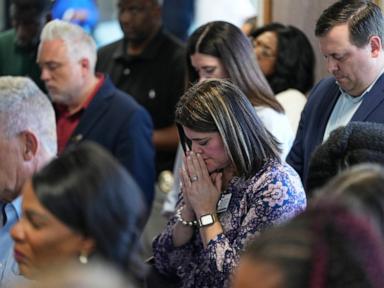
Louisiana is reeling from a nightmare that defies every logic we hold about human nature. When news broke that a man had killed eight children, the collective heart of the state didn't just break. It stopped. People in small towns like this don't just "move on" from something so horrific. They carry it. They carry the weight of names they knew and faces they saw at the local grocery store. It's a heavy, suffocating kind of grief that makes you question the very ground you walk on.
You'd think we’d have words for this. We don't. The community is currently stuck in that jagged space between total shock and the beginning of a lifelong trauma. It’s a tragedy that has left law enforcement, neighbors, and distant relatives looking for a "why" that probably doesn't exist. You can't apply a rational "why" to the irrational slaughter of innocents.
The Reality of Rural Trauma and Why It Hits Harder
Small towns in Louisiana are built on the idea of the porch light. You know who belongs and you definitely know who doesn't. When the threat comes from inside the house—literally—the psychological floor drops out. This isn't like a crime in a massive city where you can hide in the crowd. In a place where everyone is connected by blood, marriage, or decades of shared history, a single act of violence ripples through the entire population.
Psychologists call this "collective trauma." It's when an entire group of people experiences a blow to the basic fabric of their social life. It destroys the bonds that hold them together. When eight children are taken, you aren't just losing individuals. You're losing an entire generation of a neighborhood. You're losing the future football players, the valedictorians, and the kids who were supposed to take over the family business.
How the Justice System Grapples with the Unspeakable
The legal proceedings in cases like this are often agonizingly slow. People want immediate justice. They want a reckoning. But the reality is that the Louisiana judicial system has to move with a cold, calculated precision that feels offensive to those who are grieving.
When a suspect is in custody, the focus shifts to mental health evaluations and the long road to trial. We've seen this play out before in high-profile mass casualty events. The defense will likely look at every possible mitigating factor. Was there a history of untreated psychosis? Was there a domestic dispute that spiraled into a psychotic break?
Honestly, for the people in the community, these answers rarely provide peace. Knowing a motive doesn't bring back a child. It doesn't make the house next door feel any less haunted. The legal system focuses on "what happened," but the community is stuck on "how could this happen here."
Supporting the Survivors When Words Fail
If you're looking at this from the outside, you might feel an urge to do something. Anything. But "thoughts and prayers" have become a punchline for a reason. They feel hollow when the scale of the loss is this massive.
Real support looks like showing up for the long haul. The cameras will eventually leave Louisiana. The national news cycle will find a new tragedy to obsess over within a week. That's the brutal reality of our 24-hour media cycle. But the families left behind will still be there. They’ll be there in six months when the house is too quiet. They’ll be there in a year when a birthday rolls around.
Tangible Ways to Help After a Community Tragedy
- Fund the Essentials: Funeral costs for eight children are astronomical. Local credit unions and verified crowdfunding pages are the most direct way to ensure families aren't buried in debt while they're trying to bury their kids.
- Mental Health Resources: This community is going to need specialized trauma counseling for years. Donating to regional mental health clinics that provide sliding-scale services is a move that actually saves lives.
- Respect the Privacy of the Mourning: This sounds simple, but it’s often ignored. Don’t be the person gawking at the crime scene or digging for "exclusive" details on social media.
The Long Road to Healing in Louisiana
Healing isn't a straight line. It's a messy, circular process that involves a lot of anger and even more silence. The people of Louisiana are famously resilient, but resilience shouldn't be a requirement for surviving a massacre.
We need to stop expecting communities to just "bounce back." Sometimes, a community is changed forever. The landscape of that town is now permanently altered. There’s a "before" and an "after," and the "after" is a much darker place.
What happens next is the hard part. It’s the vigils that turn into quiet nights. It’s the empty desks in classrooms when school starts back up. It’s the slow, painful realization that things will never be okay in the way they were before.
The best thing we can do is keep our eyes on the survivors. Don’t let their pain become a statistic. Don’t let the names of these eight children be forgotten in the rush to analyze the killer’s past. Focus on the lives that were lived, however short they were. That’s where the real story is.
The immediate priority for anyone in the area is seeking professional support. Reach out to the Louisiana Department of Health or local crisis hotlines. Don't try to process this alone. There's no shame in admitting that the world feels broken right now. It is.
Check on your neighbors. Hug your kids. Keep the porch light on for those who can't.


:strip_icc()/pic2513216.jpg)