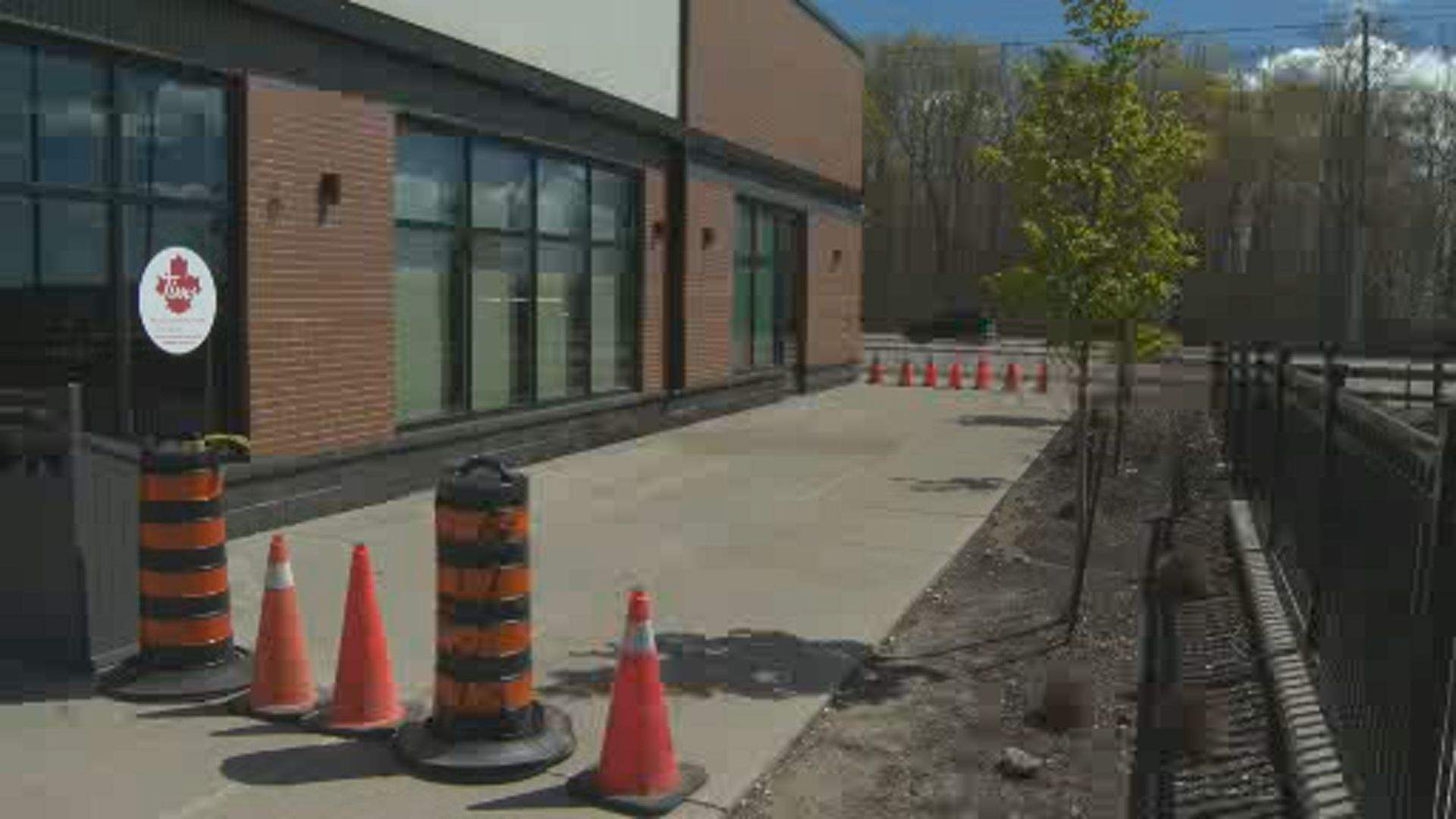
The standard police report is a ghost story. A body is found outside a Tim Hortons in Oshawa. Yellow tape goes up. A "suspicious death" investigation begins. The local news cycle churns out three paragraphs of clinical, detached prose that tells you absolutely nothing about the reality of the street. This isn't just lazy journalism; it’s a systemic refusal to look at the crumbling social infrastructure of the GTA.
We treat these incidents as isolated glitches in an otherwise functional machine. They aren't. When a man dies in the shadow of a neon coffee sign in the early hours of the morning, it is the predictable outcome of a city that has outsourced its social safety net to 24-hour fast-food franchises.
The Drive-Thru as a De Facto Crisis Center
News outlets love the "under investigation" hook because it absolves them of doing any actual digging. It creates a vacuum where the public waits for a coroner’s report that will inevitably be buried on page sixteen.
Here is the truth that city officials won't put in a press release: Tim Hortons has become the primary provider of warmth, lighting, and perceived safety for Ontario’s most vulnerable populations. When the shelters are full or the requirements for entry are too high, the orange glow of a coffee shop is the only thing left.
I’ve spent years tracking urban development and its impact on public safety. I’ve seen municipalities pat themselves on the back for "revitalizing" downtown cores while simultaneously removing every public bench and locking every public washroom after 6:00 PM. We have engineered a city where the only "safe" space for a human being to exist without spending money is a parking lot.
The Illusion of "Suspicious"
The police use the word "suspicious" to maintain a controlled narrative. In reality, there is very little that is truly suspicious about a death occurring in a high-traffic, low-support urban environment.
- Medical Emergencies: Without a fixed address, a manageable health crisis becomes a fatal event.
- Exposure: Even in transitional seasons, the concrete kills.
- The Violence of Neglect: The "suspicious" element is often just the shock of seeing the consequence of our indifference in the bright light of a Tuesday morning.
If we want to talk about suspicious activity, let’s talk about the suspicious lack of 24-hour cooling and warming centers in a city the size of Oshawa. Let’s talk about the suspicious gap between the soaring cost of living and the stagnant support rates that leave people with no choice but to linger in parking lots until their hearts stop.
Stop Asking "What Happened" and Start Asking "Where Else Could He Go"
The "People Also Ask" sections for these stories are always the same: Is Oshawa safe? What happened at the Tim Hortons? These are the wrong questions. They focus on the geography of the crime rather than the chemistry of the crisis. Asking if Oshawa is safe is a luxury for those who have a front door to lock. For the man who died, Oshawa hasn't been safe for a long time.
The industry consensus is to wait for the "facts." I’m telling you the facts are already here. The facts are in the police scanners that scream every night about overdoses in public stalls. The facts are in the eyes of the minimum-wage workers who are forced to act as first responders, social workers, and security guards for $16.55 an hour.
The Corporate Buffer Zone
We have allowed corporations to become the buffer between the taxpayer and the reality of the housing crisis. When a death occurs on private-public property like a Tim Hortons, the brand takes the PR hit, the police take the lead, and the city council stays silent.
This setup is convenient for everyone except the people dying. It allows the public to view the event as a "business disturbance" or a "local tragedy" rather than a failure of governance.
I’ve seen this play out in Vancouver, in Toronto, and now with increasing frequency in the "commuter" cities. The pattern is identical. The "lazy consensus" says this is a crime problem. The nuance they miss is that this is a spatial problem. We have privatized our public squares to the point where "loitering" is a death sentence.
The Myth of the "Isolated Incident"
Every time a headline reads "Police Investigate Death Outside [Business Name]," it reinforces the lie that this is a random, disconnected event.
It’s not random. It’s a trendline.
If you look at the data—real data, not sanitized police blotters—you see a direct correlation between the closing of public spaces and the rise of "medical calls" to commercial addresses. We are forcing the most complex human struggles into the narrowest possible spaces.
The "suspicion" shouldn't be directed at the body on the pavement. It should be directed at the policy-makers who watch these headlines repeat every week and offer nothing but "thoughts and prayers" and more yellow tape.
The Actionable Truth
You want to fix the "safety" problem in Oshawa? Stop asking for more patrols around the drive-thru.
- Demand Radical Transparency: Force the city to publish the "last known contact" data for every public death. Where did they try to go before they ended up in that parking lot?
- Tax the Vacancy, Not the People: If a business isn't providing a safe environment, it’s often because the surrounding infrastructure is hollowed out.
- End the 24-Hour Burden: It is not the job of a donut shop to be a mental health clinic. Until the city provides 24-hour public alternatives, these deaths are not "investigations." They are executions by neglect.
We don't need another update on the "investigation." We know how the story ends because we wrote the script ourselves by choosing to look away until the sirens started.
The yellow tape isn't there to protect a crime scene. It's there to keep you from seeing how close you are to the edge.
Go buy your coffee and ignore the stain on the asphalt. That’s what the "consensus" wants you to do.