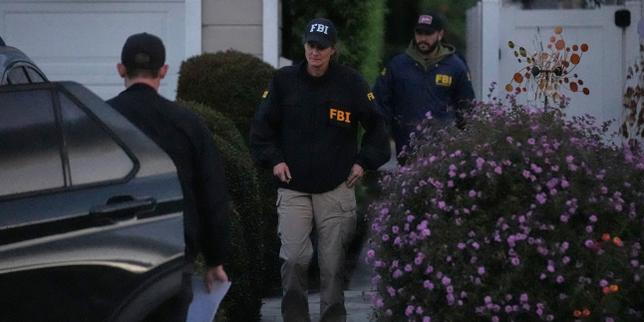
The discharge of a firearm at a high-profile media event in Washington D.C. represents more than a localized criminal act; it is a systemic breach of the "Three-Layer Defense" model typically employed in executive protection. While initial reporting focuses on the identity of the suspect and the immediate chaos, a rigorous analysis must prioritize the breakdown of threat detection and the specific mechanics of the shooter’s profile. This event serves as a case study in the failure of passive deterrence and the limitations of rapid-response tactical units when the primary perimeter has already been compromised.
Structural Vulnerabilities in Event Security Protocols
Securing an environment where high-profile journalists, politicians, and public figures congregate requires a delicate balance between accessibility and absolute containment. The Washington Press Gala incident highlights a failure in the Access Control Matrix. This matrix relies on three distinct variables: identity verification, physical screening, and behavioral surveillance.
- The Identity Gap: The suspect's ability to approach the venue or enter the immediate vicinity suggests a failure in pre-event background vetting or a breakdown in the credentials-verification process. Security teams often focus on "known threats" (Watchlists), which creates a blind spot for "emergent threats"—individuals with no prior history who have undergone a recent radicalization or mental health crisis.
- Kinetic Failure: The moment a weapon is discharged, the "Preventative" phase of security has ended and the "Mitigation" phase begins. The delay between the first shot and the neutralization of the suspect provides a window of high-fatality risk. In this instance, the proximity of the suspect to the gala's core indicates that the Buffer Zone—the physical space between the public and the attendees—was insufficient.
The cost function of security in these scenarios is often a trade-off between "friction" and "flow." Increased screening creates bottlenecks that organizers find undesirable for high-status guests. However, when friction is reduced to facilitate guest comfort, the probability of a concealed weapon bypassing the perimeter increases exponentially.
Profile of the Actor A Behavioral and Tactical Breakdown
Understanding the suspect requires moving beyond simple biographical data. From an investigative standpoint, we categorize the actor based on The Path to Violence—a five-stage model consisting of grievance, ideation, research/planning, preparation, and implementation.
Grievance and Ideation
The suspect likely harbored a specific grievance against the media or the political establishment. In a digital ecosystem, this grievance is often reinforced by echo chambers that transform vague dissatisfaction into a mandate for action. The jump from ideation (thinking about an attack) to planning (determining the location) usually leaves a digital or social footprint that was, in this case, either missed or ignored by monitoring agencies.
Logistics of the Breach
The choice of weapon and the timing of the shooting reveal the suspect's tactical intent. By selecting a gala—a target-rich environment with high symbolic value—the shooter maximized the psychological impact of the act. The mechanics of the shooting suggest a lack of professional training but a high degree of "fixated threat" behavior. A fixated threat is an individual whose focus on a person or cause becomes an obsession, leading them to bypass self-preservation instincts.
Intelligence Failures and the Predictive Void
The primary challenge in preventing such events is the "Signal-to-Noise" ratio in open-source intelligence. Law enforcement agencies are currently overwhelmed by the volume of online threats, making it difficult to distinguish between "howlers" (those who make threats but don't act) and "hunters" (those who act without making threats).
- The Predictive Paradox: Security is only visible when it fails. Successful interventions—where a suspect is stopped before the event—rarely make the news. This creates a public perception that security is either unnecessary or incompetent.
- Resource Allocation: Most protection details are structured to defend against coordinated group attacks. They are less effective against the "Lone Actor" who utilizes a low-sophistication, high-impact approach. The Lone Actor operates outside of traditional command structures, making communication intercepts impossible.
The Economics of Post-Event Response
The aftermath of a shooting in the capital triggers a predictable but inefficient resource surge. The immediate "Security Theatre"—increased police presence, visible metal detectors, and canine units—serves as a psychological balm but does little to address the underlying vulnerability of the next target.
The Resilience Cycle of an event like the Washington Press Gala follows a specific trajectory:
- Shock/Confusion: 0-6 hours post-event. Information is fragmented; misinformation is at its peak.
- Attribution: 6-24 hours post-event. Law enforcement identifies the suspect and attempts to map their network.
- Policy Reaction: 24 hours – 2 weeks post-event. Legislators and event planners propose new, often redundant, regulations.
The missing link in this cycle is Hardened Architecture. Security must move from a "reactive person-based" model to a "proactive environment-based" model. This involves designing venues with natural surveillance, ballistic-resistant materials integrated into the decor, and multiple rapid-exit vectors that do not converge on a single bottleneck.
Tactical Intelligence Integration
For future high-profile gatherings, the strategy must shift toward Total Domain Awareness. This is not merely more cameras; it is the integration of metadata with real-time human intelligence.
- Dynamic Perimeter Management: The perimeter should not be a static line (the door) but a fluid zone starting blocks away from the venue.
- Behavioral Detection Officers (BDOs): Utilizing personnel trained in the "Micro-Expression" and "Proximity" markers that indicate high-stress concealment.
- Digital Fence: Real-time monitoring of localized social media traffic to detect "pre-operational" posts or check-ins by flagged individuals.
The suspect at the Washington gala exploited a gap that exists at the intersection of public space and private event. Closing this gap requires a move away from the current "Gatekeeper" mentality. Instead, security must be treated as an atmospheric constant—invisible but omnipresent.
The strategic play for event organizers and law enforcement is the implementation of Red Teaming protocols six months prior to any major gala. This involves hiring specialists to attempt breaches of the security plan to identify "The Path of Least Resistance." If the security plan has not been stress-tested by an adversarial mind, it is not a plan; it is a hope. The Washington incident confirms that hope is an insufficient defense against a fixated actor. Moving forward, the focus must shift to the technical hardening of the "Last Mile" of access, ensuring that even if an actor reaches the venue, the environment itself prevents the deployment of a weapon.