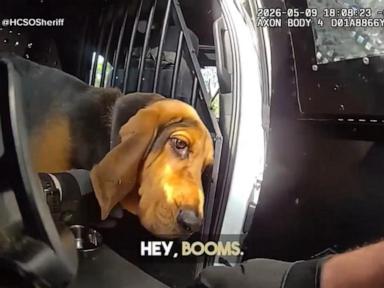
The local news loves a "good boy" story. You know the one: a grainy dashcam clip of a Belgian Malinois sprinting through a field to tackle a suspect, followed by a slow-motion shot of the canine getting a head scratch and a tennis ball. The headline usually screams something like "K9 to the Rescue."
It is high-quality PR. It is also a massive distraction from a reality that law enforcement refuses to discuss. Meanwhile, you can find similar developments here: Why Starmer is Actually Winning by Failing Your Vibe Check.
We have spent decades romanticizing the K9 unit while ignoring the staggering costs, the inconsistent biological hardware, and the fact that we are forcing animals into a high-tech tactical environment they aren't evolved to handle. If you think the "K9 to the rescue" narrative is the pinnacle of public safety, you aren't paying attention to the data. You are falling for a feel-good trap.
The Myth of the Bio-Sensor Superiority
The standard argument for the K9 is their nose. We are told a dog’s olfactory sense is a superpower that cannot be replicated. While it is true that a dog possesses roughly 300 million olfactory receptors compared to our five million, we ignore the most important variable: the handler. To see the full picture, check out the recent report by USA Today.
In the industry, we call it "handler bias." A dog isn't a neutral machine; it is a social animal desperate to please its owner. I have seen countless drug busts and search operations where the dog didn't alert because it smelled contraband, but because it picked up on the handler’s subconscious body language.
When a handler expects to find something, the dog "finds" it. This isn't just a theory; it’s a verified phenomenon known as the Clever Hans effect. In double-blind studies, K9 units have a failure rate that would get any piece of technology pulled from the shelf immediately. Yet, we use this "biological sensor" to justify searching vehicles and homes, often bypassing the Fourth Amendment on the word of a creature that might just be hungry for a treat.
The Million Dollar Puppy
Let’s talk about the money no one wants to track. Bringing a single patrol dog into service isn't just about the initial $10,000 to $15,000 purchase price. You have to factor in:
- Intensive Specialty Training: Hundreds of hours for both the dog and the officer.
- Specialized Vehicles: Retrofitted SUVs with temperature-controlled kennels and remote door-pop systems.
- Liability Insurance: The astronomical cost of insuring a "living weapon" that can't distinguish between a violent felon and a confused bystander.
- Vet Bills and Retirement: Law enforcement agencies are often on the hook for the medical care of these animals long after they stop working.
I’ve seen mid-sized departments sink $200,000 into a K9 program over three years only to have the dog retired early due to hip dysplasia or PTSD. Yes, dogs get PTSD. We send them into loud, chaotic, violent environments and then act surprised when their performance degrades. From a purely fiscal standpoint, the K9 unit is one of the most inefficient line items in a modern police budget.
The Liability Nightmare Nobody Admits
The "hero" narrative conveniently leaves out the settlements. Unlike a Taser or a pepper ball launcher, a dog cannot be "turned off" the instant a suspect complies. Once a Malinois or a German Shepherd is in "drive" mode, that animal is a 70-pound projectile of muscle and teeth.
There is a dark list of incidents where K9s have bitten the wrong person—witnesses, victims, or even their own handlers. Because a dog is a biological entity, its "stopping power" is unpredictable. A bite can result in anything from a bruise to a permanent disability or a severed artery.
When a human officer uses excessive force, there is a body camera and a use-of-force report. When a dog causes catastrophic injury, the department hides behind the "he was just doing his job" defense. It’s a loophole in accountability that would never be tolerated with any other tactical tool.
The Silicon Alternative: Why the Future Doesn't Bark
The reason the "K9 to the Rescue" story feels like a relic is because it is. We are in 2026. The technology that replaces the dog is already here, and it doesn't need to be fed or walked.
If the goal is tracking a suspect in the woods, a thermal-imaging drone is objectively superior. A drone doesn't lose the scent because the wind shifted. It covers ten times the ground in half the time and provides a 4K feed to every officer on the perimeter.
If the goal is clearing a building, we have tracked robots equipped with 360-degree cameras and two-way audio. A robot can be sent into a room with an armed suspect without the ethical nightmare of "sacrificing" a living being to draw fire.
We cling to K9s not because they are the best tool for the job, but because they provide a powerful emotional shield for the police department. It’s hard to criticize a department when they’re posing for photos with a fluffy mascot.
The Ethical Blind Spot
We claim to love these animals, yet we celebrate putting them in the line of fire. There is a deep hypocrisy in a culture that treats pets like family members but treats "working dogs" like disposable equipment.
I’ve stood in rooms where officers bragged about their dog’s "drive," which is just a polite way of saying the animal is in a permanent state of high-stress neurological arousal. We breed these dogs for extreme traits, work them until their joints fail, and then pat ourselves on the back for their "service."
If we actually cared about the welfare of these animals, we would stop asking them to do work that sensors and robotics can do more accurately and humanely.
The Actionable Pivot: How to Actually Modernize
If you are a taxpayer or a city official, stop falling for the viral videos. Demand better.
- Audit the Hit Rate: Ask for the "find to alert" ratio. If the dog is alerting and the officers aren't finding anything 40% of the time, the dog isn't a sensor; it’s a tool for manufacturing probable cause.
- Redirect Funding to Tech: Take the $150,000 earmarked for a new K9 and handler. Buy three high-end thermal drones and train six officers to fly them. You will catch more suspects and pay less in insurance premiums.
- End the "Hero" Defense: Treat K9 bites exactly as you treat firearm discharges. No excuses. No "accidental" bites. If the tool is that uncontrollable, it shouldn't be on the street.
The "K9 to the rescue" trope belongs in a 1980s TV show. In the real world, we need precision, accountability, and fiscal sanity. A dog is a companion, not a replacement for a functional justice system.
Stop cheering for the "good boy" and start asking why your police department is still using 19th-century solutions for 21st-century problems.
The dog doesn't want to be a hero. He just wants a ball. We're the ones who decided he should bleed for our lack of better tech.