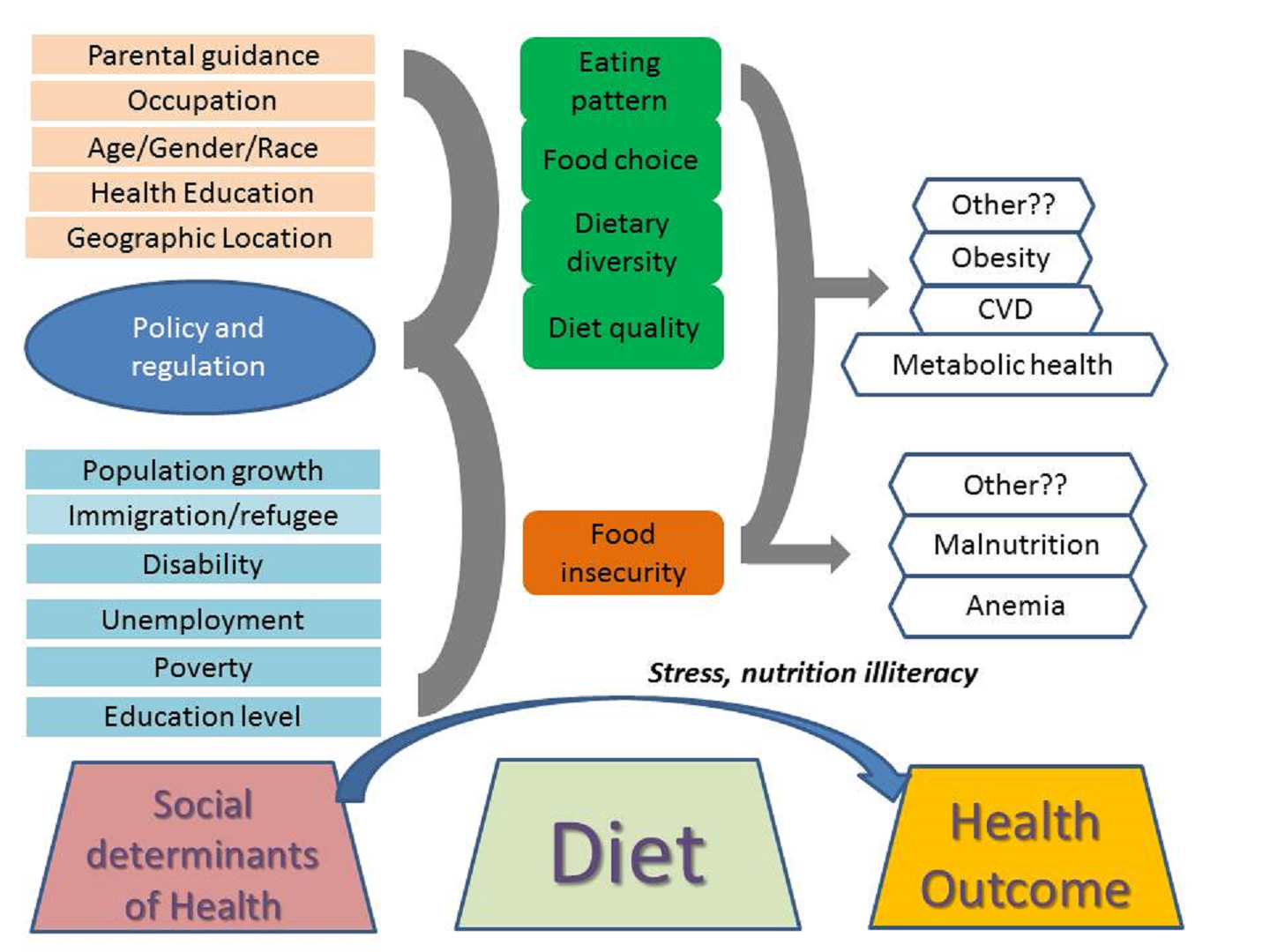
The current structure of federal dietary recommendations operates on a lagging indicator model, prioritizing historical commodity stability over contemporary metabolic data. By treating all macronutrients as monolithic blocks—categorizing "carbohydrates" or "fats" without accounting for glycemic load or fatty acid profile—the guidelines create a systemic misalignment between caloric intake and physiological utility. This discrepancy is not merely a matter of public health preference; it is a fundamental breakdown in the biological cost function of the human body.
The Architecture of Metabolic Distortion
The primary failure of the traditional food pyramid, and its various iterations, lies in the false equivalence of energy sources. The human metabolism does not treat 100 calories of glucose the same as 100 calories of medium-chain triglycerides. The guidelines suggest a base of grains and starches, which ignores the secondary effects of insulin signaling on lipid storage.
The Insulin-Glucose Feedback Loop
When high-carbohydrate loads form the foundation of a diet, the body enters a state of chronic hyperinsulinemia. This creates three distinct structural bottlenecks in human health:
- Adipose Tissue Sequestration: Insulin is a storage hormone. High circulating levels inhibit lipolysis (the breakdown of fat) and promote lipogenesis. By mandating a high-carb base, the guidelines effectively lock the body's energy stores, forcing the individual to rely on frequent exogenous glucose spikes to maintain energy levels.
- The Glycemic Variance Trap: Refined grains and processed starches possess a high glycemic index (GI). The resulting rapid rise and subsequent crash in blood glucose levels trigger a counter-regulatory stress response, increasing cortisol and ghrelin. This creates a feedback loop of perceived hunger that overrides actual caloric requirements.
- Mitochondrial Efficiency Degradation: Chronic reliance on glucose as a primary fuel source can reduce metabolic flexibility—the ability of the mitochondria to switch between burning carbohydrates and fats.
The Cost Function of Low-Fat Dogma
The historical pivot toward low-fat recommendations in the late 20th century was based on an incomplete understanding of the Lipid Hypothesis. This shift failed to account for the essential role of lipids in cellular integrity and hormonal synthesis.
The Replacement Effect
Removing fat from processed foods necessitates a replacement to maintain palatability. In almost every industrial application, this replacement is sugar or refined starch. This creates a net-negative trade-off:
- Satiety Failure: Fat triggers the release of cholecystokinin (CCK) and peptide YY (PYY), hormones that signal fullness. High-carb, low-fat diets lack these triggers, leading to chronic overconsumption.
- Micronutrient Malabsorption: Vitamins A, D, E, and K are fat-soluble. A diet that minimizes fat intake, even if it includes these vitamins in supplemental form, ensures a lower bioavailability, leading to sub-clinical deficiencies.
The Industrial-Nutritional Complex
The guidelines are not developed in a vacuum. They are subject to the pressures of agricultural output and food manufacturing capabilities. The "pyramid" structure is, in many ways, an inventory management tool for domestic grain production.
Scalability vs. Biocompatibility
Grains are stable, transportable, and shelf-ready. These attributes make them ideal for industrial scaling but do not correlate with biological necessity. The mismatch between what is easy to distribute and what is optimal to ingest creates a "Nutritional Arbitrage" where the government optimizes for food security (calories per dollar) at the expense of metabolic health (quality of life-years).
The cost of this arbitrage is visible in the rising rates of Type 2 Diabetes and Metabolic Syndrome. These are not failures of willpower; they are predictable outcomes of a system that optimizes for the wrong variables.
Quantitative Redefinition: A New Framework
To rectify these systemic errors, dietary analysis must move away from the "balanced plate" visual and toward a hierarchical metabolic priority model.
1. The Essentiality Hierarchy
The body has a physiological requirement for essential amino acids (proteins) and essential fatty acids (fats). There is no biological requirement for exogenous carbohydrates; the liver can produce necessary glucose via gluconeogenesis. Therefore, the foundation of any scientifically rigorous dietary framework must be the protein-to-energy ratio.
- Protein Leverage: The body will continue to signal hunger until protein requirements are met. High-carb guidelines dilute protein density, forcing higher total caloric intake to reach amino acid thresholds.
- Lipid Quality: Analysis must distinguish between inflammatory seed oils (high Omega-6) and stable saturated or monounsaturated fats. The current guidelines' failure to make this distinction is a significant driver of systemic inflammation.
2. The Fiber-to-Starch Ratio
Instead of "servings of grains," a more accurate metric is the Glycemic Load per Gram of Fiber. Fiber acts as a metabolic buffer, slowing the absorption of sugar and feeding the gut microbiome. A guideline that prioritizes "whole grains" often overlooks that finely ground whole-wheat flour has a glycemic response nearly identical to white flour.
Technical Constraints and Limitations
While a shift toward a low-insulinogenic diet is supported by biochemical principles, implementation faces significant hurdles:
- Economic Elasticity: Protein and high-quality fats are more expensive per calorie than refined grains. A sudden shift in guidelines would expose the "Nutritional Divide," where metabolic health becomes a luxury good.
- Behavioral Friction: The modern food environment is engineered for hyper-palatability—the combination of high fat, high salt, and high sugar. Overcoming the dopamine response associated with these triggers requires more than a chart; it requires a complete restructuring of the food supply chain.
Strategic Realignment
The objective for the individual or the policy designer is to move from a "Quantity-First" model to a "Hormonal-Response" model. This involves three specific tactical shifts:
- Invert the Base: Transition from grain-based foundations to nutrient-dense, fibrous vegetables and high-bioavailability proteins.
- Prioritize Oxidative Stability: Eliminate highly processed vegetable oils (soybean, corn, canola) which are prone to lipid peroxidation and contribute to cellular stress. Replace them with stable fats that support mitochondrial function.
- Time-Restricted Feeding Integration: Acknowledge that when one eats is as critical as what one eats. Constant grazing, encouraged by high-carb snack recommendations, keeps insulin elevated 24 hours a day, preventing the body from entering a fasted, repair-oriented state (autophagy).
The path forward requires abandoning the simplified geometry of the pyramid in favor of a sophisticated, data-driven understanding of human biochemistry. We must optimize for insulin sensitivity, not just caloric density. The failure to do so ensures that the next generation will be the first in modern history to have a shorter life expectancy than their parents, driven entirely by an engineered metabolic crisis.
Audit your current intake by measuring the insulinogenic load of your first meal of the day. If that meal is carbohydrate-dominant, you are setting a metabolic tone that prioritizes fat storage and glucose dependency for the subsequent 16 hours. Replace it with a protein-and-lipid-heavy bolus to stabilize blood glucose and reset your satiety baseline.