The pressure inside a natural gas pipeline isn't just a physical measurement. It is the steady, rhythmic pulse of a nation’s survival. In the South Pars field, which straddles the dark waters between Iran and Qatar, that pulse is a roar. Deep beneath the Persian Gulf, the earth yields its ancient breath to a complex web of steel and sensors. On a Tuesday that felt like any other, that roar became a scream. Then, it became a void.
Precision is a cold word. It doesn't capture the way a thermal imaging camera sees the world bloom into white-hot agony when a missile finds its mark. It doesn't describe the sound of a structural failure that can be heard fifty miles away. When the Israeli strike hit the Iranian gas infrastructure, it wasn't just metal hitting metal. It was a message sent in the language of fire, aimed at the very nervous system of a regional power.
But the most deafening sound wasn't the explosion. It was the silence coming from Washington.
The Ghost in the Situation Room
Imagine a map projected onto a wall in a room where the air is filtered and the clocks are set to three different time zones. On this map, a blinking red light marks the impact zone. This is the South Pars-Farzad gas complex. It provides the heat for millions of homes and the fuel for a struggling industrial economy.
When the news broke, the traditional machinery of American diplomacy began to grind. Usually, there is a script. There are "deep concerns." There are "coordinated responses." There is a sense that the hand on the tiller is firm, even if the seas are rough.
This time, the tiller was spinning freely.
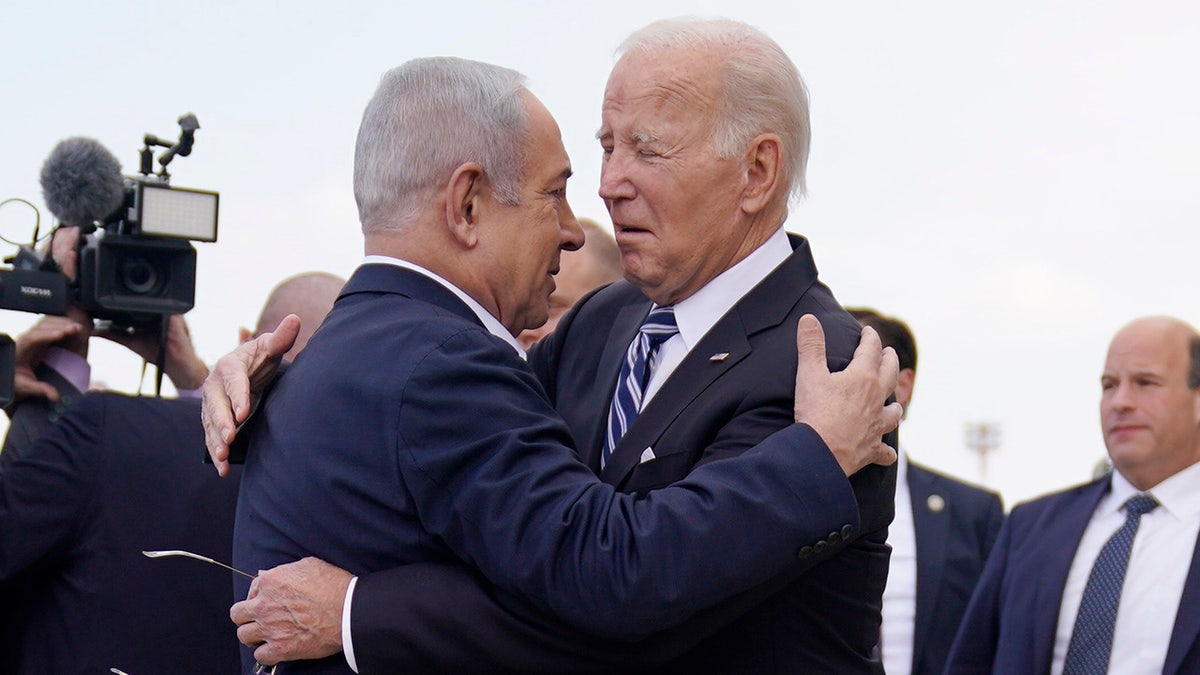
Donald Trump, back in the seat of power, did something that left his own generals staring at their shoes. He claimed he didn't know. He wasn't briefed. The strike, a massive escalation that could tip the global energy market into a chaotic tailspin, was apparently a surprise to the man who holds the nuclear codes.
This is the "invisible stake." It isn’t just about who bombed what. It’s about the terrifying possibility that the world’s most powerful military alliance is currently operating on two different frequencies. Israel is playing a high-stakes game of survival and preemption. The United States, under its current leadership, is playing a game of plausible deniability—or perhaps, more frighteningly, genuine disconnection.
The Architecture of a Rift
To understand why this matters, you have to look at the chemistry of an alliance. A partnership between nations is built on the same foundation as a marriage: No surprises. When one partner decides to rearrange the furniture—or in this case, burn down the neighbor’s garage—without telling the other, the foundation cracks.
For decades, the U.S. and Israel have operated with a "gray zone" understanding. Israel does what it must to ensure its "never again" policy, and the U.S. provides the diplomatic shield and the hardware to make it happen. But there was always a phone call. There was always a quiet nod in a hallway.
By claiming ignorance, Trump has signaled a vacuum. If he truly didn't know, it suggests a breakdown in the intelligence pipeline that is supposed to keep the President informed. If he did know and is lying, he is signaling to Tehran that he will not stand in Israel’s way, regardless of the consequences for global oil prices or the American sailors stationed in the Gulf.
Consider the perspective of a technician at the South Pars facility. He is a man with a family in Shiraz, a man who worries about his daughter’s tuition and the rising cost of bread. When the sirens wail, he doesn't think about "geopolitical shifts." He thinks about the sheer, terrifying volatility of the gas under his feet. He knows that his life is a small chip in a game being played by men in suits thousands of miles away.
That technician is the human face of a factual reality: Iran’s energy sector is its only remaining lifeline. By severing it, Israel isn't just fighting a war; they are performing a frantic, mid-battle surgery on the Iranian state.
The Algorithm of Escalation
We often talk about war as a series of choices, but it is more like a chemical reaction. Once you add heat to a pressurized environment, the outcome is dictated by laws of physics, not intentions.
The strike on the gas fields was a calculated move to hit Iran where it hurts most—its wallet. But the reaction from the White House adds a variable that no algorithm can predict: unpredictability.
- The Energy Factor: When gas fields burn, the supply tightens.
- The Security Factor: If the U.S. isn't consulted, it cannot prepare its bases for the inevitable retaliatory drone swarms.
- The Diplomatic Factor: Allies like the UK and France are left wondering if the "special relationship" now has a "do not disturb" sign on the door.
This isn't about being "pro-Israel" or "pro-Iran." It’s about being "pro-stability." The world economy is a delicate creature. It relies on the belief that someone, somewhere, is in control. When the President of the United States says he was out of the loop on a strike of this magnitude, that belief evaporates.
The markets felt it immediately. Traders in London and Singapore didn't look at the wreckage of the pipelines; they looked at the transcripts of the press conferences. They saw a rift. A rift means that the next strike could be bigger, and the response could be even more uncoordinated.
The Cost of the Unspoken
There is a specific kind of dread that comes with a "no comment" from the Oval Office. It’s the dread of the unknown.
In the corridors of the Pentagon, there are people who spend their entire lives mapping out "escalation ladders." You take a step, they take a step. You hit a facility, they seize a tanker. It’s a grim dance, but it has rules. Trump’s claim of ignorance effectively kicks the ladder away.
If the U.S. is no longer the stabilizing force that moderates Israeli ambition or warns Iranian aggression, then we are entering a period of pure Darwinian conflict. The strongest survives, but everyone bleeds.
The fire at the gas field will eventually be extinguished. The pipes will be patched, or they will be left to rust in the salt air. But the fire in the relationship between Washington and Jerusalem is harder to douse. It is a slow-burning realization that the old rules are dead.
We are living through a moment where the "human element" is a lack of communication. It is a President who prefers the theater of the unknown over the hard work of the informed. It is a Prime Minister who feels he can no longer wait for permission from a distracted superpower.
In the end, the facts are simple: A strike happened. A field burned. A leader stayed silent. But the narrative is far more haunting. It is the story of a world where the adults have left the room, leaving the rest of us to watch the horizon for the next orange glow, wondering if anyone in charge even knows it's coming.
The sky over the Gulf is dark again, but the pressure in the pipes—and in the halls of power—is still rising.
Would you like me to analyze the historical parallels of U.S.-Israeli intelligence gaps during previous administrations?