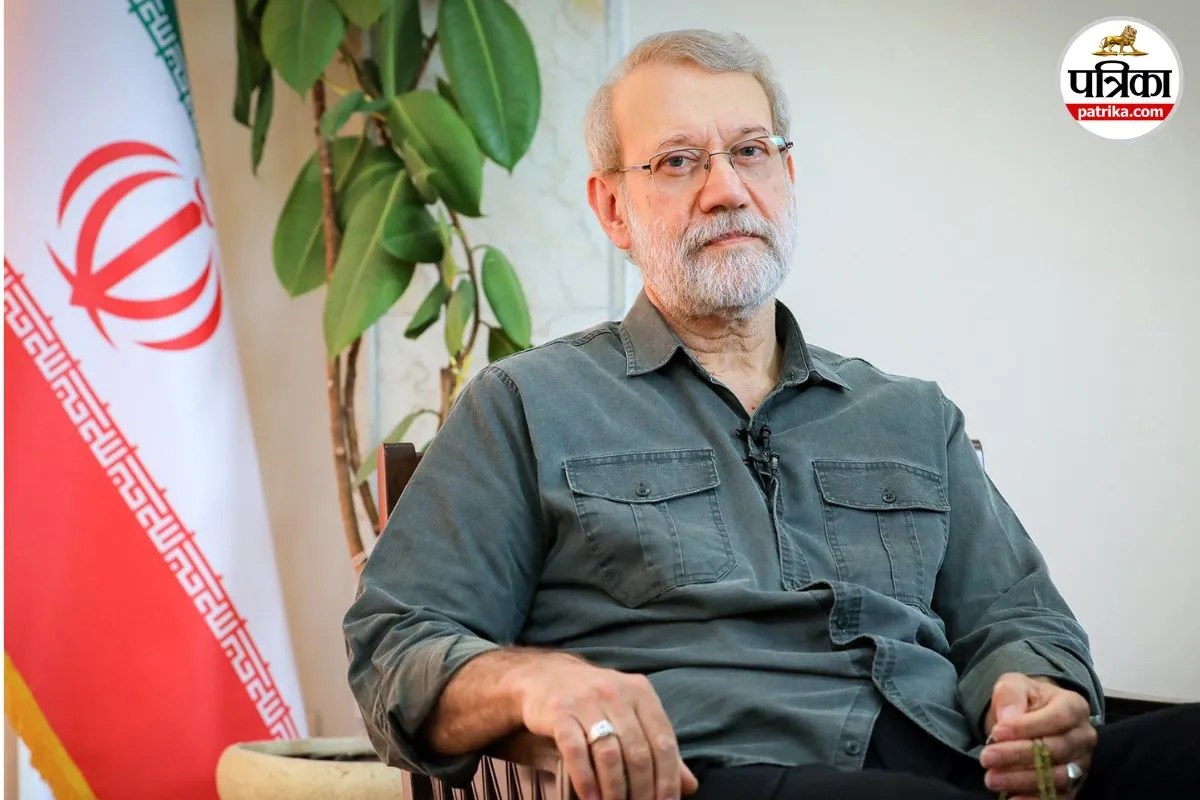
The air in Tehran during the transition from winter to spring usually carries a sharp, hopeful clarity. But on this particular Tuesday, the atmosphere didn't just feel cold; it felt brittle. It was the kind of stillness that precedes a landslide. When the news finally fractured the quiet, it didn't come as a shout. It arrived as a rhythmic vibration in millions of pockets—the synchronized buzzing of smartphones delivering a headline that seemed, for a moment, impossible to process.
Ali Larijani was gone.
He wasn't just a name on a government masthead. For decades, Larijani was the institutional memory of a nation, a man whose career spanned the volatile geometry of the Middle East. He was the philosopher-politician, the former Speaker of Parliament, and the man often sent to whisper in the ears of giants when the world felt like it was catching fire. Now, the Iranian government has confirmed his death, alongside his son and several high-ranking officials.
The details are jagged. Brutal. They paint a picture of a sudden, catastrophic end that has left the political architecture of the region trembling.
The Weight of a Name
To understand why this matters, you have to look past the suit and the official titles. Imagine a chessboard where the pieces have been moving for forty years. Larijani was one of the few players who remembered every opening gambit and every failed truce. He was a bridge-builder in a land of walls. When he sat across from diplomats in Geneva or Beijing, he brought with him a specific kind of intellectual gravity, often quoting Western philosophy and Islamic jurisprudence in the same breath.
His death is not merely a personnel change. It is the removal of a cornerstone.
When a figure of this magnitude vanishes, the vacuum created is physical. It pulls at the stability of the surrounding structures. His son, who was traveling with him, represented the next generation of this political dynasty—a lineage now severed in a single, violent stroke. In the markets of Tehran, the immediate reaction wasn't a riot or a protest. It was a stunned, heavy silence. Shopkeepers looked at their screens, then at each other, and then slowly began to pull down their metal shutters.
A Journey Interrupted
We often view geopolitical events through the lens of satellite imagery and cold press releases. We forget that behind the "confirmed deaths" are human itineraries. There were suitcases packed. There were phone calls made earlier that morning—simple, mundane check-ins about dinner or the weather.
The convoy was moving through a space that should have been safe, a corridor of power where the elite move with a presumed invulnerability. That invulnerability has been shattered. The "security chief" label suggests a man surrounded by shields, yet those shields failed. This failure sends a message far more potent than any official statement: nobody is out of reach.
Consider the ripple effect. Each official lost in this event headed a department, managed a budget, and held keys to specific, sensitive doors. When you lose the top layer of a command structure simultaneously, the middle management is left staring at empty desks, wondering who holds the authority to sign the next order. It is a decapitation of institutional knowledge.
The Invisible Stakes
Why does this feel different from the myriad of other tragedies that pepper the news cycle? Because Larijani was a pragmatist in an era of ideologues. He was a man who understood the language of compromise, even if he didn't always choose to speak it.
For the average person in the West, Tehran is a dot on a map, a source of headlines about enrichment levels and sanctions. But for the people living in the shadow of the Alborz mountains, this is about the direction of their lives. Larijani represented a specific path—one that sought to balance the revolutionary identity of the state with the cold realities of global trade and diplomacy. With him gone, that path becomes significantly narrower.
The stakes are invisible until they aren't. They are the price of bread, the stability of the rial, and the likelihood of the next generation finding work. When the old guard falls, the friction between the remaining factions usually intensifies. Sparks fly. Sometimes, those sparks find dry tinder.
The Anatomy of an Aftermath
In the hours following the confirmation, the digital space became a battlefield of speculation. Was it an accident? Was it an act of precision? The government has been sparse with the technicalities, focusing instead on the "martyrdom" of those lost. But the technicalities are exactly what the world is hungry for.
In the absence of a clear "how," the "why" becomes a monster of its own.
Think of a family dinner where the patriarch is suddenly missing. The conversation doesn't just stop; it changes tone entirely. The cousins start looking at the inheritance. The rivals start measuring the fence lines. In the geopolitical sense, Iran's neighbors are currently doing exactly that—measuring the fence lines. They are watching for signs of a stutter in the Iranian response, or perhaps a sudden, aggressive surge to prove that the state is still whole.
Beyond the Headlines
The news reports will tell you the names. They will tell you the death toll. They might even show you grainy footage of charred debris or a funeral procession lined with black banners. But they won't tell you about the shift in the wind.
The real story isn't the explosion or the crash. It is the fact that a specific kind of Iranian leadership is dying out, and there is no clear replacement waiting in the wings. We are witnessing the closing of a chapter that began in 1979. Larijani was a link to the origin story of the Republic. Now, that link is broken.
The human element here is the grief of a family, yes, but also the collective anxiety of a nation that has grown used to the steady hand of a familiar elite. Even those who disagreed with Larijani's politics often respected his intellect. There is a terrifying uncertainty in losing a clever enemy or a seasoned leader. You are left with the unknown.
Tonight, the lights in the government buildings in Tehran will stay on. Clerks will be shredding documents or printing new ones. Orders will be issued to secure the borders and the airwaves. But in the quiet neighborhoods, where the smell of jasmine usually drifts through the courtyards, the conversation is different. People are asking what comes after the silence.
The sun will rise over Tehran tomorrow, hitting the gold-domed mosques and the concrete apartment blocks with the same indifferent light. The city will move. The traffic will clog the streets. But the architecture of power has changed. A pillar has fallen, and the roof is groaning under the weight of the new sky.
As the funeral shrouds are prepared and the official mourning period begins, the world watches the empty chair. It isn't just about who died. It’s about the fact that the person who knew how to keep the machine running is no longer in the room, and the manual he wrote is nowhere to be found.