The floorboards of the apartment above mine have groaned the exact same way every Tuesday and Thursday night for the last six years. It is a predictable rhythm of heavy, exhausted footsteps returning from a late shift at the hospital down the block. But at precisely 11:14 PM last night, that predictable rhythm vanished. It was replaced by a violent, rhythmic thudding that actually made the light fixtures shake.
Then came the windows.
Windows opening all across the block. Not the quiet, tentative opening of people checking the weather, but the slammed-up, violent rattling of old glass meeting rusted frames. A collective, guttural roar lifted from the pavement, bouncing off the brick facades of the brownstones and echoing down toward Eighth Avenue.
New York City did not just celebrate. It exhaled a breath it had been holding for decades.
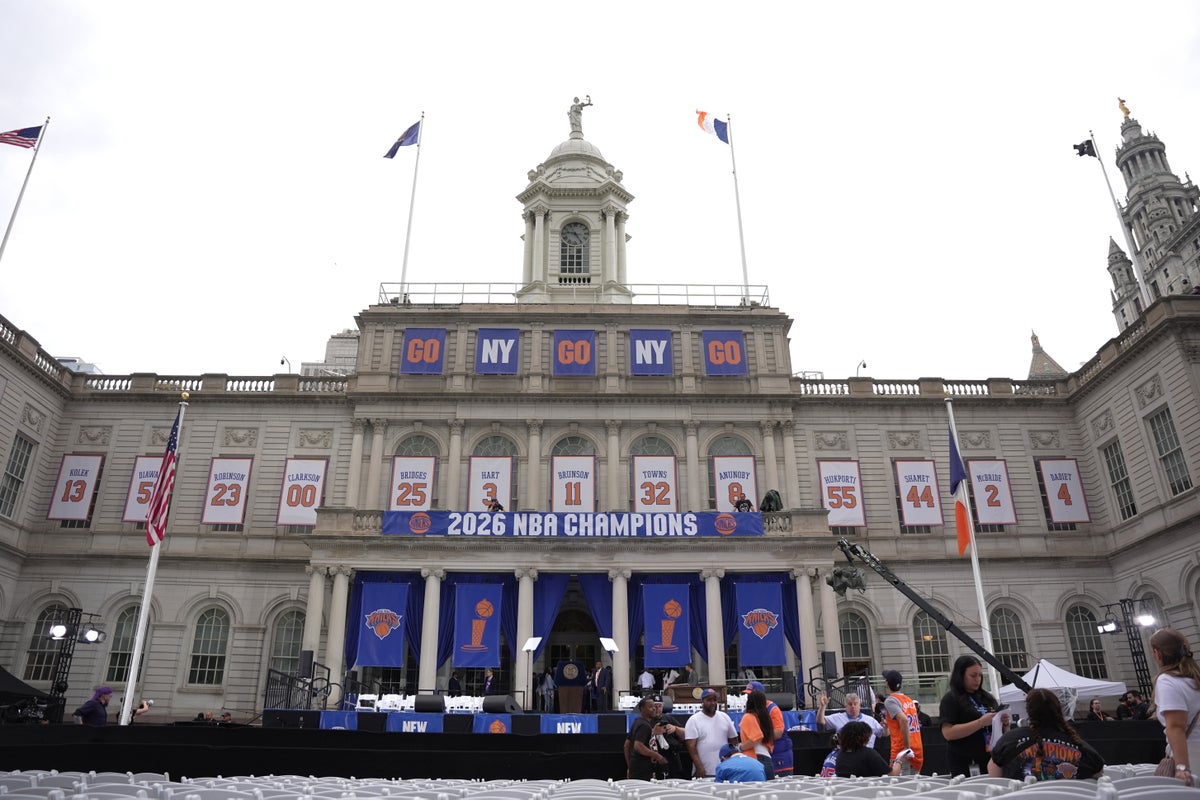
For anyone who does not live here, the numbers look like a standard sports headline. The New York Knicks won the NBA Championship. It is a data point. A box score. A statistic to be filed away in the league archives. But statistics are cold, and what happened on the asphalt of Manhattan last night was burning hot. To understand why grown men were weeping on the hoods of yellow cabs, you have to look past the trophy and into the specific, grueling psychology of a city that had forgotten how it felt to win.
The Geography of Disappointment
Every sports franchise has a fanbase, but the relationship between New York and the Knicks is closer to a legally binding, slightly toxic marriage. The team plays at Madison Square Garden, a circular concrete fortress sitting directly on top of Penn Station. This is not a stadium surrounded by a sea of parking lots in a distant suburb. It sits in the absolute epicenter of the city’s daily chaos.
Think about the physical reality of that. Every single day, hundreds of thousands of commuters pour out of the trains, ascend the escalators, and walk beneath the shadow of that arena. For more than fifty years, that walk was accompanied by a lingering sense of sports-induced melancholy. You walked past the posters of past glories from the 1970s, knowing that the current reality was a revolving door of bad contracts, draft lottery busts, and management decisions that felt like public insults.
Consider the economic investment. The price of a ticket to sit in the nosebleeds of the Garden has historically outpaced almost every other arena in the country, even when the team was objectively terrible. New Yorkers were paying premium prices to watch a masterclass in underachievement. It became a badge of honor, a form of collective masochism. We wore the blue and orange jerseys like armor, preparing ourselves for the inevitable third-quarter collapse.
But a funny thing happens when you starve a population of success for long enough. The hunger becomes part of the identity.
The Anatomy of the 11:14 PM Shift
To understand the sheer scale of the release, you have to understand the specific anatomy of the final two minutes of the game.
The bars along Seventh Avenue were already bursting past legal capacity by nine o'clock. Inside, the air was thick with the scent of spilled cheap lager and nervous sweat. People who would normally pretend each other did not exist on the subway were standing shoulder-to-shoulder, their eyes locked on the glowing rectangles suspended from the ceiling.
With forty seconds left on the clock and a six-point lead, the silence inside a packed pub called The Blarney Rock was heavy enough to feel physical. Nobody wanted to celebrate too early. This is a fan base raised on tragedy; we know all the creative ways a sure thing can evaporate in the final seconds of play.
Then, the final buzzer.
The sound that followed was not a cheer. It was a primal, collective scream that seemed to tear its way out of the lungs of everyone within a five-mile radius. Within ninety seconds, the bars emptied onto the streets. Traffic on Seventh Avenue ground to a complete halt. Not because of an accident, but because drivers simply put their cars in park, stepped out into the middle of the road, and climbed onto their roofs to beat their chests.
Look at the kids who grew up in this city during the aughts and the tens. They had never seen a championship parade. Their entire experience of basketball fandom was defined by watching other cities—Boston, Los Angeles, Miami, San Francisco—take turns hosting the trophy. For an entire generation of New Yorkers, the idea of a championship was an abstract concept, a story told by fathers and grandfathers about the legendary eras of Walt Frazier and Willis Reed. It was a myth.
Last night, the myth became flesh.
The Invisible Network of the Streets
By midnight, the celebration had mutated from a sports rally into a massive, decentralized block party that spanned five boroughs.
On the corner of 34th Street, a guy named Marcus—who later told me he has worked as a bike messenger since 1998—was standing on top of a traffic light pole. He was conducting the crowd below with a rolled-up sports section. Every time he dropped his arm, five hundred people chanted the name of the point guard who had carried the team through the postseason.
"I was here in '94 when they lost in Game 7," Marcus shouted down to me over the din, his voice already reduced to a gravelly whisper. "I stood right on this corner and watched people cry because we were so close. I promised myself I’d be on this exact same corner when they finally did it. I’ve been waiting thirty-two years for tonight."
This is the real currency of a championship in a place like New York. It creates a temporary, beautiful glitch in the social fabric. This is a city built on boundaries. We have unwritten rules designed to keep us separate from one another: don't make eye contact on the train, don't talk to strangers in elevators, keep your head down, mind your business.
But last night, those rules were completely incinerated.
Wall Street executives in bespoke suits were high-fiving teenage skateboarders from Washington Heights. Grandmothers in lawn chairs on the sidewalks of Astoria were banging pots and pans with wooden spoons, cheered on by delivery drivers on electric bikes. A city that often feels like a collection of millions of isolated islands suddenly synchronized.
The Morning After the Noise
The sun rose this morning over a city that felt distinctly hungover, yet strangely light.
The streets around the Garden are littered with the remnants of the night before: flattened aluminum cans, confetti that has turned into a gray paste under the wheels of the city buses, and discarded newspapers with front-page headlines printed in massive, bold fonts that haven't been used in decades.
The commute this morning was different. On the downtown 1 train, the usual tense, heavy silence was gone. People were catching each other’s eyes. A man sitting across from me was holding a copy of the daily paper, staring at the photo of the team holding the Larry O'Brien trophy up toward the rafters of the arena. He wasn't smiling, exactly. He just had this look of profound relief on his face, the kind you see on someone who has finally finished a long, grueling piece of manual labor.
The championship does not change the rent prices. It does not fix the subway delays or make the winters any less brutal. Tomorrow, the city will return to its standard, hyper-competitive, exhausting baseline. The grit will return. The cynicism will re-establish its territory.
But for a few hours on a warm June night, the collective weight of fifty years of disappointment simply evaporated. Seven million people looked at each other in the neon glow of the streetlights and agreed on one beautiful, undeniable truth.
The wait was over.